
Basket Random Review: Chaotic Physics Basketball to Five Points



Basket Random is a short, loud party sports game from the Twoplayergames random-physics series. Two ragdoll-style basketball players bounce around a court, contest a ball with awkward jumps, and race to five points. Courts, balls, and player bodies can change between dunks, so the bounce math you learned a moment ago may not hold for the next set.
The current Google Play scrape used for this article marks the listing as containing ads and does not show in-app purchases. Live store badges can change by region and version, so recheck the page before you install. This review treats Basket Random as a local versus CPU or local two-player chaos game rather than a deep competitive sports sim.
First to Five Is the Entire Loop
There is almost no career scaffolding. You pick a match, control a bouncy body with simple input, fight for possession, and try to dunk. The first player to five points wins. That brevity is the design. A full set can finish while someone waits for a bus, then reset for a rematch with a different court or ball feel.
The skill that matters is not textbook basketball form. It is timing: when to jump, how to contest a rebound that behaves like a rubber toy, and when to accept that the physics will throw a lucky bounce either way. Practicing against the CPU teaches the rhythm without the social pressure of a friend laughing at every airball. Shared-screen two-player mode is the feature that makes the game travel well at gatherings.
Because fields, players, and balls rotate, treat each point as a new micro-rule set. A heavy ball, a slippery court, or a longer character model changes jump windows. Players who insist on perfect fairness will be frustrated; players who treat variance as the joke will have a better time.

Editorial illustration: jump timing and rebounds matter more than polished sports animation.
Local Multiplayer Rules That Keep It Friendly
Basket Random is strongest as a couch rivalry. Place the device where both people can reach controls, agree that accidental touches count, and decide whether you are playing one set to five or a best-of-three. Stopping after a planned number of sets prevents a physics joke from becoming a real argument.
A practical social setup:
- warm up with one CPU match so both players feel the current bounce
- play first to five, then switch who sits on which side of the device if needed
- laugh at absurd dunks instead of replaying every contested call
- end the session on a timed limit even if rematches feel tempting
Pixel presentation and simple controls keep the barrier low. You do not need basketball knowledge. You do need a stable frame rate so jump timing feels consistent. On an older phone, close background apps before a party session; input lag turns chaos into unfairness.
The game does not ask you to grind cosmetics or build a roster across weeks. Variety comes from rotating arenas and equipment, not from a progression tree. That makes it an excellent “one more round” title and a poor substitute for a career-mode sports game.

Editorial illustration: house rules and short sets keep the chaos fun.
Variety Map: Courts, Bodies, and Balls
Each dunk can move you into a new visual and physical context. Think of the rotation as a randomizer rather than a reward track. Your job is not to unlock the “best” court forever; it is to adapt your jump timing when the silhouette or ball changes.
Useful mental notes:
- new court: re-learn safe landing spaces and rim approaches
- new ball: adjust for speed and bounce height
- new body: expect different reach and jump arcs
- accept RNG: some points will feel silly by design
If a sequence of bad bounces tilts you, switch to CPU practice or end the set. The game’s humor only works when both players share the premise that physics, not pure skill ranking, is part of the entertainment.
There is little long-term progression to optimize. That is a feature for party use and a limitation for players who want unlock trees, ranked ladders, or online matchmaking. Basket Random’s store copy emphasizes two-player mode, easy control, pixel graphics, and changing fields—not a live-service economy.
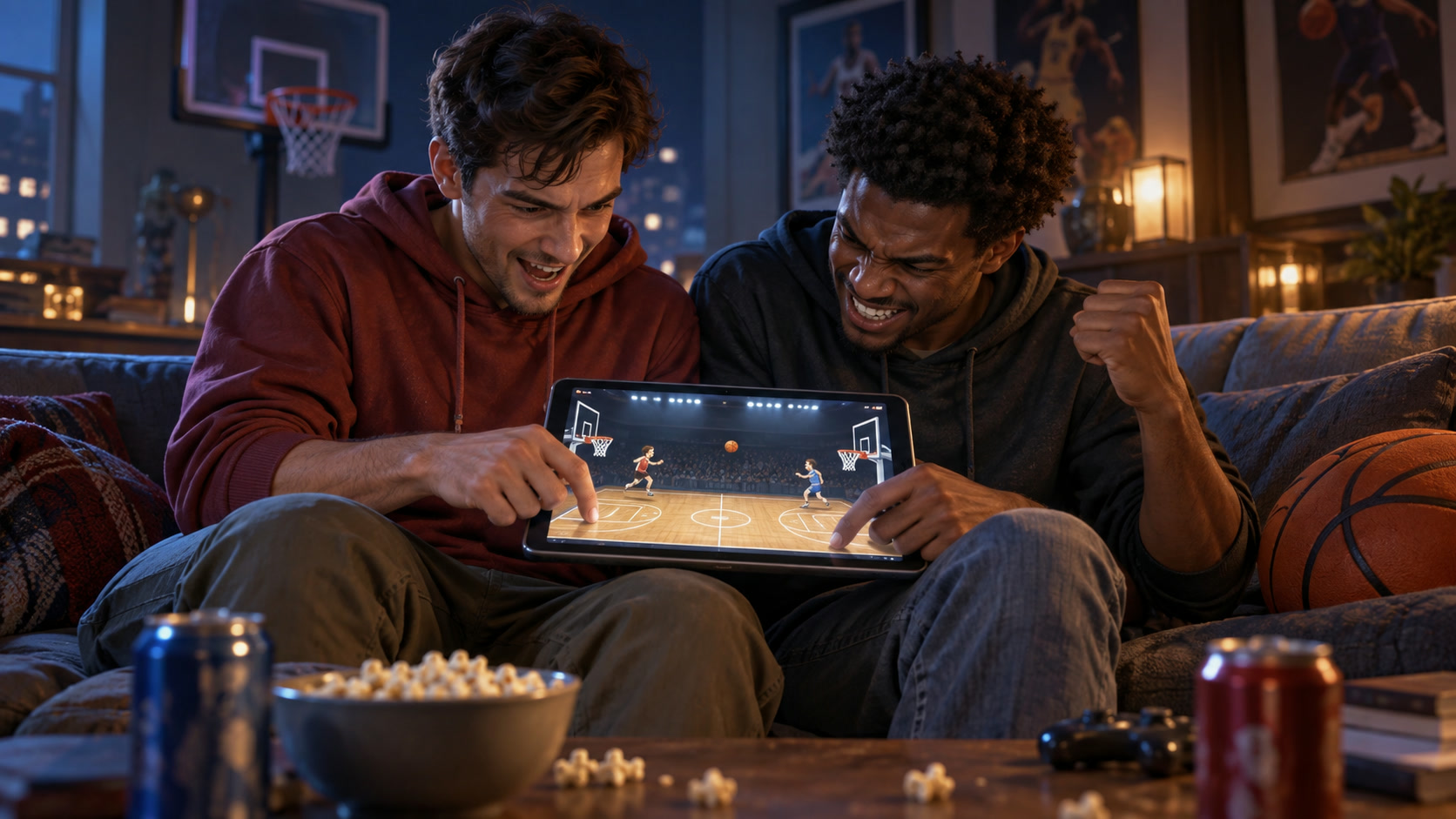
Editorial illustration: rotation keeps rematches fresh without a grind.
Ads, Spending, and Session Boundaries
Play-facts for this package record ads as present and in-app purchases as not detected on the scrape used for planning. That is not a lifetime guarantee. Confirm the live Google Play badges, and treat any new store products carefully if they appear after an update.
Ad interruptions matter more in a party context than in a solo puzzle. Nothing kills a best-of-five faster than a long interstitial between points. If ads appear frequently on your build, plan shorter sets or play when you can tolerate breaks. On a family device, still keep purchase authentication enabled even if the current scrape shows no IAP; storefront status can change.
Session design tips:
- keep matches short—first to five is the natural unit
- prefer a stable surface so two hands do not drop the phone
- mute notifications that could expose private content on a shared screen
- stop when laughter turns into frustration
Basket Random is not trying to be a simulation of professional basketball. Evaluating it on shot contest realism misses the point. Evaluating it on how quickly two people can understand the joke and start competing does not.
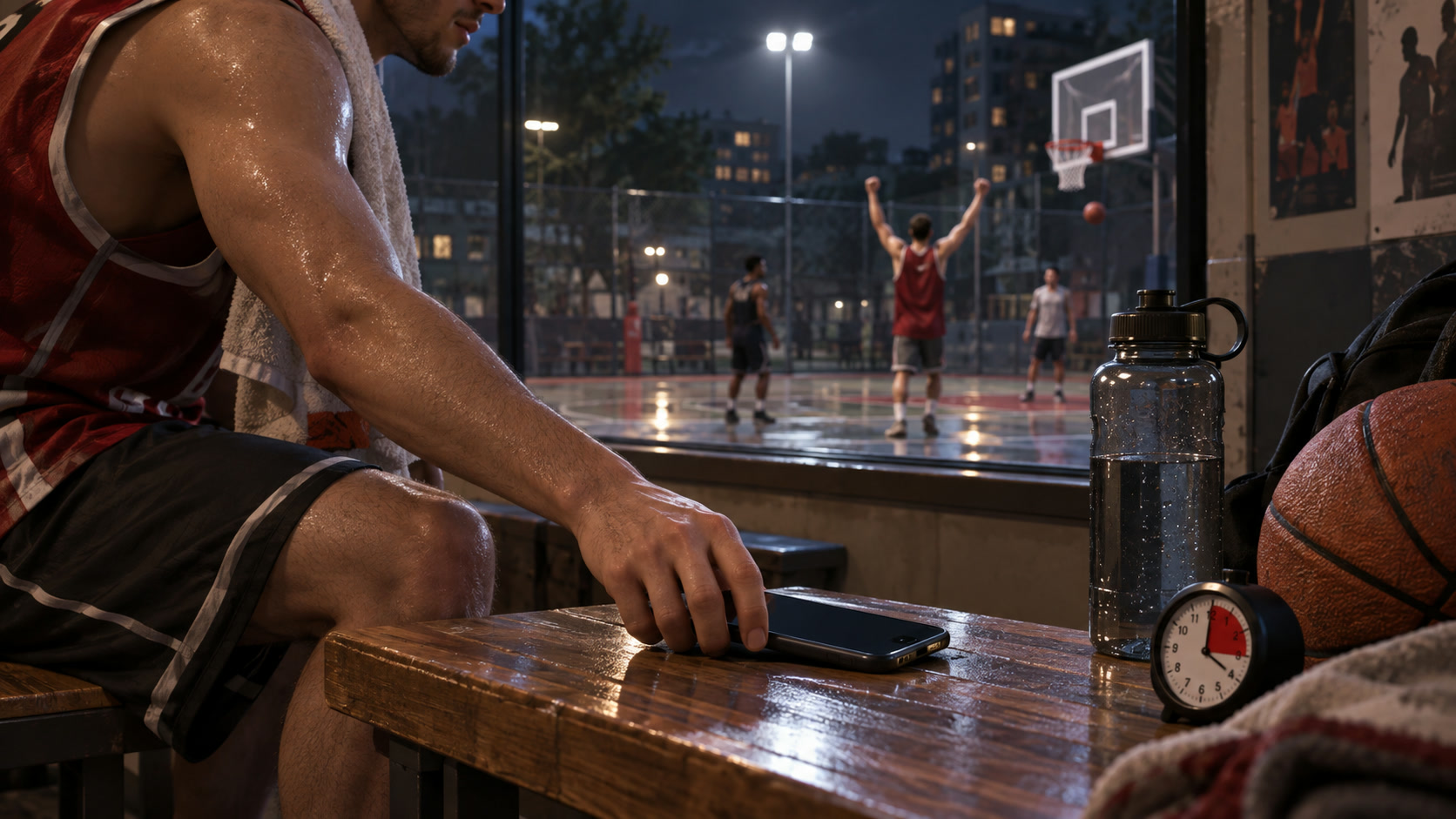
Editorial illustration: party games need clear stop points as much as good physics jokes.
Who Should Play Basket Random
Basket Random fits friends, siblings, and classmates who want a loud two-minute rivalry on one device. Solo players can use the CPU to learn timing, but the best sessions are social. It is a weak fit for anyone seeking online ranked basketball, deep career modes, or precise sports simulation.
If you already enjoy other random-physics party titles from the same series, expect a familiar formula applied to basketball. If you want skill expression with minimal randomness, look elsewhere.
Strengths and Weaknesses
Strengths
- Instantly readable first-to-five structure
- Strong local two-player appeal on one screen
- Rotating courts and equipment keep rematches silly and fresh
- Low control complexity
Weaknesses
- Physics variance can feel unfair in close sets
- Little long-term progression for grind-oriented players
- Ads may interrupt party pacing
- Not a serious basketball training or sim experience
Final Verdict
Basket Random is a pocket party sport: jump, bounce, dunk, reset. The fun is the shared absurdity of ragdoll timing, not a fair ladder of pure skill. Play short sets, adapt when the court changes, and treat lucky bounces as part of the product.
Install only from a trusted listing that matches package com.twoplayergames.basketrandom, recheck ads and purchase badges on the live store, and keep sessions short enough that the chaos stays friendly.


.webp?x-oss-process=image/resize,w_80/format,webp)