
Construction Simulator 3 on Android in 2026: Is This Premium Builder Still Worth Buying?

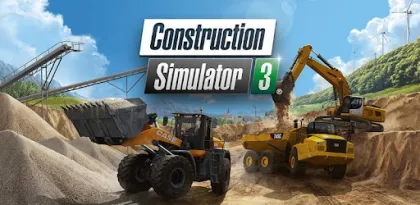

Construction Simulator 3 occupies an unusual place on Android in 2026. It is an older premium game in a store increasingly dominated by free-to-play releases, yet its promise remains attractive: buy the game, enter a compact European open world, operate officially licensed heavy machinery, and build a construction company through dozens of hands-on contracts. There is no energy timer pushing you away from a job and no requirement to stay online just to drive an excavator.
The question is whether that focused experience still justifies its price. Google Play currently lists Construction Simulator 3 at $4.99 in the United States, with in-app purchases, more than 500,000 downloads, offline support, and an October 2, 2025 update described as a small bug fix. The game offers over 50 vehicles from 14 brands, more than 70 contracts, a 10-square-kilometer map, and three distinct districts. Those numbers sound strong, but age, device compatibility, and reported bugs complicate the recommendation.

Construction Simulator 3 gives each machine a practical role instead of treating the fleet as decoration.
A construction game built around doing the work
Many mobile building games ask players to tap a menu, wait for a timer, and collect a finished structure. Construction Simulator 3 takes the opposite approach. A contract may require you to collect materials, transport equipment, excavate a foundation, pour concrete, lift components, pave a road, or place structural pieces with a crane. You perform the important steps yourself.
That hands-on structure is the game's greatest strength. Moving a pile of soil with an excavator is slow compared with pressing a “complete” button, but precision gives the task meaning. You must position the machine, control the boom and bucket, and avoid wasting motion. Crane jobs create a similar rhythm: stabilize the vehicle, line up the load, raise it carefully, and guide it into the highlighted zone.

Excavation is deliberately physical, rewarding careful positioning and smooth controls.
The simulation is approachable rather than punishing. Machines have simplified controls designed for touchscreens, and the game explains new equipment when it appears. This makes it suitable for players fascinated by heavy machinery but unfamiliar with real hydraulic systems. The tradeoff is repetition: tutorials and guided steps can feel excessive after you understand the basics, and early contracts reuse familiar operations.
Neustein is compact, but it feels coherent
The setting is a fictional European region called Neustein, inspired by the Alpine foothills. Its 10-square-kilometer map is divided into a village, an industrial district, and a modern town. You can drive freely between jobs, visit suppliers, collect equipment, and watch completed projects alter parts of the environment.

The European map connects worksites, suppliers, and company progression in one navigable space.
It is not a huge modern open world, and scenery can repeat during long hauling sessions. Yet the manageable size works well on mobile. A trip is long enough to make transporting a machine feel like part of the contract, but usually short enough to avoid becoming dead time. The three districts also give the campaign a readable progression from modest residential work to industrial and urban projects.
The world is most convincing when construction changes it. Repairing a broken road or completing a building creates a sense that your company is leaving a mark. Not every contract produces a dramatic transformation, but the visible projects make progression more tangible than a rising bank balance alone.
The licensed fleet is the real attraction
Construction Simulator 3 includes more than 50 vehicles from Caterpillar, Liebherr, CASE, Bobcat, Palfinger, STILL, MAN, ATLAS, Bell, BOMAG, WIRTGEN, VÖGELE, HAMM, and MEILLER Kipper. The selection covers excavators, wheel loaders, trucks, pavers, rollers, cranes, forklifts, compact machines, and specialized equipment.

Fourteen licensed brands give the garage more authenticity than a collection of generic machines.
This variety matters because equipment changes the verbs available to the player. A MAN truck is useful for transport, a Bobcat T590 handles compact earthmoving, the Liebherr 150 EC-B 8 tower crane reaches high structures, and the Liebherr LB28 drilling rig prepares deep foundations. Unlocking a machine is exciting not only because it looks different but because it introduces a new procedure.
Vehicle interiors add another layer. Construction Simulator 3 introduced a cockpit view across its machines, allowing you to work from inside the cab. Exterior cameras remain easier for precise placement because they expose the bucket, load, or attachment, but cockpit view greatly improves immersion during transport and simple operations.

Cockpit view makes road travel and machine operation feel more personal, even when exterior cameras are more practical.
Contracts provide scale, progression, and occasional grind
The campaign offers more than 70 contracts, ranging from small Bavarian-style houses to warehouses, road repairs, bridges, and taller urban buildings. Small jobs teach a machine or provide quick income. Larger contracts combine multiple stages and vehicles, turning a construction site into a logistical project.

Large contracts are the payoff, combining transport, lifting, earthmoving, and material handling.
Completing work earns money and experience, which unlock new districts, contracts, and equipment. You can purchase machines for regular use or rent specialized equipment when buying would drain the company account. That decision adds light business strategy without burying the player in spreadsheets.
The downside is padding. Transporting equipment across the map, repeating excavation passes, or following another guided construction sequence can become routine. Players who enjoy methodical work may find this calming; those seeking constant novelty may find the campaign slow. The game is best approached as a steady simulator rather than a fast collection of action missions.
Touch controls work, but precision takes practice
Adapting complex machinery to a phone screen is difficult, and Construction Simulator 3 generally succeeds. Driving controls are familiar, while hydraulic functions use virtual sticks and context-sensitive buttons. The interface changes with the machine, exposing the functions needed for its attachments and stabilizers.

Roadwork contracts demonstrate how different machines form a complete workflow.
A tablet or large phone offers the best experience because the controls and camera share limited screen space. On a smaller display, fingers can obscure the exact point where a bucket or crane hook needs to land. Camera management becomes part of the challenge. Rotating to a useful angle before making a precise movement is often more important than moving quickly.
The physics are credible enough to sell the weight of the machines, but they are not a professional training model. Attachments can behave awkwardly near terrain or mission objects, and collision behavior occasionally reminds you that this is a mobile game from 2019. Patience helps, especially when a task completion trigger expects an object in a very specific position.
The 2026 problem: bugs and compatibility
The most important warning is not the age of the graphics; it is reliability. The Google Play rating currently sits near 3.1 stars, and multiple recent reviews report problems such as lost progress, contracts that cannot advance, startup failures, or objects preventing a work stage from completing. Other players still report a strong experience, so these issues do not affect every device or save, but the pattern is significant for a paid game.

When contracts behave correctly, completing a multi-stage project remains deeply satisfying.
The October 2025 update shows the app has not been completely abandoned, but “small bugfix” does not guarantee that every modern Android device will run it well. Before buying, check the current Play Store compatibility message for your exact phone or tablet, review the refund policy available in your region, and avoid assuming that an older review reflects your device.
Because the game supports offline play, it remains useful for travel and areas with weak connectivity. Google Play's data-safety section says the developer declares no third-party data sharing, though the app may collect app activity, app information and performance, and device identifiers. As always, install from Google Play or another source you trust, and verify the official package name: com.astragon.cs3.
Construction Simulator 3 versus newer alternatives
Construction Simulator 4 now exists on Android, and players who want newer technology should compare it before purchasing. Construction Simulator 3 still has advantages: its European map is compact, its contract list is substantial, the fleet is diverse, and the one-time premium structure feels cleaner than many free construction games. It also has years of guides and player knowledge behind it.
However, buying an older simulator makes the most sense when its specific map, fleet, or price appeals to you. It is not automatically the best entry simply because it carries a lower number. New players should compare device support, ratings, and feature lists rather than treating the series as a mandatory sequence.
Is it still worth buying?
Yes—with conditions. Construction Simulator 3 remains one of Android's most complete hands-on construction games. Its machines have distinct jobs, its contracts require real interaction, and the company progression creates a satisfying reason to master the fleet. Offline support and a premium purchase also make it appealing to players tired of timer-driven building games.
But it is no longer a risk-free recommendation. The low current rating and recurring bug reports matter. Players using a compatible device and willing to work around occasional rough edges can still find many hours of unusually tactile simulation. Anyone who is sensitive to lost progress, mission blockers, or older presentation should investigate the latest device-specific reviews first.
Quick verdict
Best for: heavy-equipment fans, methodical players, offline gaming, and anyone who prefers hands-on construction over idle timers.
Watch out for: reported save and contract bugs, repetitive early tasks, a guided tutorial structure, and uneven compatibility on newer devices.
Bottom line: Construction Simulator 3 is still a rewarding premium builder in 2026, but its excellent machinery and contract design now come with a meaningful technical caveat.


