
Dr. Driving Review: City Missions Instead of Track Racing


Dr. Driving is a compact driving game from SUD Inc. that focuses on traffic, parking, fuel, and route discipline more than lap times. The Google Play listing names online multiplayer through a Google account and currently shows more than 500 million downloads, a Teen rating, ads, and in-app purchases.
Its age and simple presentation are not weaknesses by themselves. Dr. Driving remains easy to understand because it gives ordinary street actions a score: turn cleanly, avoid collisions, manage speed, and finish a task before the timer or fuel supply becomes a problem.
The Core Loop: Accept a Mission and Drive Cleanly
You choose a vehicle and mission, then enter a small city route. The objective may emphasize parking, speed, fuel use, lane changes, or controlled turns. Unlike an arcade racer, the fastest line is not always the best line. Crashing, clipping traffic, or approaching a corner badly can ruin an otherwise quick attempt.
The useful rhythm is:
- read the mission objective before moving
- accelerate smoothly instead of holding maximum throttle
- look beyond the car immediately ahead
- brake before the turn, not after steering begins
- finish cleanly and use the reward on a deliberate upgrade
This makes Dr. Driving closer to a score challenge than a driving school. It borrows the language of traffic but does not teach real-world laws, hazard perception, or vehicle physics with professional accuracy. Never use success in the game as evidence of real driving ability.
The short routes suit mobile sessions. One failed parking attempt does not destroy a long championship. The downside is repetition: familiar streets and mission structures eventually expose the limited environment.
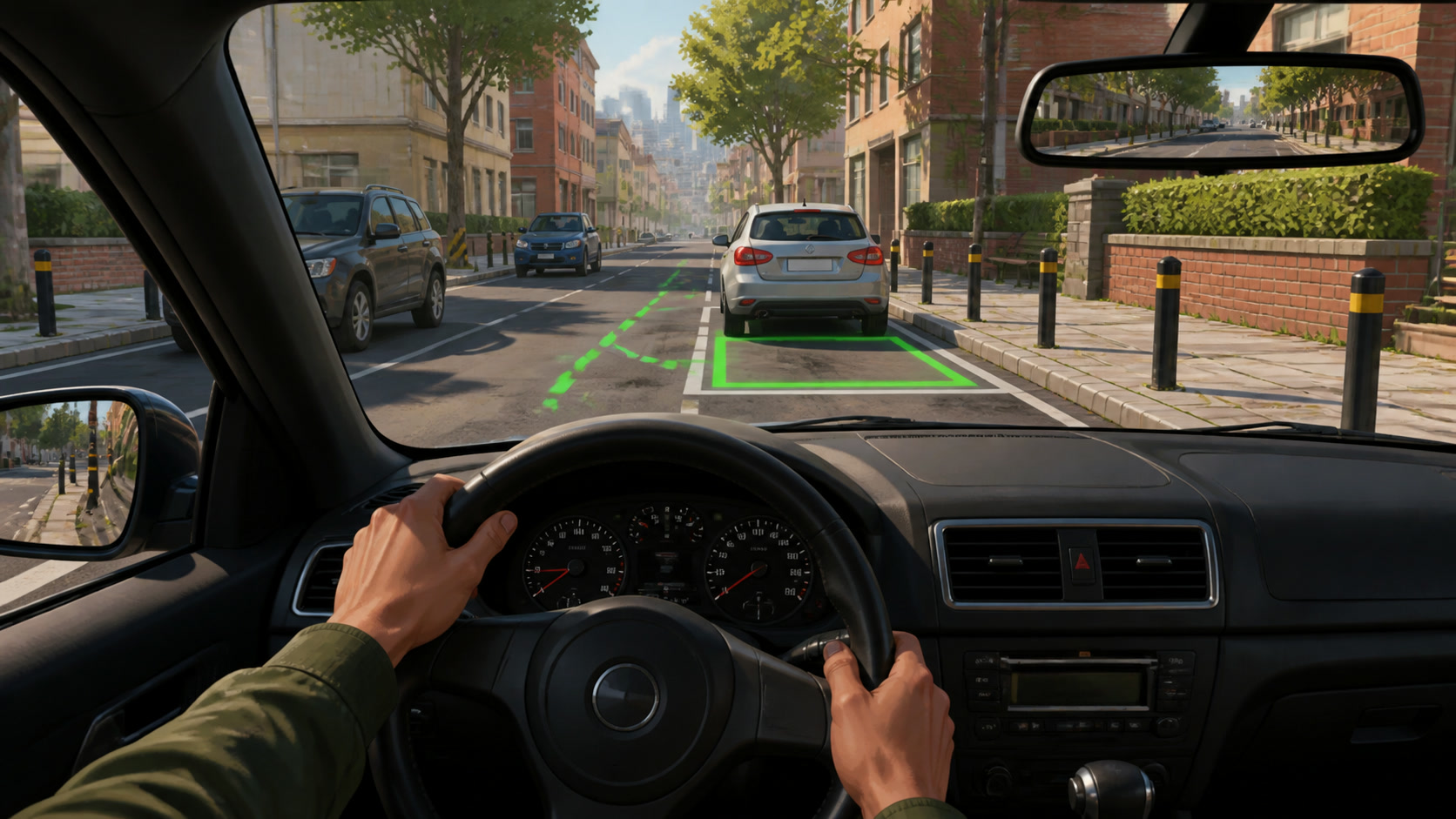
Editorial illustration: the best line is the one that finishes without turning traffic into an obstacle course.
Controls and the Difference Between Speed and Flow
Dr. Driving uses an in-car viewpoint with touch controls for steering, pedals, and gear or direction changes depending on the mode. The cockpit makes lane position feel more important than it would from a distant camera. It also narrows peripheral vision, so small corrections work better than late swerves.
New players often oversteer. Turn the wheel gently, let it return, and watch how the vehicle settles. Brake early enough to enter a corner under control. If the mission rewards fuel economy, avoid repeated full-throttle acceleration followed by hard braking.
The game is visually modest, which helps older or lower-powered devices, but device size still matters. A steering control that feels precise on one screen can feel sensitive on another. Test the control options before judging the handling.
Dr. Driving is not about building a perfect racing line. It rewards flow: maintaining momentum without creating emergency corrections. That makes a clean low-speed run more satisfying than a fast collision-filled one.
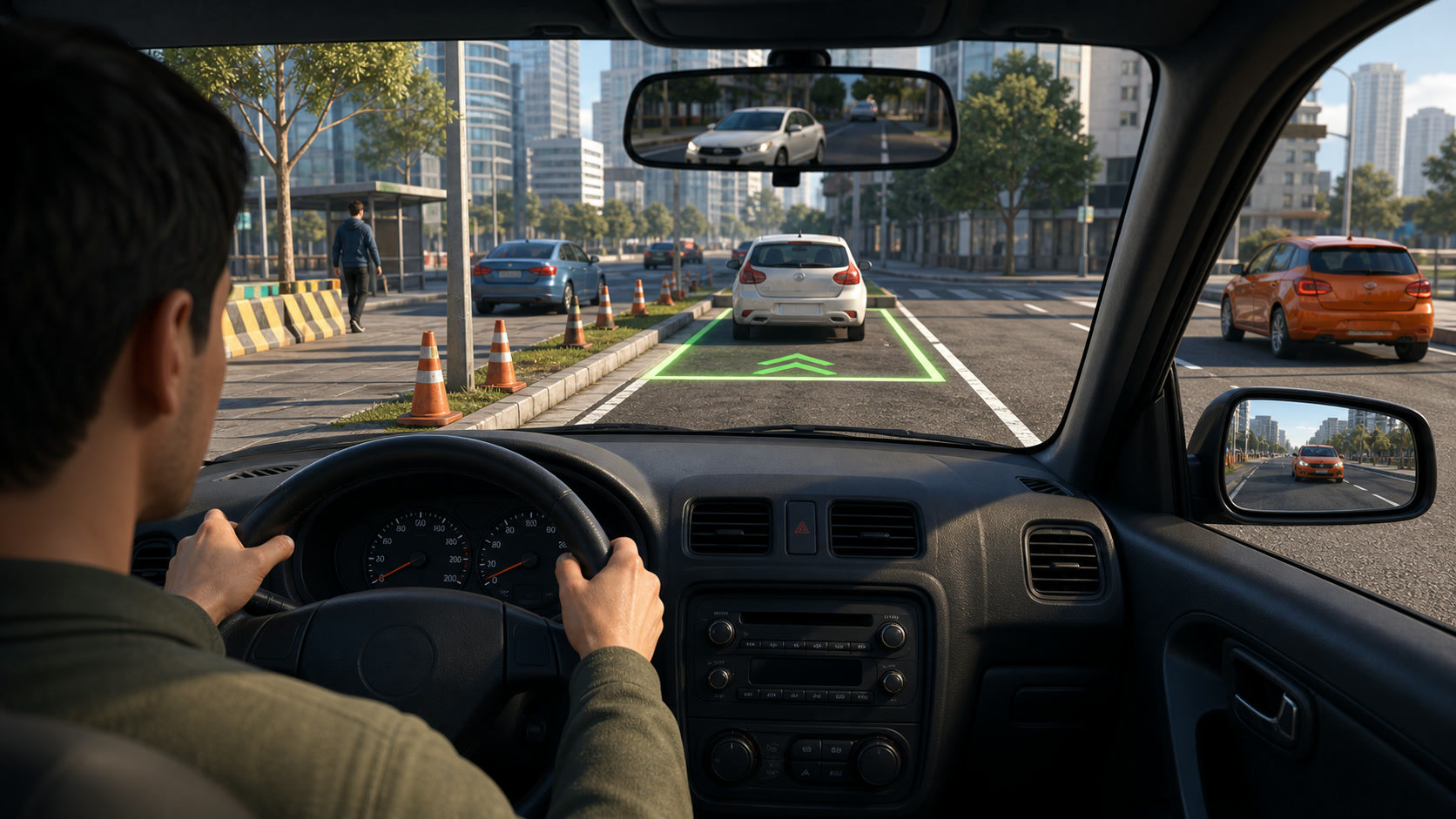
Editorial illustration: smooth inputs protect both the route and the score.
Vehicles, Progression, Multiplayer, and Spending
Mission rewards support vehicle purchases and upgrades. Different cars change the sense of acceleration and control, but progression is most useful when it solves a specific problem. Save for a vehicle or upgrade that fits the missions you enjoy instead of buying every available option.
The Play listing says users can sign in with a Google account for online multiplayer. Multiplayer adds unpredictability because another driver no longer follows a simple traffic pattern. It also exposes the limits of a compact mobile simulation: contact and network behavior will not feel like a full racing simulator.
Google Play marks the game as containing ads and in-app purchases. Decide whether the ad-supported free loop is acceptable before spending. If you purchase anything, choose a defined item with an obvious use. Do not pay after a crash simply to erase frustration.
The current Play Data safety disclosure states that location, app information and performance, and device or other IDs may be collected and shared, with data encrypted in transit and deletion requests available. Check the live store disclosure because developers can update practices. Account sign-in is useful for online play; it is not necessary for every offline-style mission.
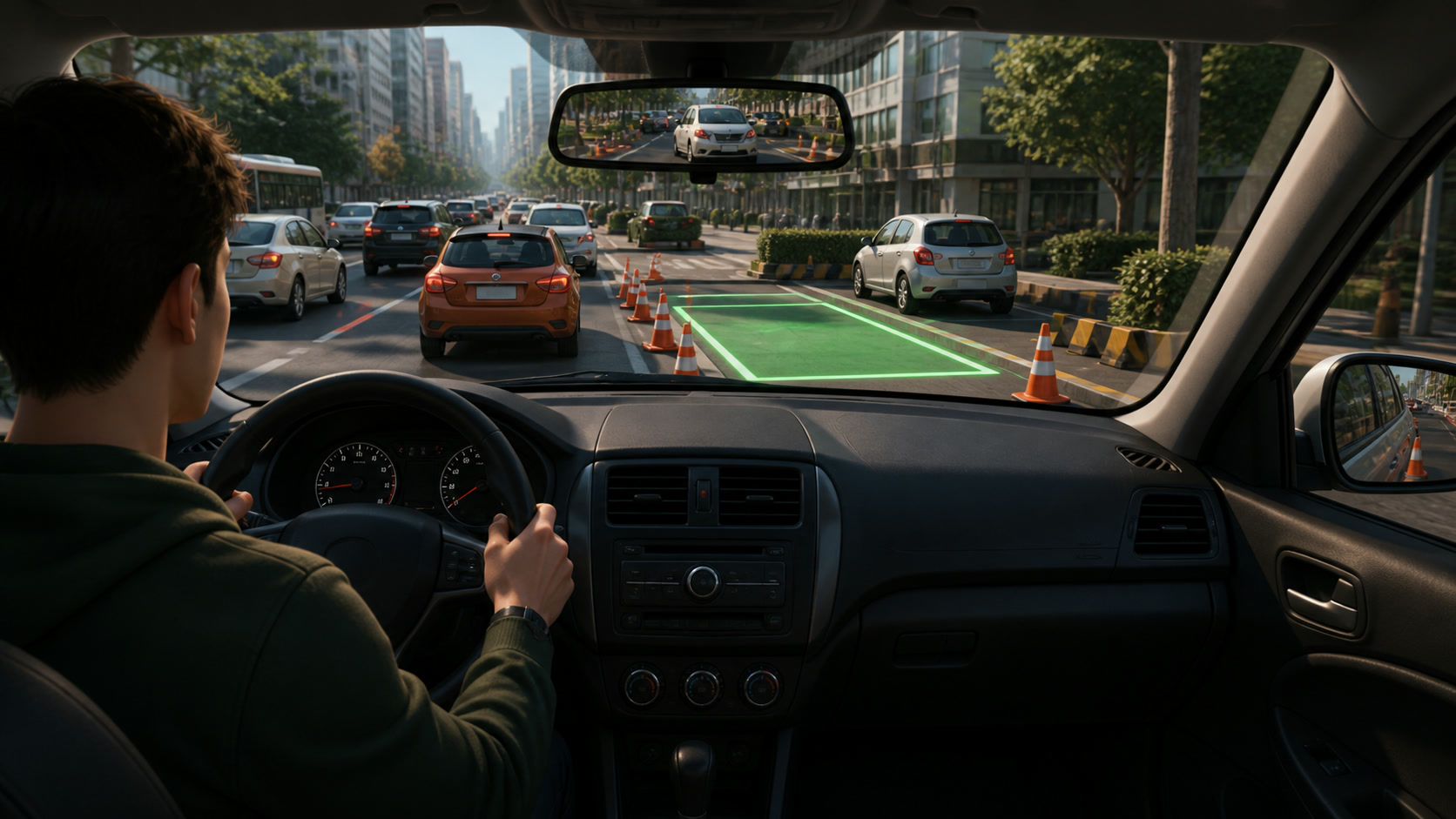
Editorial illustration: upgrade for a driving goal, not to compensate for an impatient run.
A Better Starting Plan
Spend the first sessions on control, parking, and fuel missions. They teach lane placement and throttle discipline without asking for maximum speed. Replay one mission with the same car until you can identify the exact cause of a poor score.
Use this checklist:
- Confirm the mission and destination.
- Center the car before accelerating.
- Leave space around traffic.
- Brake in a straight line when possible.
- Review the mistake before starting the next attempt.
Move to multiplayer after the controls stop demanding conscious attention. If the app becomes repetitive, switch mission types rather than grinding a single reward path. Short sessions preserve the game's simple charm.
Who Should Play Dr. Driving?
Dr. Driving is a strong fit for players who want lightweight city-driving challenges, quick missions, cockpit controls, and a game that can run on modest hardware. It offers a calmer alternative to crash-heavy open-world driving and track racing.
It is a weaker fit for players seeking licensed vehicles, realistic physics, a large open map, modern graphics, or a structured story campaign. Real drivers looking for instruction should use an accredited course, not a mobile score game.
Strengths and Weaknesses
Strengths
- Short missions with clear driving goals
- Clean driving matters more than constant top speed
- Accessible cockpit controls
- Lightweight presentation suits many devices
- Optional online multiplayer
Weaknesses
- Repetitive roads and mission structure
- Simplified physics and traffic behavior
- Dated graphics and interface
- Ads and purchase prompts
- Not a substitute for real driving education
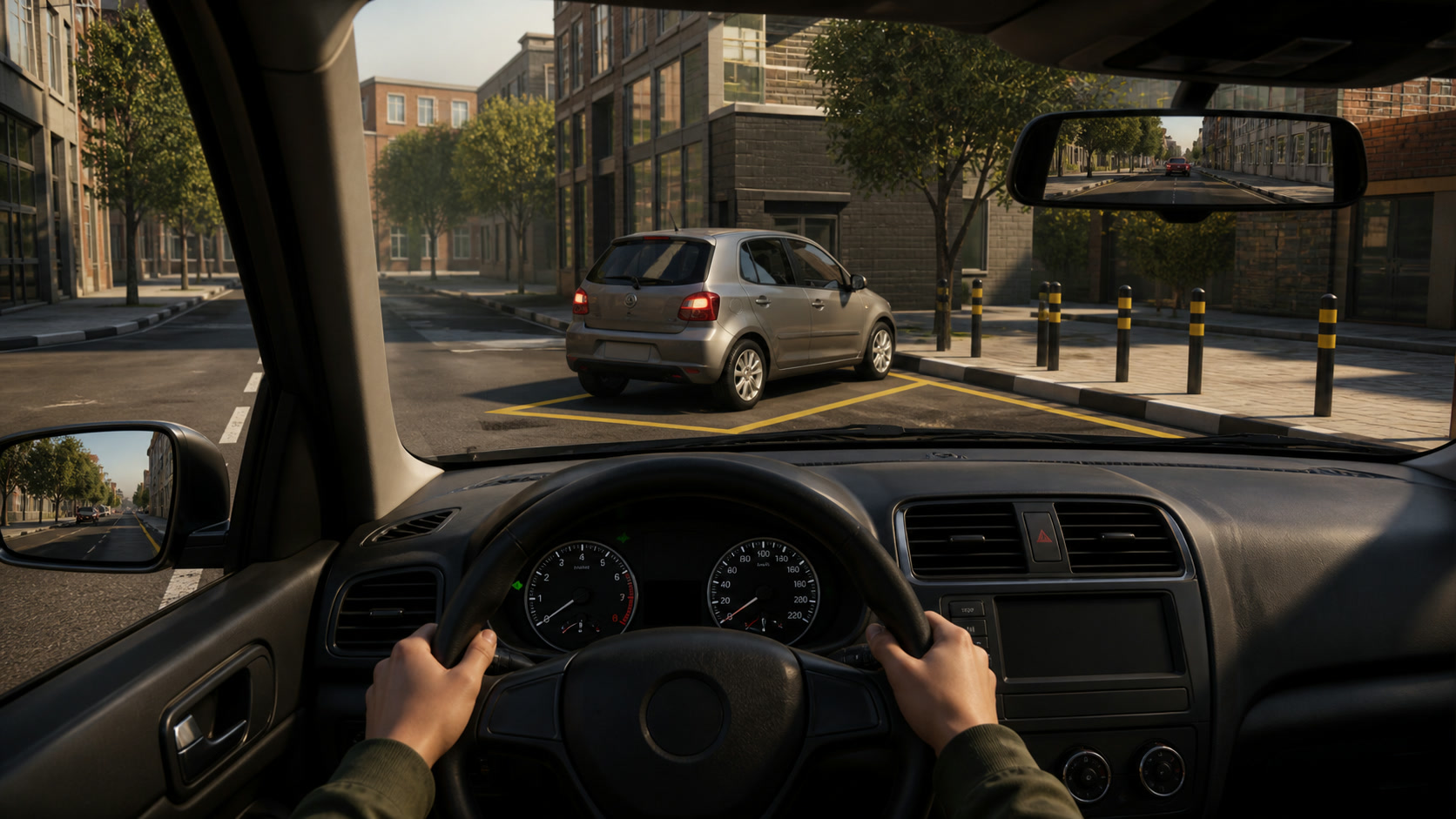
Editorial illustration: install it for compact score missions, not for a complete driving simulator.
Final Verdict
Dr. Driving remains relevant because it understands a different fantasy from most car games. It is not about owning the fastest machine or destroying a city. It is about completing a small route cleanly enough to make ordinary driving feel like a challenge.
The map and presentation show their age, but the core loop is readable and portable. Drive smoothly, upgrade with a purpose, and keep the distinction between game scoring and real road skill clear. Under those limits, Dr. Driving is still an effective five-minute mobile driving game.


.webp?x-oss-process=image/resize,w_80/format,webp)