
Fate/Grand Order Review: A Story-Heavy RPG With a Demanding Summon System

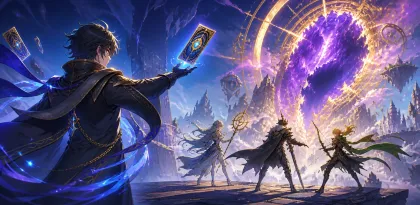

Fate/Grand Order combines a long visual-novel story with turn-based command-card battles. You play as a Master, form parties of Heroic Spirits called Servants, and travel through Singularities that threaten human history. The English edition contains years of story chapters, events, character quests, and combat systems.
The writing and character roster give the game its identity. The summon system, event schedule, and account progression create the main risks. A player can enjoy the story without owning every rare Servant, but the game makes collecting a visible part of the experience.
Command Cards Turn Teams Into Short Combos
Each turn presents cards tied to the Servants on the field. Card color and order affect damage, critical stars, and Noble Phantasm charge. Choosing three cards from one Servant can create a Brave Chain when the conditions fit.
Skills add buffs, defense, healing, target control, and other effects. Use them with a plan. A powerful attack buff has less value if the matching cards are absent or the boss enters a defensive phase.
Party building matters before the first turn. Class advantage can produce a large difference in damage and survival. Support Servants can make a modest attacker perform better than a team built from isolated rare units.
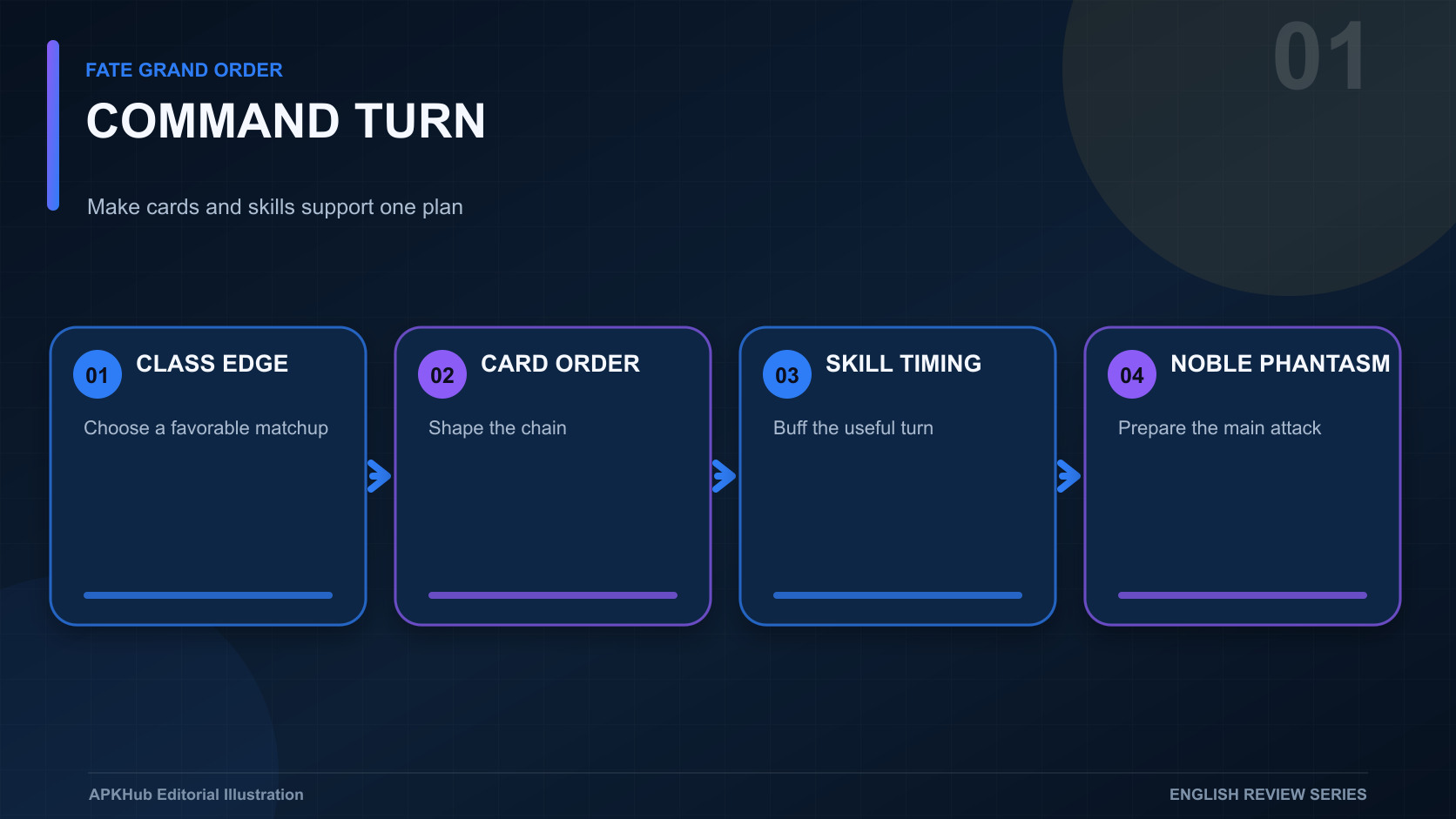
Editorial illustration: party synergy and card order shape each turn.
The Story Requires Time and Reading
The main scenario contains millions of words under the official description. Early chapters introduce the structure, while later arcs often expand the cast and stakes. Players who skip all dialogue remove a major reason to choose this game over another turn-based RPG.
Read at a pace that fits the session. Story chapters can run longer than a quick battle, and event deadlines may compete with main progression. Use the archive features available in the current build when you need to revisit scenes.
New players do not need to finish every available chapter at once. Clear enough story to unlock useful systems, then set one chapter or event goal.
Summoning Needs a Written Budget
Fate/Grand Order uses Saint Quartz and summon banners to distribute Servants and Craft Essences. Results are random within the published banner rules. A featured character does not become guaranteed unless the current banner terms state a guarantee or pity condition.
Read the in-game rates and banner period before spending. Set a cap in currency or money, then stop at that cap. Prior spending does not improve the next independent result unless the game records progress under a stated system.
Free and lower-rarity Servants can clear a large amount of content when players build them and use class advantage. Friend supports also give access to strong units. Collection goals should not replace party knowledge.
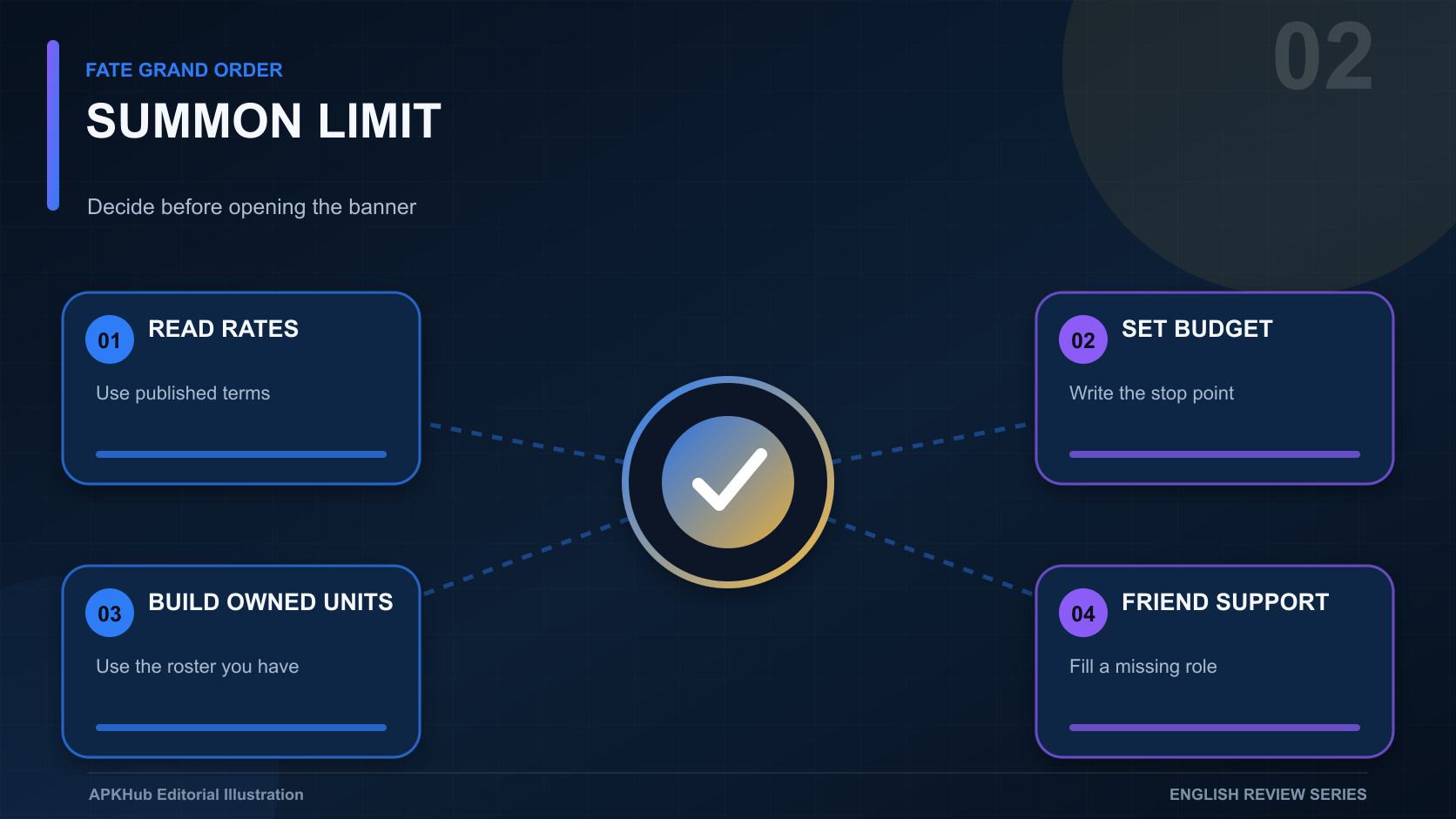
Editorial illustration: decide the maximum spend before opening a banner.
Events Reward Preparation and Schedule Control
Events offer story, materials, and limited rewards. Some require main-story progress or repeated farming. Check entry requirements and the end date inside the game because the English schedule differs from other regions.
Build a small roster across several classes. Level skills that support the team's main plan, and save materials for known needs. Event efficiency improves after you understand the node rather than after you add more rare characters.
Account recovery needs attention. Follow the current official transfer or account-binding method and keep recovery information private. Avoid buying accounts or using unofficial currency services.
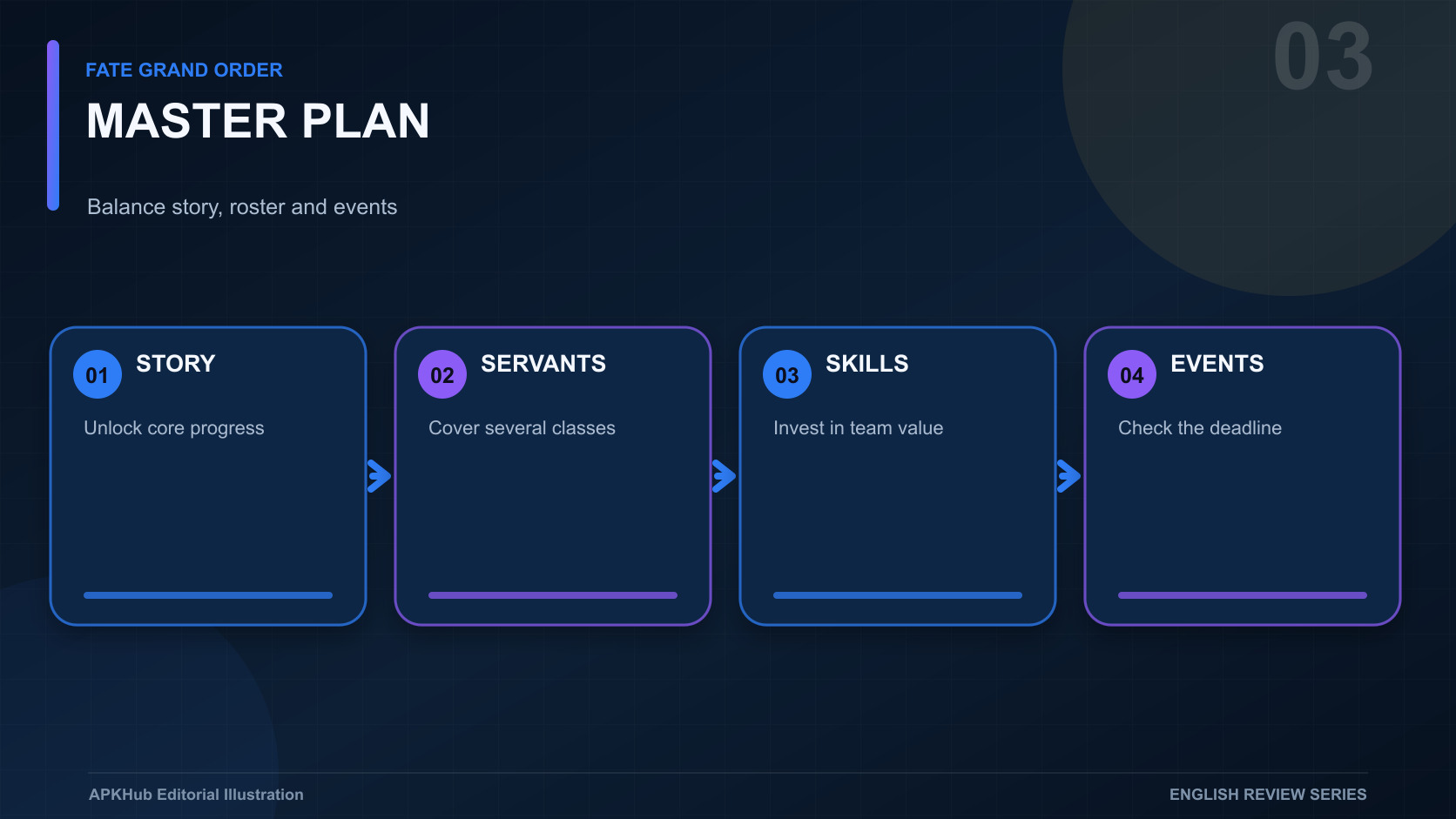
Editorial illustration: a broad working roster supports story and event requirements.
Strengths and Weaknesses
Strengths
- The main scenario provides a large story for Fate fans and newcomers.
- Class advantage and support roles reward team planning.
- Events and character quests expand the roster's context.
- Low-rarity units can remain useful with investment.
Weaknesses
- Random summoning creates strong spending pressure.
- Story and event farming demand substantial time.
- The interface carries years of added systems.
- Regional schedules make some overseas guides inaccurate.
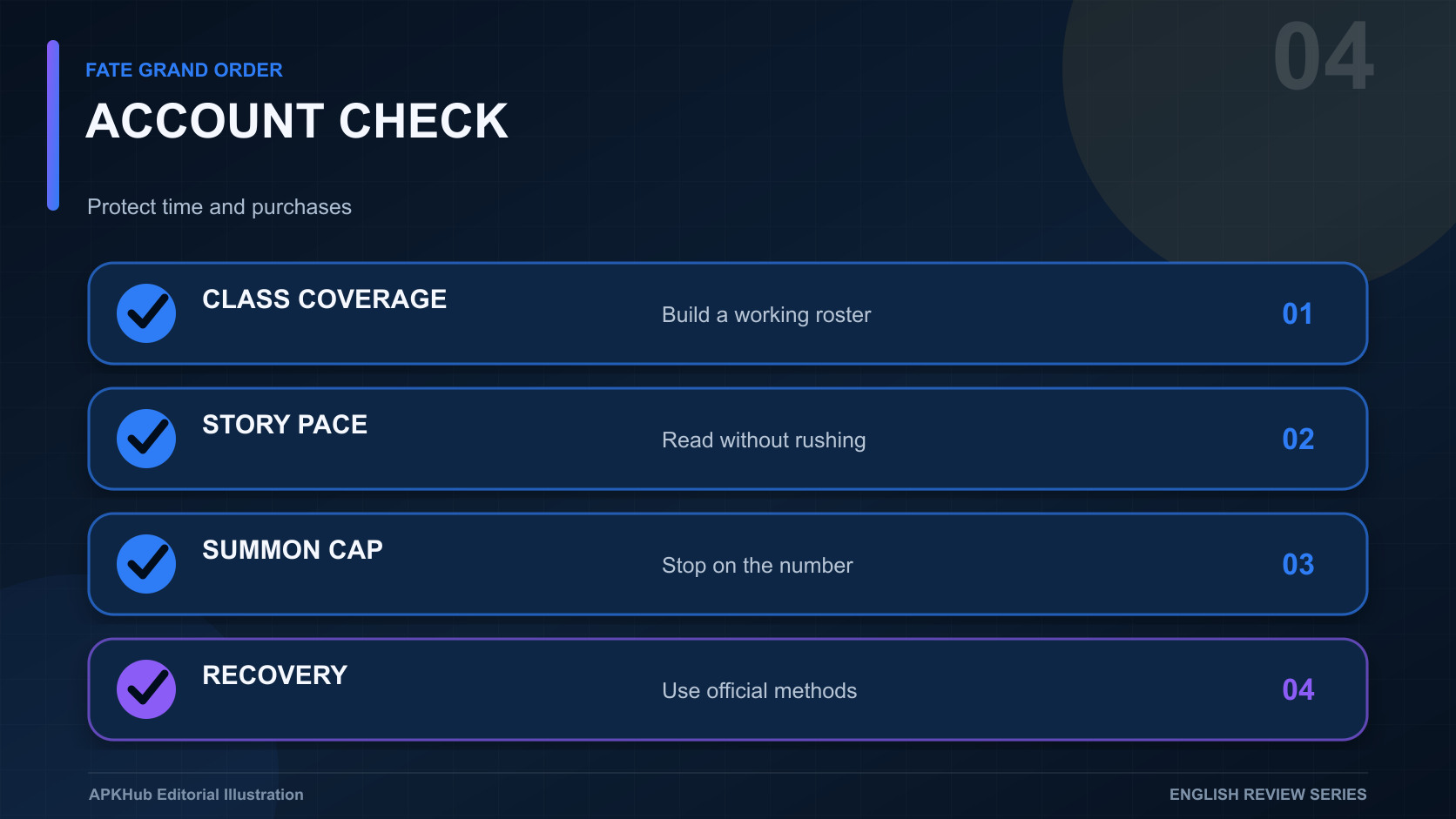
Editorial illustration: a written schedule and summon cap protect both progress and budget.
Final Verdict
Fate/Grand Order suits players who want a long character-driven story and can accept an older mobile RPG structure. Command-card battles offer enough team planning to support the narrative, while events provide recurring goals.
The summon system needs firm limits. Build the Servants you own, use friend support, and judge each banner by published rates rather than hope. Players who dislike reading or randomized collections should choose another RPG.


