
Free Fire MAX Review 2026: Better Graphics, Same Fast Battle Royale

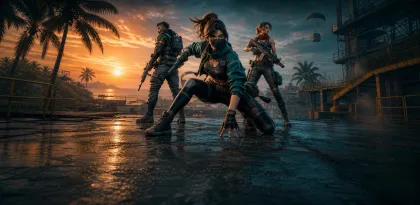

Free Fire MAX is the premium-looking edition of Garena’s enormously popular mobile battle royale, but “premium” does not mean paid or separate. It is a free client built for stronger Android hardware, with sharper textures, richer effects, improved environments, and enhanced presentation. It shares the same fundamental matches, account ecosystem, and live-service rhythm as standard Free Fire.
That makes the buying decision unusual: there is nothing to buy before playing, yet users must decide whether the visual upgrade is worth the larger download, heavier battery drain, extra heat, and stronger device requirements. On a capable phone, MAX is clearly the better-looking way to play. On modest hardware, a steadier frame rate in the standard client can matter more than foliage or reflections.
In 2026, Free Fire MAX remains defined by speed. A traditional Battle Royale match drops up to 50 players onto an island and usually resolves in around ten minutes. Clash Squad compresses the game into rapid 4v4 rounds with an economy. Constant events, character abilities, cosmetics, pets, weapon systems, and collaborations keep the surrounding service busy—sometimes much busier than the actual shooting needs.

MAX Versus Standard Free Fire
The core distinction is visual fidelity. Free Fire MAX uses higher-resolution assets, enhanced lighting and effects, more detailed environments, upgraded animation and audio presentation, and a more polished lobby. The standard game is optimized for a wider range of low-end devices. Both aim to preserve the same competitive ecosystem so friends do not need identical clients to play together.
Garena’s Firelink technology allows an existing Free Fire account to be used in MAX, synchronizing progression and items. Players using MAX can join players on the standard client rather than entering an isolated population. This is the right design: graphics preference should not split a social game’s community.
MAX does not turn Free Fire into a realistic military simulator. The art direction remains colorful and stylized, animations are designed for readability, and character skins often prioritize personality over camouflage. The upgrade is easiest to see in surfaces, draw distance, shadows, particles, vehicles, weapon models, and the density of a scene. It feels cleaner and more atmospheric, not fundamentally different.
The downside begins before the first match. MAX needs more storage, and optional resource packs can expand its footprint further. High graphics and frame-rate settings increase power use and temperature. When heat forces a phone to throttle, the supposedly superior client can become less responsive than standard Free Fire. Competitive players should prioritize stable frame pacing and touch response over a screenshot-friendly preset.
Battle Royale Designed for Mobile Time
Free Fire’s greatest design insight is duration. A ten-minute match is long enough to produce tension, rotation decisions, looting, firefights, revives, and a final circle, but short enough to play during a break. With 50 players rather than the larger lobbies of many competitors, the map and pacing can move quickly without every landing becoming immediate chaos.
Players choose a drop point, gather weapons and supplies, move with the shrinking safe zone, and try to become the final survivor or squad. Vehicles enable fast rotations, vending machines turn collected currency into practical choices, and revival mechanics reduce the chance that one early mistake leaves a teammate watching for the entire match. Airdrops create visible risk-and-reward points that pull squads into conflict.
The current OB55 update adds more random variation to Battle Royale. Events can change weapon distribution, open arsenals, create dangerous storms, or alter the behavior of airdrops. The returning Naruto Shippuden collaboration adds ninjutsu skill cards, ninja tools, and themed map events. These systems keep experienced players adapting, though they also move the game farther from a clean contest where everyone understands the battlefield at a glance.
Free Fire is willing to bend its formula for entertainment. Temporary mechanics, powered-up skills, unusual traversal, and collaboration items can make a session memorable. They can also feel noisy to players who prefer consistent competitive rules. Ranked modes need careful balance because a spectacular event ability is less charming when it decides a promotion match.

Clash Squad Is the Better Competitive Classroom
Clash Squad removes the long looting phase and places two teams of four into compact rounds. Players buy weapons and equipment with round currency, then fight for eliminations and control. The economy gives wins and losses consequences without requiring a full Battle Royale commitment.
This mode is excellent for learning movement, aim, Gloo Wall placement, peeking, and team trades. Encounters happen rapidly, so mistakes produce immediate feedback. A player who spends several Battle Royale matches avoiding contact can gain more mechanical experience from a few minutes of Clash Squad.
OB55 expands the grenade and device ecosystem and continues Garena’s habit of adjusting characters and weapons. The earlier anniversary update added Perk Points, skill boosts, and awakened weapons in selected contexts. These layers create tactical choices, but they also increase the knowledge gap between a new player and someone who knows every ability interaction.
Round-based play exposes balance problems quickly. A dominant close-range weapon, mobility skill, or defensive combination can repeat across every engagement. Garena patches frequently, yet the live-service schedule means the meta is always moving. Players seeking a fixed competitive rulebook will find the constant adjustment tiring; people who enjoy discovering new combinations will rarely be bored.
Shooting, Movement, and Touch Controls
Free Fire MAX favors accessible action over heavy simulation. Movement is quick, weapons communicate their role clearly, aim assistance helps touch users, and looting is streamlined. The result is easy to start but mechanically demanding at higher ranks, where fast camera movement, precise drag shots, cover placement, jumps, crouches, and ability timing happen in seconds.
The custom HUD is essential. Buttons can be moved, resized, and arranged for two-, three-, or four-finger layouts. New users can stay with thumbs, while competitive players often add index fingers for simultaneous movement, aiming, shooting, and utility. Sensitivity settings need experimentation; copying a professional player’s numbers ignores differences in screen size, touch sampling, frame rate, and grip.
Gloo Walls are Free Fire’s signature defensive tool. Dropping a wall instantly creates cover in otherwise exposed ground, turning positioning into an execution skill. Good players use them to heal, revive, block angles, climb, or force an opponent to reposition. Poor network conditions or a low frame rate make wall placement feel late, which is one reason performance matters more than visual detail.
Weapon handling is intentionally readable rather than realistic. Recoil, spread, range, armor penetration, magazine size, attachments, and movement interact, but the game rewards fast adaptation more than ballistics study. Headshots remain decisive. On a small display, target visibility can become difficult at range, making MAX’s sharper image useful when the device can sustain it.
Controller support is not the center of the design, and external mapping tools can violate rules or create unfair input advantages. The safest approach is to use the official touch interface and avoid software that injects or automates inputs. Free Fire’s competitive identity is built around touch, not around imitating a console shooter.

Characters Make Strategy Personal—and Harder to Balance
Free Fire distinguishes itself through characters with active or passive abilities. One may provide healing, another mobility, information, defense, or a way to manipulate cover. Skill combinations let squads build roles instead of relying only on weapons and armor.
This creates meaningful identity. An aggressive player can choose tools that support entry fighting; a cautious squad can favor sustain, scanning, or protection. Learning to recognize an enemy’s ability and cooldown becomes part of combat. Team composition matters most when players communicate rather than selecting four individually powerful characters with no plan.
Abilities also complicate fairness. A new user must learn dozens of interactions while collecting or unlocking useful options. Frequent reworks can invalidate habits, and collaboration mechanics temporarily add another layer of power. Garena has improved access to characters and balances the roster over time, but Free Fire will never be as mechanically neutral as a shooter where every participant starts with the same body and no skill loadout.
Pets add passive benefits and cosmetic personality. Weapon skins and other progression systems can include stat-related considerations, which understandably concern competitive players. The game is most convincing when spending changes appearance rather than combat effectiveness. Any system that connects collection value to match power deserves close scrutiny, even if skilled free players can still win.
Graphics and Audio: The Reason MAX Exists
On a strong OLED phone, Free Fire MAX can look excellent. Colors are vivid, character outfits are detailed, particle effects give abilities impact, and environmental upgrades make familiar maps feel less sparse. Higher-quality animation and lobby presentation make the service feel closer to a current-generation mobile release than the deliberately lightweight standard client.
Clarity is not always improved by detail. Dense effects, elaborate skins, collaboration visuals, and bright ability cues can obscure targets or make fights visually chaotic. Competitive settings may benefit from reducing effects or choosing a graphics profile that maintains consistent contrast and frame rate.
Audio communicates footsteps, gunfire, vehicles, abilities, and approaching danger. Headphones make directional information easier to interpret, while squad voice chat supports rotations and revives. Voice quality depends on the network and microphone, and open chat carries the usual risk of harassment. Muting, blocking, and reporting tools should be used without hesitation, particularly for younger players.
The Play Store rates the game for teens and notes violence, blood, user interaction, in-game purchases, and random items. Parents should treat online communication and spending as seriously as the combat content.

Performance, Heat, and Network Quality
Free Fire MAX should be tuned like a competitive tool. Begin with a frame-rate target the phone can maintain for an entire match, then raise graphics quality. A beautiful first five minutes followed by thermal throttling is worse than a stable medium preset. High refresh rate only helps if the game, display, and chipset deliver frames consistently.
Heat comes from sustained CPU and GPU load, brightness, radios, charging, and the environment. Playing while fast-charging under a thick case can raise temperature rapidly. Lower shadows or effects, reduce brightness, stop background downloads, and allow the phone to cool between long sessions. Download optional resources on Wi-Fi before entering ranked play.
Network stability is equally important. Packet loss and jitter create delayed hit registration, sudden movement, failed Gloo Walls, and voice-chat problems even when a speed test shows high bandwidth. A nearby, uncongested Wi-Fi connection is usually preferable, but stable mobile data can outperform poor public Wi-Fi. Players should avoid VPNs marketed as magical ping reducers unless they understand the route; an extra tunnel can add latency or create security risks.
MAX cannot compensate for a weak device or connection. Standard Free Fire exists precisely because visual ambition and broad accessibility pull in opposite directions. If MAX stutters after lowering settings, switching clients is a practical performance choice, not a downgrade in skill.
Events, Craftland, and Social Play
Garena updates Free Fire constantly. Seasonal celebrations, anime collaborations, themed maps, challenges, login rewards, and limited modes ensure that the lobby always has something new to claim. The 2026 anniversary introduced a social 3D party lobby, while the current OB55 cycle revives Naruto Shippuden content and adds new random match events.
Craftland lets players explore community-created maps and rule sets. It extends the game beyond Battle Royale and Clash Squad with races, social spaces, unusual combat modes, and experiments that would not fit ranked play. Quality varies, but creation tools give the community a reason to remain active between major patches.
The weakness is interface overload. Returning players face banners, red notification dots, event currencies, reward tracks, mail, stores, spins, and temporary missions before reaching a match. Scarcity timers and repeated claim screens are designed to build daily habits. A more restrained lobby would make the underlying shooter feel more confident.
Guilds, friend lists, squads, and voice communication are central to retention. Free Fire MAX is far more enjoyable with a consistent team. Solo matchmaking can produce uneven coordination, early quitters, or language barriers. Honor systems and rank protection try to reduce the cost of disruptive teammates, but no automatic system can fully replace playing with people you trust.

Monetization and Random Items
Free Fire MAX is free to play and sells Diamonds, passes, cosmetics, spins, memberships, and event offers. Google Play explicitly labels the game as including random items. Some purchases have a clear price and guaranteed reward; others use probability, escalating spins, or limited-time structures.
The cosmetic appeal is powerful because the game emphasizes character identity. Outfits, emotes, vehicle skins, weapon appearances, and collaboration items are visible to friends and opponents. Spending can therefore become social as well as personal. Time limits and rarity encourage fear of missing out, while returning old items can change the perceived value of earlier purchases.
Set a budget before opening a random-reward event. Do not chase a previous loss, and do not treat a rare digital item as an investment: availability, status, account access, and game rules can change. Parents should use Google Play purchase authentication and review account activity. The safest free-to-play mindset is to enjoy events for their modes and guaranteed rewards, not to equate completion with owning every cosmetic.
Never buy discounted Diamonds, accounts, hacks, or “generators” from unofficial sellers. These offers commonly involve stolen payments, credential theft, scams, or rule violations. Cheats damage matches and can lead to account sanctions. No cosmetic or rank is worth giving a third party login access.
The Play Store disclosure says the app may collect personal information, financial information, and other data types; data is encrypted in transit and deletion can be requested. Players should read Garena’s regional privacy terms, secure the linked login method, and avoid sharing recovery codes.
Who Should Play MAX?
Free Fire MAX is best for existing Free Fire players with a midrange or high-end phone who want better presentation without leaving friends or progression behind. It is also a strong fit for newcomers who prefer fast battle royale matches, character abilities, expressive cosmetics, and frequent events over realism.
Standard Free Fire remains the better client for low-storage devices, older chipsets, or anyone who cannot hold a stable frame rate in MAX. Competitive players should test both instead of assuming the larger app provides an advantage. A consistent 60 frames per second on simpler graphics is more valuable than unstable visual effects.
Players who dislike ability-based shooters, crowded event interfaces, randomized purchases, or constantly changing metas may prefer a cleaner alternative. Free Fire MAX is not interested in staying still; that energy is both its appeal and its greatest source of fatigue.
Verdict
Free Fire MAX succeeds because it respects the strengths of Free Fire rather than stretching them into a slower imitation of another battle royale. Matches are short, controls are built for touch, Clash Squad delivers immediate competition, Gloo Walls create a distinctive mechanical skill, and the shared ecosystem keeps friends together. MAX adds the presentation that powerful phones deserve.
Its problems come from excess. Character and weapon systems are difficult to balance, live events can overwhelm the core rules, the lobby is crowded with offers, and random-item monetization demands discipline. Higher graphics also mean more storage, battery use, and heat, with no benefit when the device cannot maintain smooth performance.
Score: 8.1/10
Choose MAX for a capable phone and a better-looking version of the same fast game. Choose standard Free Fire when performance is uncertain. Whichever client you use, stable frames, good teammates, smart positioning, and controlled spending matter far more than the highest graphics preset or rarest outfit.


