
Hearthstone Review: Fast Card Battles Where Packs Stay Optional

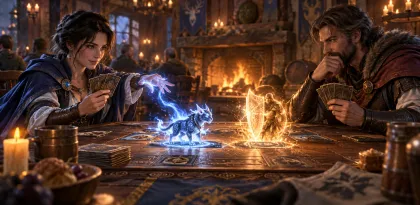

Hearthstone is Blizzard's free digital card game set in the Warcraft universe. You pick a class, spend mana crystals, summon minions, and sling spells until the other hero's health is gone. The official site still uses the line "deceptively simple, insanely fun." The Google Play listing for package com.blizzard.wtcg.hearthstone matches that pitch and then lists the modern mode pile: Standard, Wild, Casual, Battlegrounds, Tavern Brawl, and solo PvE.
Play flags in-app purchases that include random items. That is the pack. Cards come from packs, rewards, and crafting with dust. Purchases are optional on both the official site and the store description. Optional is not the same as pressure-free. This review treats constructed play as a resource problem and Battlegrounds as the mode that sidesteps your collection.
The Core Loop: Draw, Spend Mana, Trade, Face
A constructed match is a mana curve. You play cheap cards early, develop the board, and decide whether to trade minions or go face. Each class has a Hero Power that defines its default verb: a Mage pings, a Warrior armors, a Warlock pays life for cards. The board is public. The hidden information is the opponent's hand and the top of both decks.
The loop that improves your play:
- look at your mana and the enemy board before you click the first minion
- trade when a minion would die for free next turn
- save a removal spell for a card that actually ends the game
- use Hero Power when it is the best two-mana play, not as an afterthought
- review the loss. Hearthstone shows you the cards; it does not show you the missed sequence unless you look
Battlegrounds is a different loop. Eight players recruit minions in a tavern, then watch those boards fight. You are not carrying a 30-card deck into that lobby. The official site uses that fact as an on-ramp: you can jump in without a collection. Tavern Brawl is a weekly rule twist. Solo adventures are practice and quest fodder.
Presentation is still a selling point: voiced Warcraft heroes, readable boards, and a tavern tone. On mobile, that presentation shares the device with a connection that must hold through a long turn. Player reviews on the current listing often mention disconnects. That is not a ranking. It is a reason to prefer a stable network before a ranked game or a paid mode.
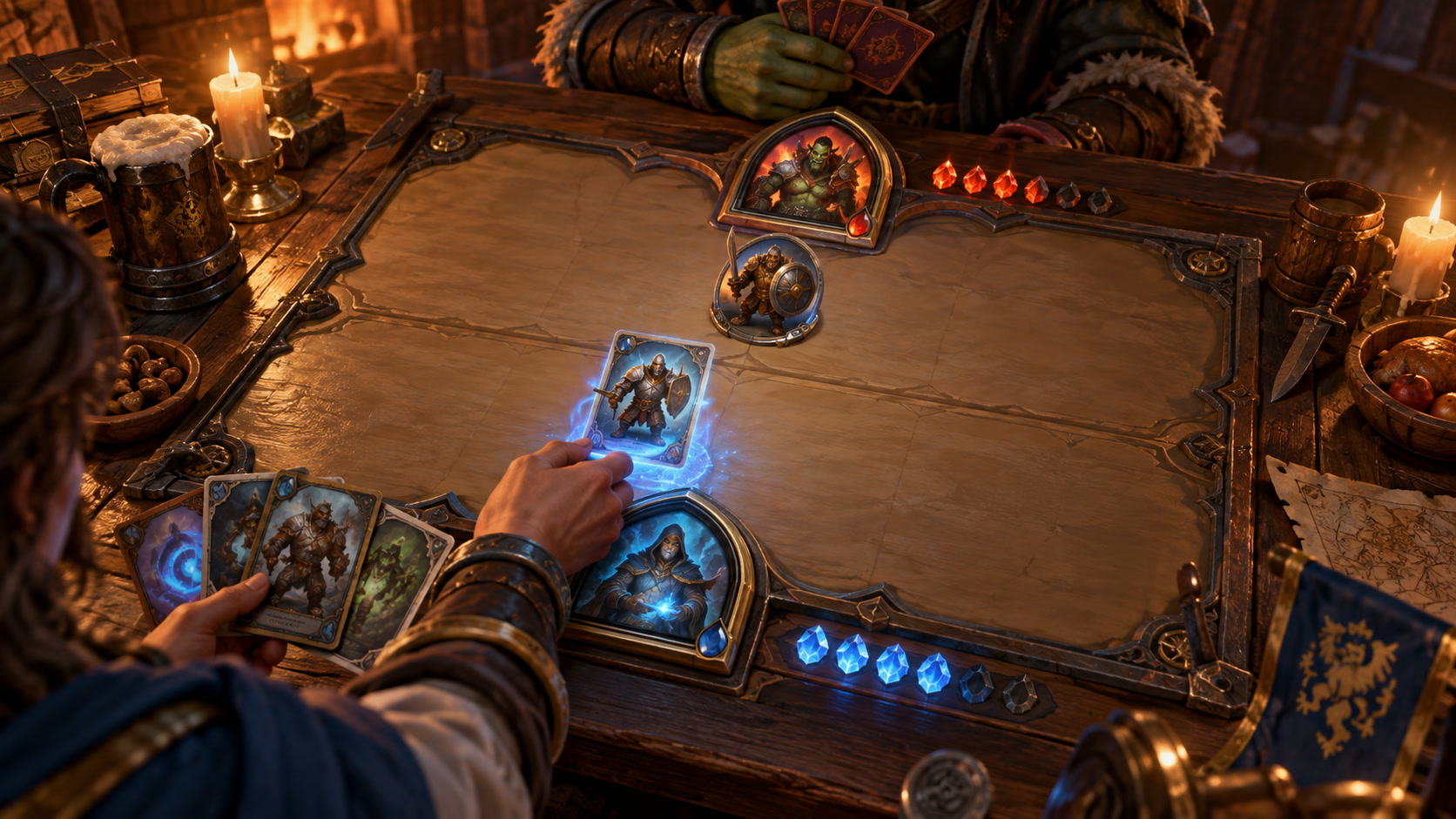
Editorial illustration: mana, trades, and the Hero Power are the match; the pack art is the lobby.
Systems: Classes, Formats, Dust, and Cross-Progress
Standard rotates recent sets. Wild keeps the larger history. Casual is a lower-stakes constructed queue. Battlegrounds is an auto-battler with its own heroes and seasons. The Play "What's new" text on the scrape used for this review mentioned a Battlegrounds season, event cards, and Heroic Tavern Brawl. Those names move. The format choice should not: pick one mode for a sitting.
Dust is the constructed safety valve. You can disenchant cards and craft others. That makes a bad pack less final than in a physical CCG, and it also makes every extra copy a temptation to mill something you might want after the next balance change. Craft a deck you will play this month. Do not dust a collection into a screenshot.
A systems plan:
- start with a prebuilt deck or Battlegrounds if you have no collection
- pick one class and learn its Hero Power lines
- complete quests for gold before you look at the shop
- craft only the missing cards for one deck
- use a Battle.net account so phone and PC progress can meet, as the official site describes
Cross-progression is a real product feature on the official site. Set the account up before you spend. A guest-like or mislinked login is how people lose a collection that took years to assemble.
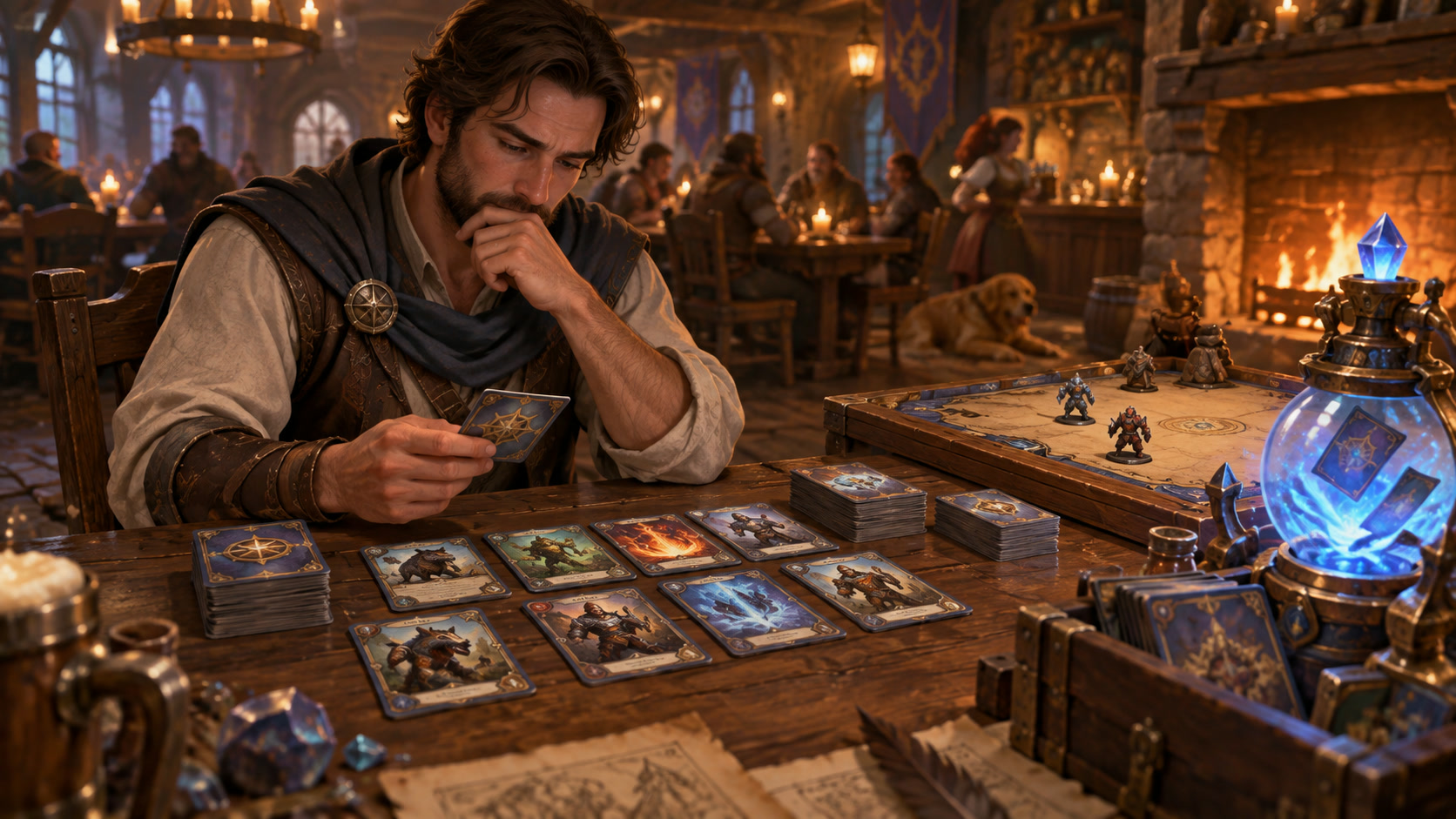
Editorial illustration: one format per sitting keeps the tavern from becoming a second job.
Spending Risk: Packs Are Random by Design
A pack is a random set of cards. Google Play's random-item label is accurate. You can also buy individual offers, passes, or cosmetics depending on the current shop. The official site says you can play and win without paying. That is possible, especially in Battlegrounds and with quest gold. It is slower in Standard if you chase every new set.
Neutral rules:
- read what a bundle actually contains. A pack is not a chosen legendary
- set a monthly cap before the shop animation starts
- prefer gold from quests when you want a set, and dust when you want a specific card
- do not buy packs to "make up" a loss streak. The match already ended
- enable Battle.net purchase protections and device authentication
This article will not invent pack prices, legendary rates, or pass tiers. Blizzard changes those with sets and regions. If a purchase matters, screenshot the offer.
Heroic or high-stakes brawls, when present, add another money-adjacent risk: you can pay or spend tickets to enter a mode where a disconnect still counts. If your mobile network is unreliable, skip those modes.
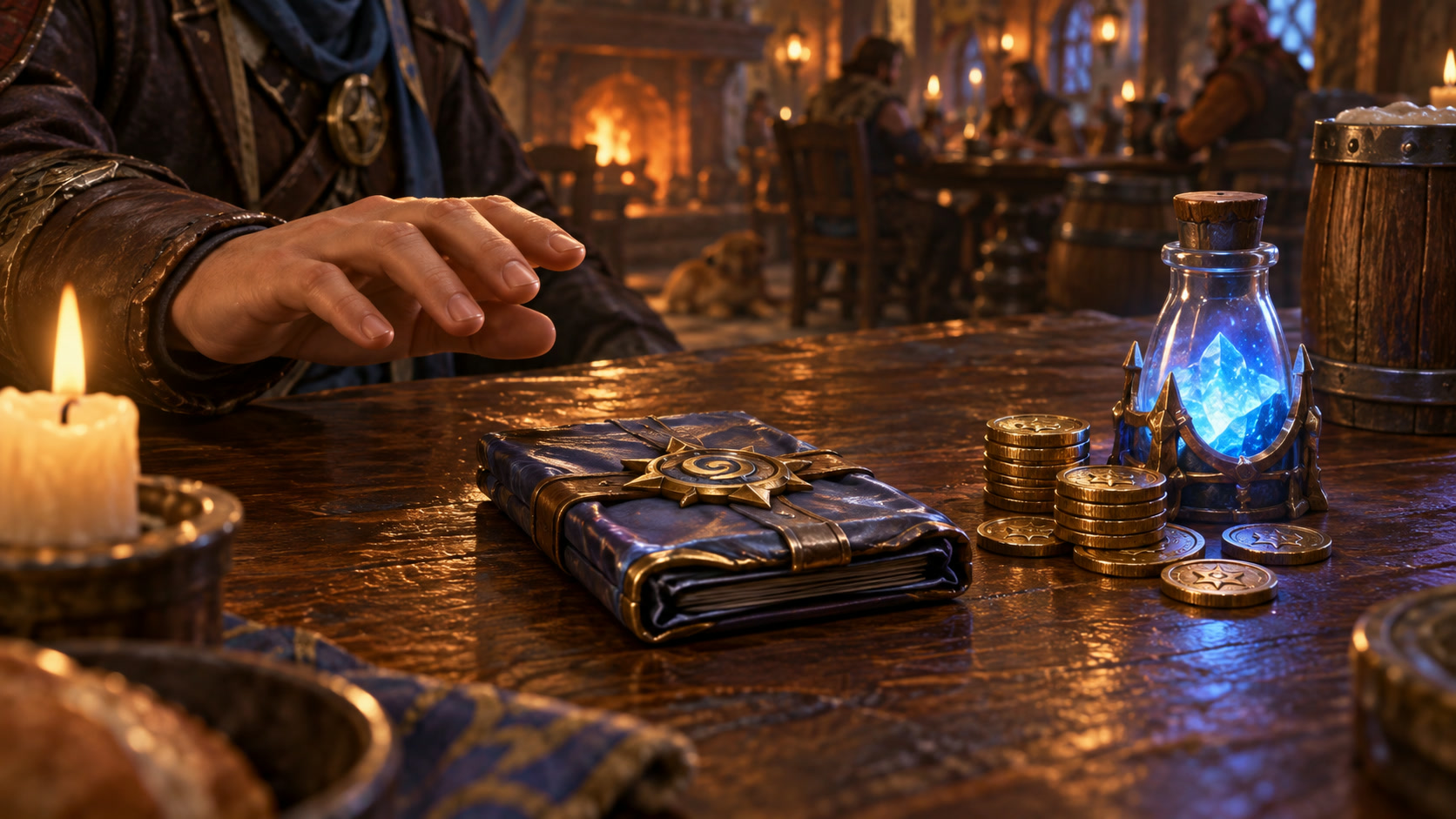
Editorial illustration: craft the card you need; do not open packs to soothe a lost game.
A Smart First Session
Make a Battle.net login. Play the tutorial, then either a prebuilt constructed deck or a Battlegrounds lobby. Ignore the shop. After three matches, write down one mistake that was a sequencing error rather than "I did not have the rare card."
Then stop. Hearthstone matches are short until they are not. A fatigue game or a full Battlegrounds lobby can swallow the evening.
Who Should Play Hearthstone?
Hearthstone is best for players who want readable digital card combat, Warcraft flavor, and a mode list that includes a collection-light auto-battler. It fits commuters who can hold a stable connection for one game.
It is a weaker fit if random packs feel bad, if you want a complete offline collection, or if your mobile network drops mid-turn. It is also a weaker fit if you wanted a rules-heavy table simulator rather than a streamlined Blizzard CCG.
Strengths and Weaknesses
Strengths
- Clear mana-and-board combat with strong class identity
- Battlegrounds and prebuilt decks lower the collection wall
- Dust crafting turns extras into planned cards
- Cross-progress through Battle.net on the official description
Weaknesses
- Packs are random and new sets refresh constructed demand
- Mobile disconnects can decide a match
- Format and mode pile can overwhelm a first week
- High-stakes modes punish unstable connections
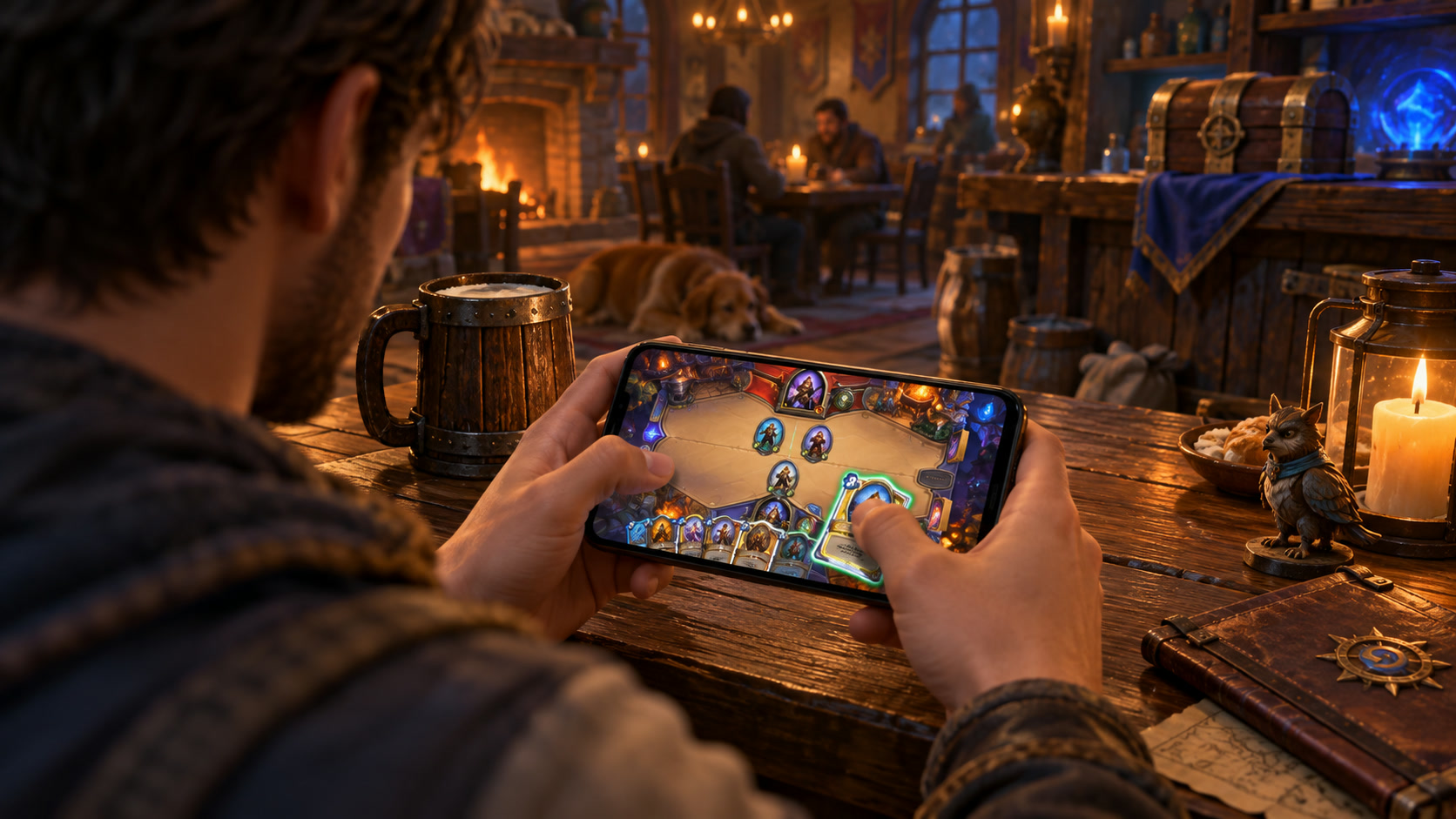
Editorial illustration: log into Battle.net, pick one queue, and leave the pack shop closed.
Final Verdict
Hearthstone remains a clean card game because every crystal and every trade is visible. The tavern now holds several games under one icon. Packs are the optional, random part. Battlegrounds and quest gold are the part that lets you play tonight.
Confirm package com.blizzard.wtcg.hearthstone. Use a real Battle.net account. Spend dust on a deck, not emotion on a pack. Played that way, the Warcraft CCG still earns a seat at the table.


.webp?x-oss-process=image/resize,w_80/format,webp)