
Lep’s World Review: Traditional Platforming in Short Mobile Stages



Lep’s World is a side-scrolling platformer about running, jumping, avoiding enemies, and searching for lost gold. Its official description advertises 160 levels, six world themes, nine enemy types, eight playable characters, achievements, leaderboards, multiplayer capability, and offline play. Google Play currently shows 100M+ downloads and a Everyone content rating. The listing was updated on Aug 17, 2026, so features and offers should still be checked in the installed version.
Popularity is a useful discovery signal, not proof of quality. This review therefore focuses on the decisions the game repeatedly asks you to make, the systems that support or distract from those decisions, and the practical limits around money, privacy, age, and hardware.
The Core Loop
Movement is direct: read the platform spacing, commit to a jump, collect useful items, avoid or defeat enemies, and reach the end. Hidden spaces reward checking suspicious gaps, but survival depends on maintaining forward awareness. A clover can increase health, yet extra health does not replace timing.
The first hour should be used to learn feedback rather than to maximize rewards. Notice what the game communicates clearly, what it hides behind menus, and which mistakes create knowledge for the next attempt. A healthy loop makes failure or delay informative; a weak loop merely asks for another tap, another ad, or another purchase.
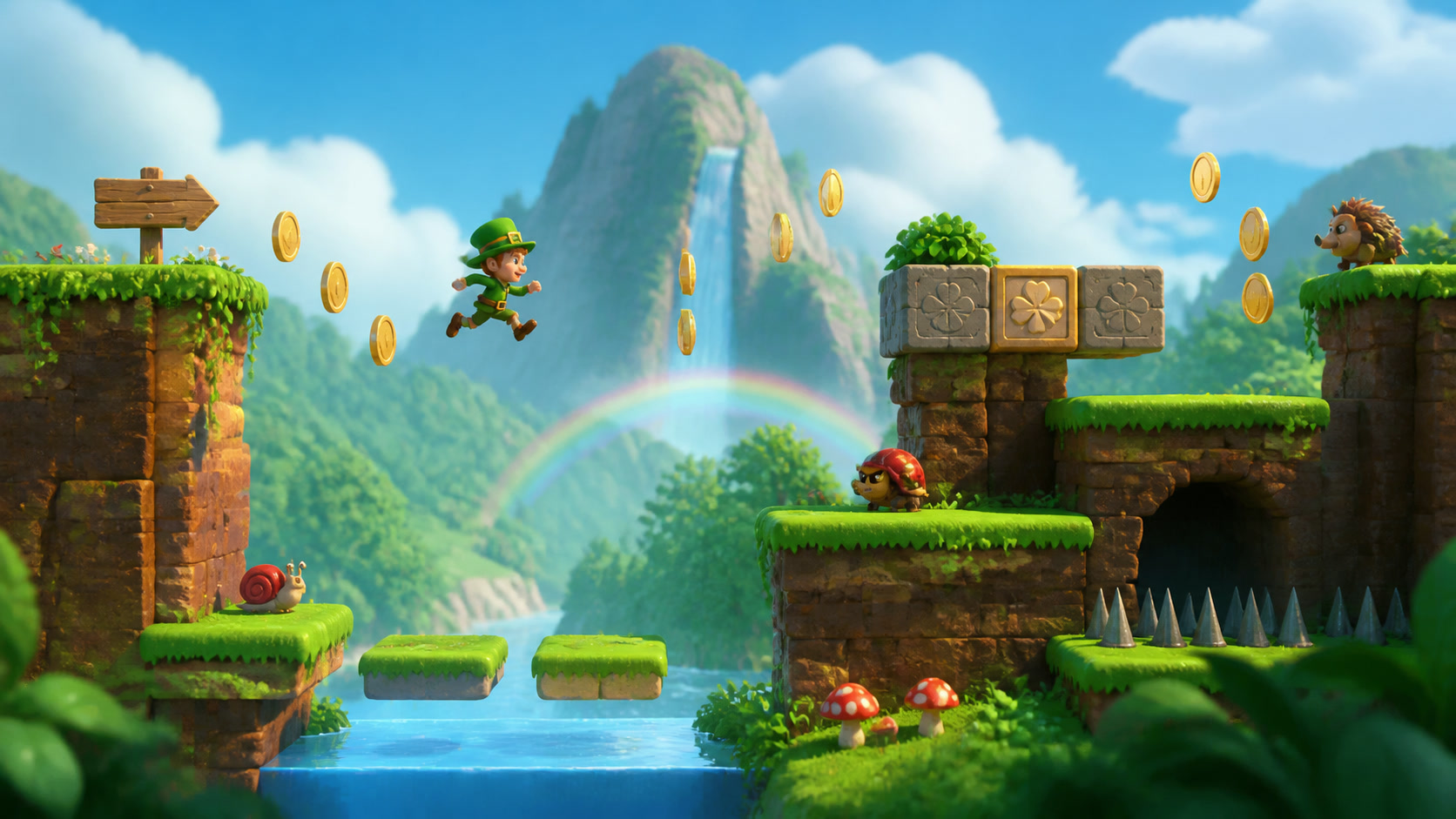
Editorial illustration: the loop is easiest to understand when every action has a visible consequence.
The Systems Around the Main Mechanic
World themes change visual context and obstacle combinations, while additional characters vary presentation. Achievements and leaderboards create optional goals beyond clearing stages. Offline support makes the main route suitable for travel, and multiplayer or connected comparisons add competition when a network is available.
These supporting systems matter because they shape the pace between active moments. The best ones create a meaningful decision before the next round. The weaker ones add collection, notifications, or currency without changing how the player thinks. New users should learn the central mechanic first and add optional systems only when their purpose is clear.
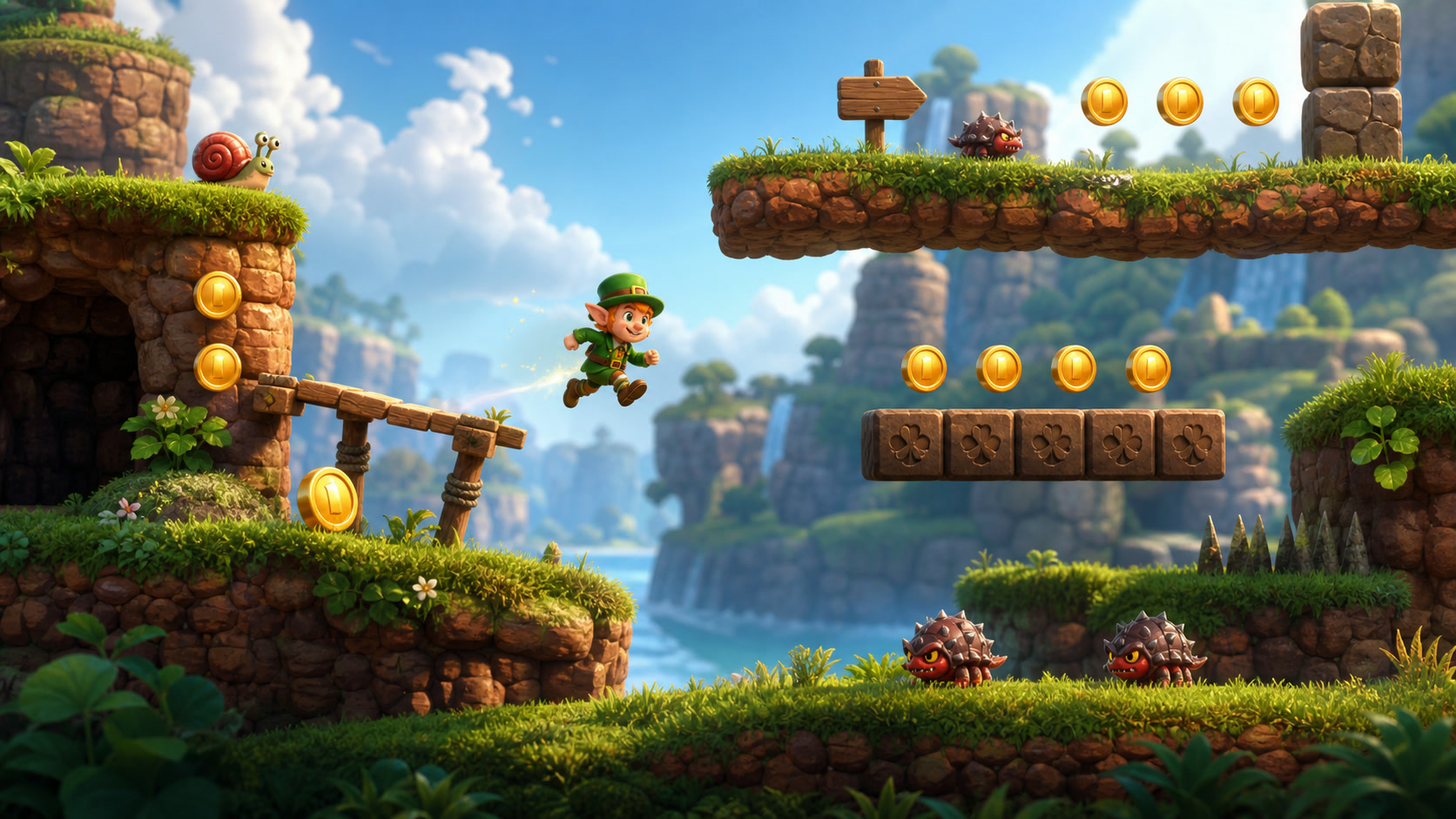
Editorial illustration: separate the central mechanic from the progression systems wrapped around it.
Progression: A Better Way to Improve
Treat each level as a sequence of safe landing points. Learn where the camera reveals danger late, avoid collecting an item that pulls the jump off line, and replay a stage only when the next attempt has a specific purpose. Completion matters more than clearing every collectible on the first visit.
A useful routine is to choose one measurable goal for a session, stop when attention falls, and review one mistake before starting again. This avoids confusing time spent with skill gained. Event calendars, streaks, or daily rewards may be convenient, but they should not decide whether a session continues after it stops being enjoyable.
Ads, Purchases, and Random Rewards
Google Play labels the game as containing ads and in-app purchases. The developer also notes optional paid items and recommends disabling purchases in device settings when they are not wanted. Apply that control before a child starts, not after an accidental purchase prompt appears.
Store labels describe the current distribution page, not every screen a player may see after a future update. Before paying, confirm the exact item, currency, renewal rule, refund route, and whether the benefit survives account loss or a service shutdown. Randomized rewards deserve a lower budget than direct purchases because the desired result is not guaranteed.
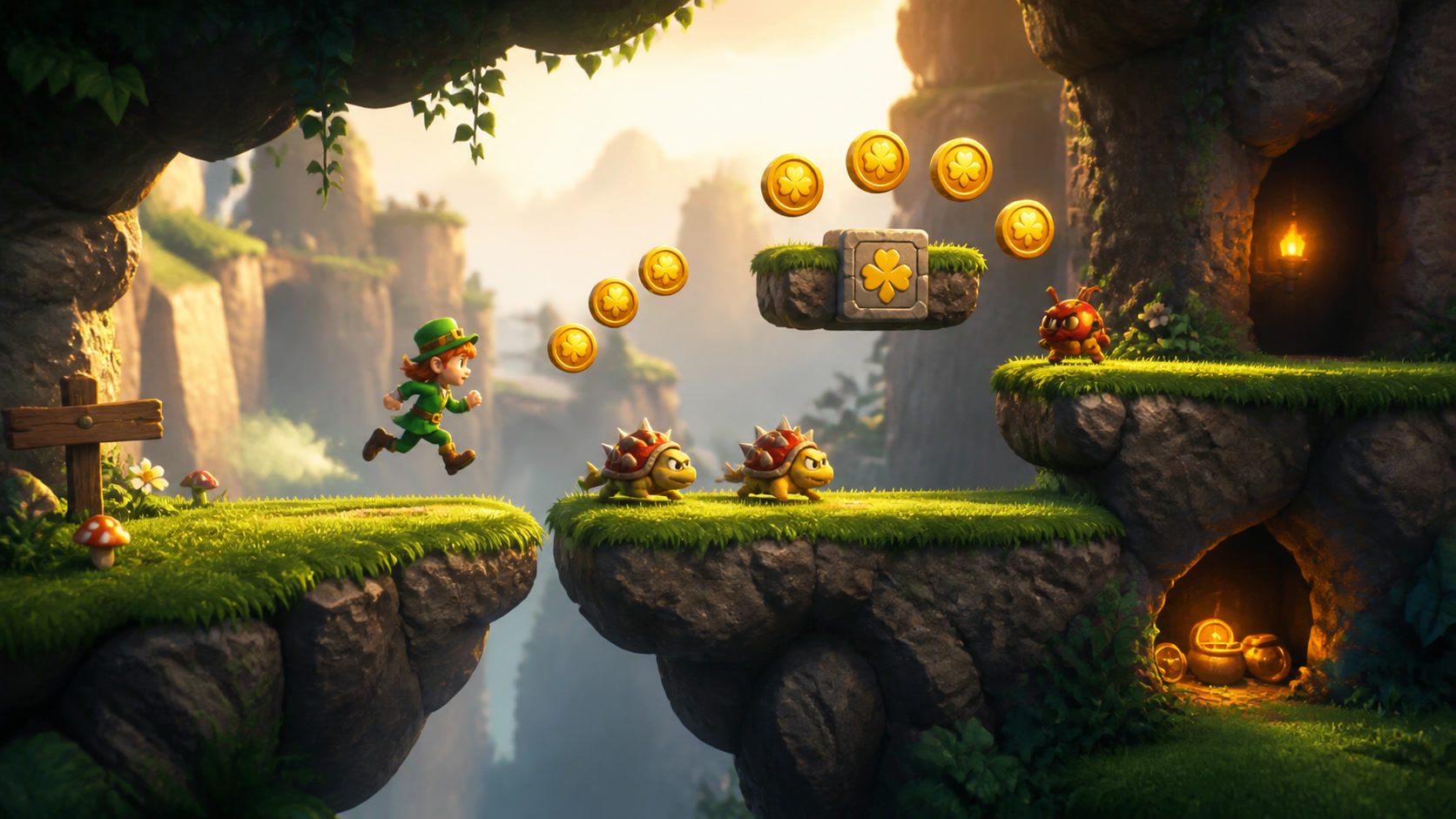
Editorial illustration: enjoyment improves when money, time, and device constraints are decided in advance.
Device and Performance Expectations
The game’s offline classification is a practical advantage, but some connected features still require service access. Test controls on the target phone because screen size and touch sampling affect jump confidence. Short breaks help when repeated missed jumps lead to harder presses and worse timing.
Compatibility on Google Play means the store allows installation; it does not promise identical frame rate, battery use, controller support, or network quality on every model. Keep the operating system and app current, use official downloads, and avoid third-party “performance” tools that request excessive permissions.
Privacy, Younger Players, and Healthy Sessions
The Everyone rating and cartoon presentation make the content approachable, but purchases, ads, account comparisons, and possible social connections remain separate concerns. Parents should review those systems and explain that a large download count does not make every external link appropriate.
Use a unique password when an account is required, enable platform purchase authentication, and do not share recovery codes. For a child’s device, review permissions and social features together with the child. A content rating addresses themes such as violence or language; it is not a complete judgment about spending design, chat, advertising, or privacy.
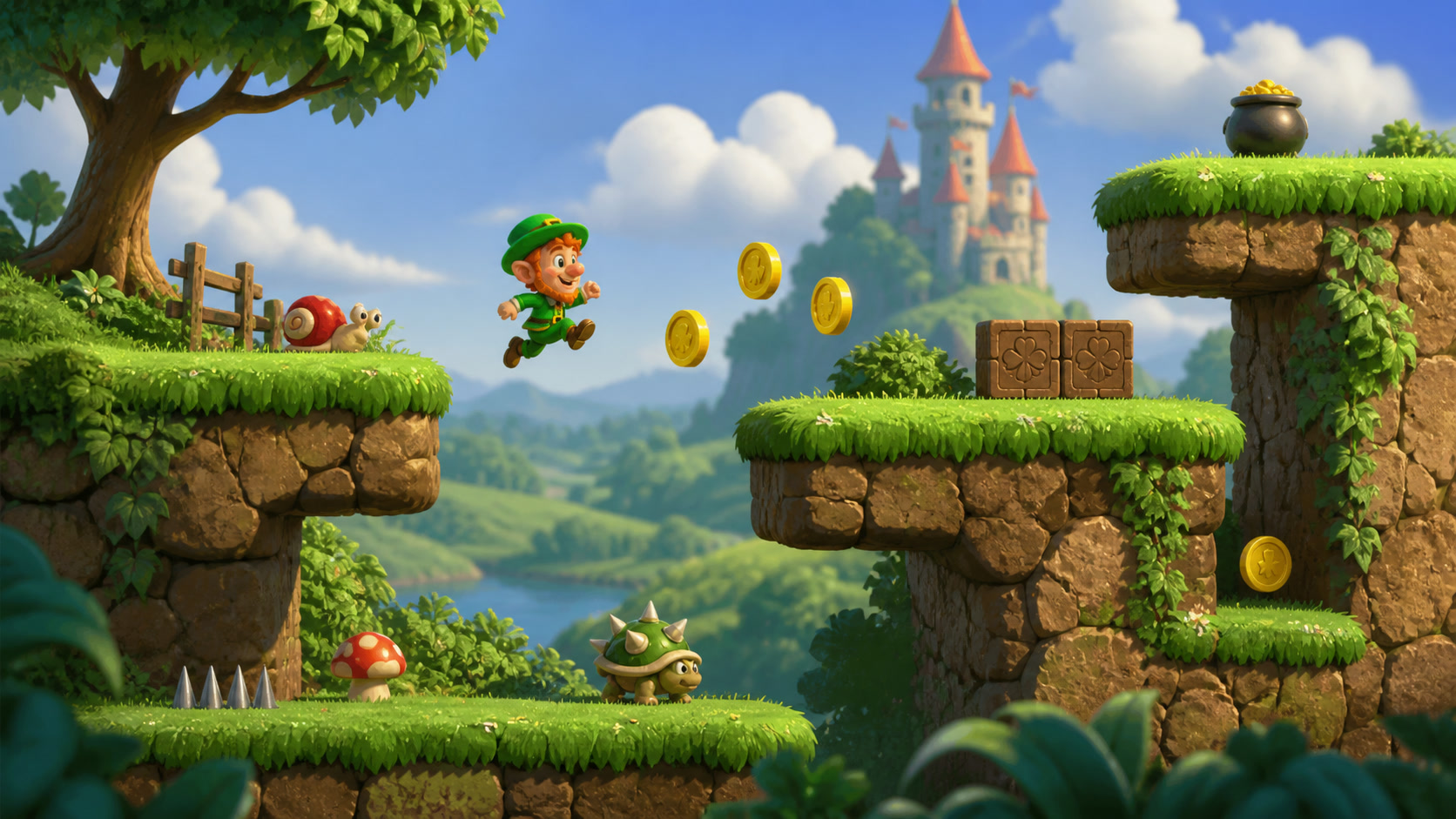
Editorial illustration: the best recommendation depends on fit, not popularity alone.
Who Is It For?
This is a strong fit for players who enjoy classic run-and-jump stages, collectibles, straightforward controls, offline sessions, and gradual difficulty. It is a weaker recommendation for players seeking modern physics experimentation, an open world, complex combat, or a completely ad-free premium campaign.
Strengths and Weaknesses
Strengths
- A large set of structured platforming levels
- Simple controls support quick sessions
- Offline main play is convenient
- World themes and characters add visual variety
Weaknesses
- Familiar genre ideas can feel derivative
- Ads can interrupt stage rhythm
- Touch controls demand adaptation
- Completionists may find repeated collection tiring
Final Verdict
Lep’s World offers a dependable mobile version of traditional platforming. It is not trying to reinvent jumping; it is trying to provide many short stages in which timing and route memory steadily improve. That works well offline, provided ads and purchases are controlled and expectations remain focused on familiar rather than experimental design.
The practical recommendation is to install from an official source, test the first session without spending, and decide in advance what would make the game worth keeping. A popular title earns attention; it still has to earn time, storage, money, and trust on the player’s own device.


.webp?x-oss-process=image/resize,w_80/format,webp)