
LIMBO on Android Review: A Quiet Journey That Demands Your Attention

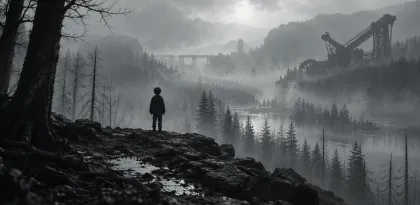

A fallen branch, a dark pool and an empty stretch of ground can all look harmless until you have to cross them. LIMBO places that uncertainty at the center of its appeal. You study a small piece of the landscape, make a decision, then find out whether you understood it. Players who enjoy that pause before an experiment have a stronger reason to try it than anyone seeking a stream of rewards.
Playdead describes a boy searching for his sister through a dark adventure of puzzles, sound and atmosphere. The Android store also carries a strong-violence warning. Its restrained presentation should not lead you to mistake it for a gentle children's game. Official Android listing
Look at the ground before looking for a solution
For a puzzle adventure built around uncertainty, observation deserves as much attention as movement. The useful question is what you can change in the space ahead. Separate movable objects from background decoration. Notice a rope, an edge or a gap, then decide what information one small action might reveal. A deliberate test gives you something to work with even if you fail.
That approach changes how to assess the difficulty. An obstacle can be hard because you have not understood its relationship to another object, or because you understand the relationship but have trouble performing the action. Those are different frustrations. Repeating the same attempt without knowing which problem you face can make a short sequence feel much longer than it is.
For a first session, give yourself permission to stop moving. Inspect the whole visible space before committing to a jump. This is an editorial recommendation about how to approach environmental puzzles, not a claim that every obstacle has one obvious clue. Some players will enjoy that uncertainty; others will regard it as a barrier between them and the next scene.
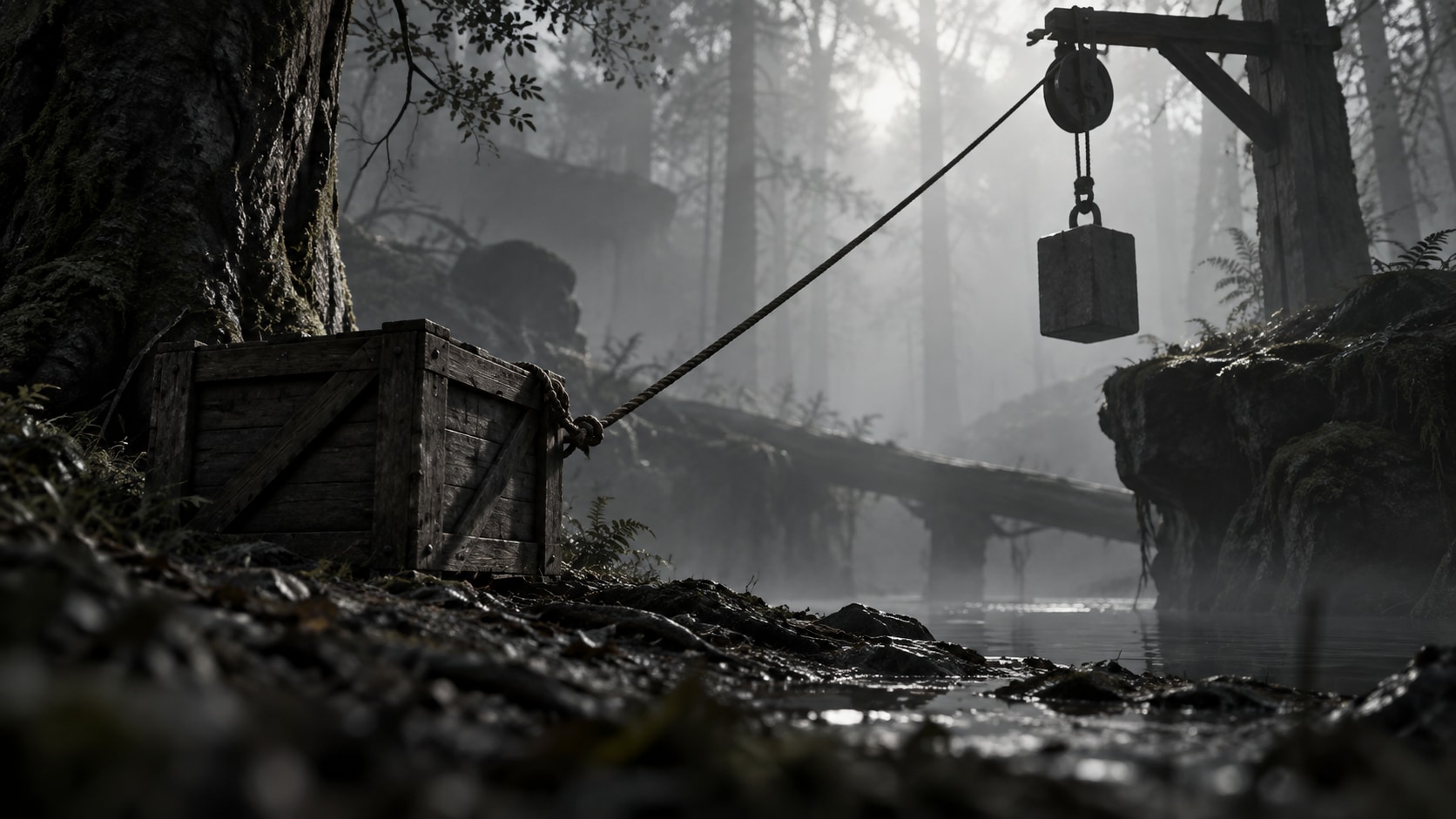
Concept illustration: inspect physical relationships before trying an action.
A good idea still needs a workable rhythm
Timing introduces a separate kind of commitment. You may understand the intended route and still mistime a movement. At that point, inventing a new theory after each failure can waste effort. Keep the plan stable for a few attempts and change one part of your execution. If that produces no useful progress, return to the theory instead of repeating out of habit.
This distinction matters on a phone. Screen size and your grip affect how much of the scene you can see while interacting. Before judging a difficult section, find a comfortable position and learn the available input method in a safe area. That small preparation cannot guarantee comfort on your device, but it makes your own assessment more reliable.
Do not buy the Android edition on the assumption that a familiar game must feel identical across hardware. This review includes no touch-latency measurements, controller test or device benchmark. The sensible buying question is whether you want to learn a puzzle-platform adventure on the screen you carry, with the attention that its movement demands.
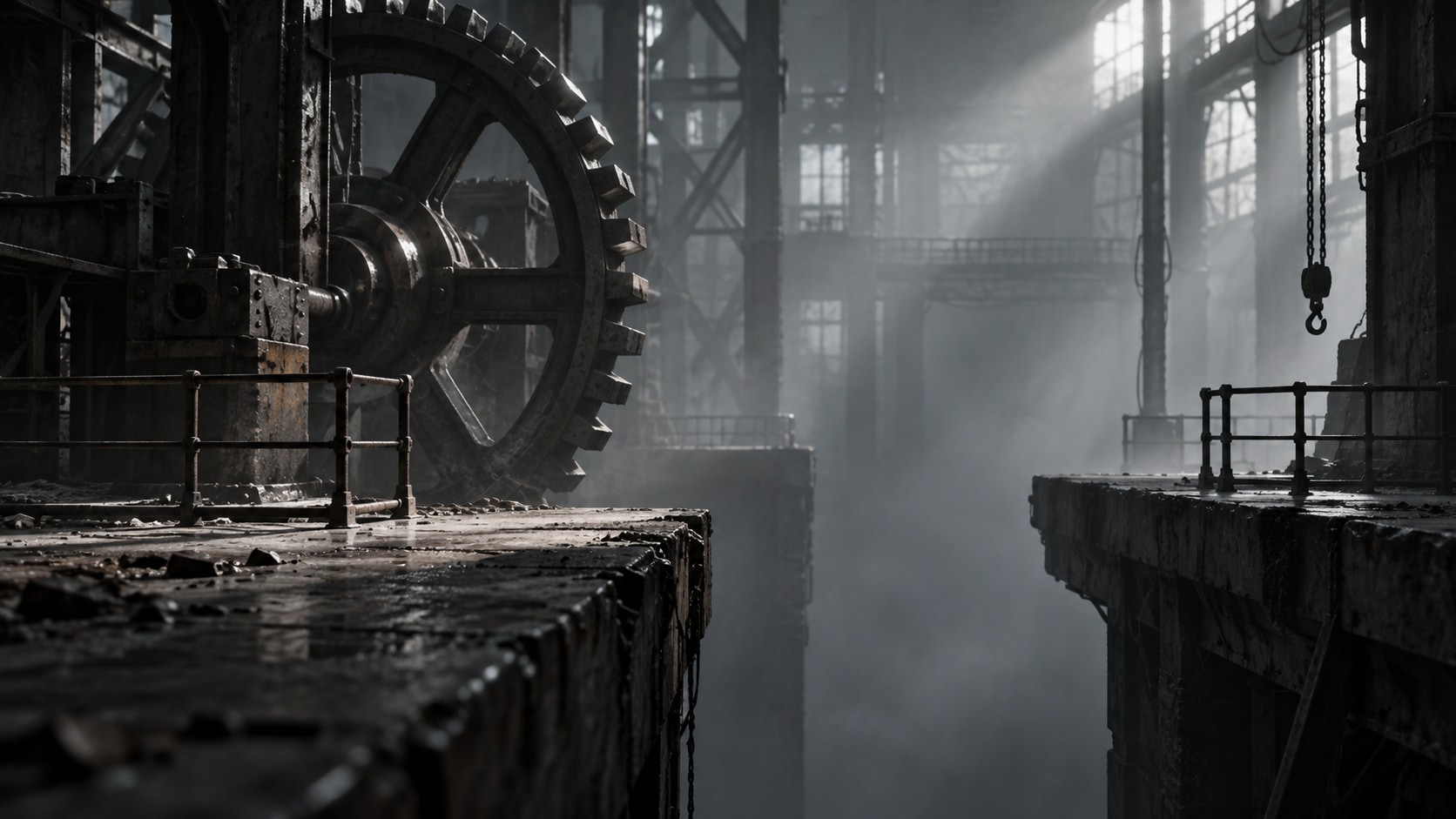
Concept illustration: execution and deduction can create different obstacles.
Silence gives the scenery room
Playdead's official presentation gives substantial weight to LIMBO's visual and audio atmosphere. The monochrome images on its game page communicate a world where distance and uncertainty do much of the work. The photographic illustrations here reinterpret that mood; they do not show the game's actual rendering. Playdead's LIMBO page
For a player, the practical implication is to choose a setting in which subtle details remain available. A dim scene becomes harder to judge under harsh reflections. Sound loses its effect if you have to compete with a loud room. Headphones at a comfortable volume may help you concentrate, but volume is not a substitute for a quiet place.
The same restraint places a limit on the audience. If you want constant dialogue to explain where you are and why you should care, an understated journey may leave you detached. You need some tolerance for unanswered questions. The appeal lies in spending time inside an uncertain place, with room to interpret what you encounter.
Spoiler-heavy videos can also change the experience before you start. A short official trailer is useful for deciding whether the tone suits you. A complete solution video may remove the very uncertainty that gives you a reason to examine the scene.

Concept illustration: atmosphere depends on small details and empty space.
Make a return visit count
A break is useful if you return with a different question. Instead of asking how to get past the obstacle, ask which part of your last explanation failed. Did you misread the distance? Did an object behave in a way you had not predicted? Did you change several actions at once and lose track of the result?
That habit gives frustration a boundary. You can finish a session after learning something, even if you have not reached a new area. It also helps you decide when a hint would improve the evening. Seek a nudge about the principle before taking a complete sequence of inputs, if you want to preserve the pleasure of discovery.
There is no need to turn the game into a test of personal worth. A player who dislikes repeated failure has identified a preference, not a deficiency. LIMBO makes more sense for someone who enjoys revising a small hypothesis than for someone who wants uninterrupted forward motion during spare minutes.
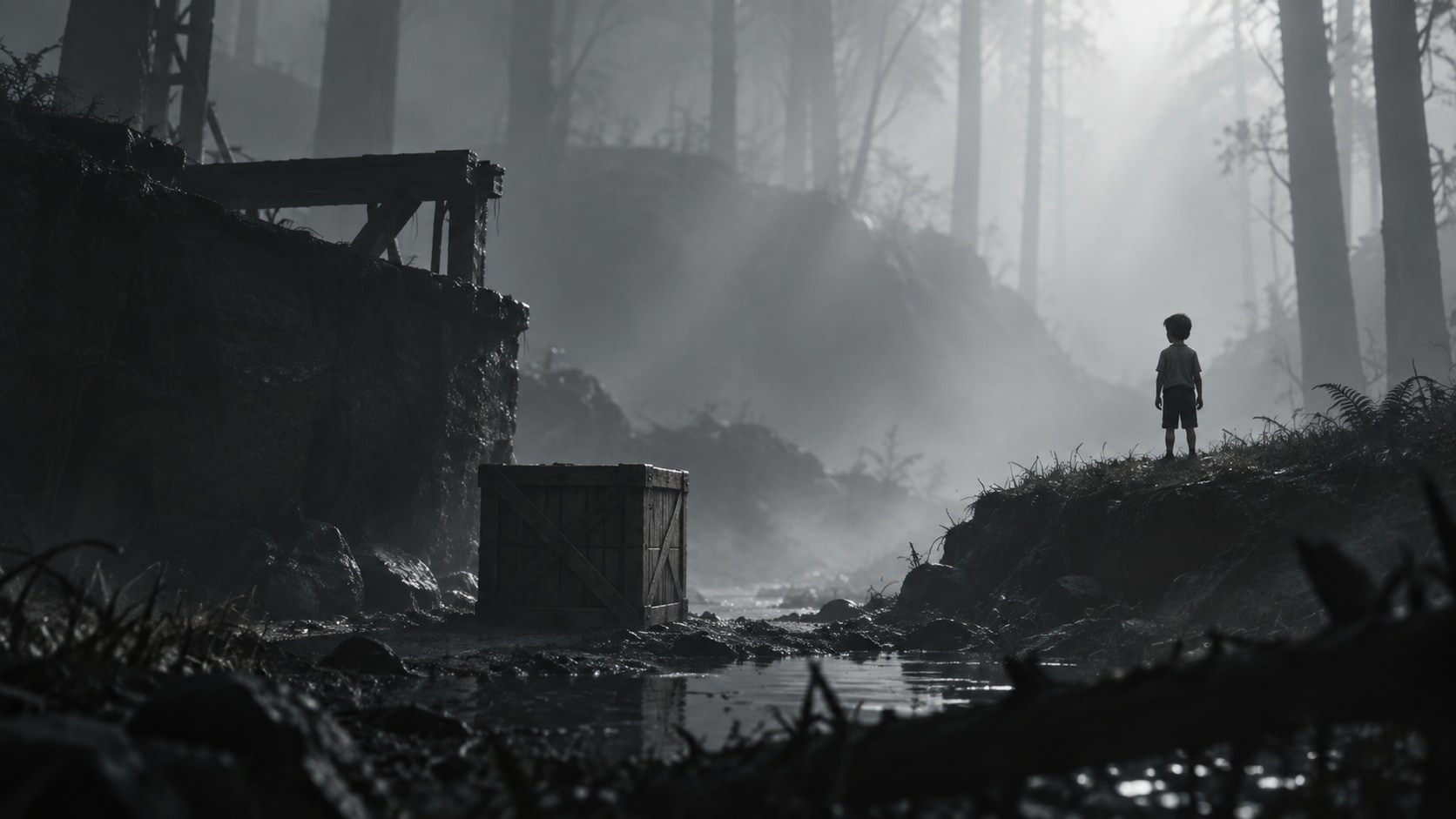
Concept illustration: return to a difficult space with a specific question.
Verdict
LIMBO is a strong candidate for players drawn to uneasy environmental puzzles and spare storytelling. Its Android appeal depends on whether that concentrated style fits your habits. Plan for attentive sessions, check the current store's device eligibility and content rating, and resist buying it on visual charm alone. The darker material and the possibility of repeated attempts deserve equal weight.
Editorial basis: official materials checked on September 27, 2026. This is source-based analysis, not a hands-on test. All accompanying images are AI-generated editorial interpretations, not official art or gameplay screenshots.


.webp?x-oss-process=image/resize,w_80/format,webp)