
Mech Arena Review: Compact Team Battles With Upgrade Pressure


Mech Arena is an online third-person shooter built around short team battles, customizable robots, and a large equipment catalog. The official listing advertises more than 25 mechs, more than 90 weapons, more than 35 maps, several PvP modes, custom matches, and account synchronization across platforms.
Google Play currently shows 50M+ downloads, a Everyone 10+ content rating, an update date of Jul 31, 2026. Store details can vary by region and should be rechecked in the installed listing.
Popularity is a discovery signal, not proof of quality. This review focuses on the decisions the game repeatedly asks the player to make, the systems that support or distract from those decisions, and the practical limits around money, privacy, age, and hardware.
The Core Loop
A match begins before the first shot: choose a mech and weapon pairing that fits the map and objective. During play, cover, firing lanes, ability timing, and control points matter more than simply moving toward the nearest enemy. Defeat then returns the player to hangar decisions and another team composition.
The first hour should be used to understand feedback rather than to maximize rewards. Notice which mistakes reveal a rule, which controls require calibration, and which systems merely ask for another tap. A strong mobile loop makes the next attempt more informed; a weak one replaces learning with waiting or spending.
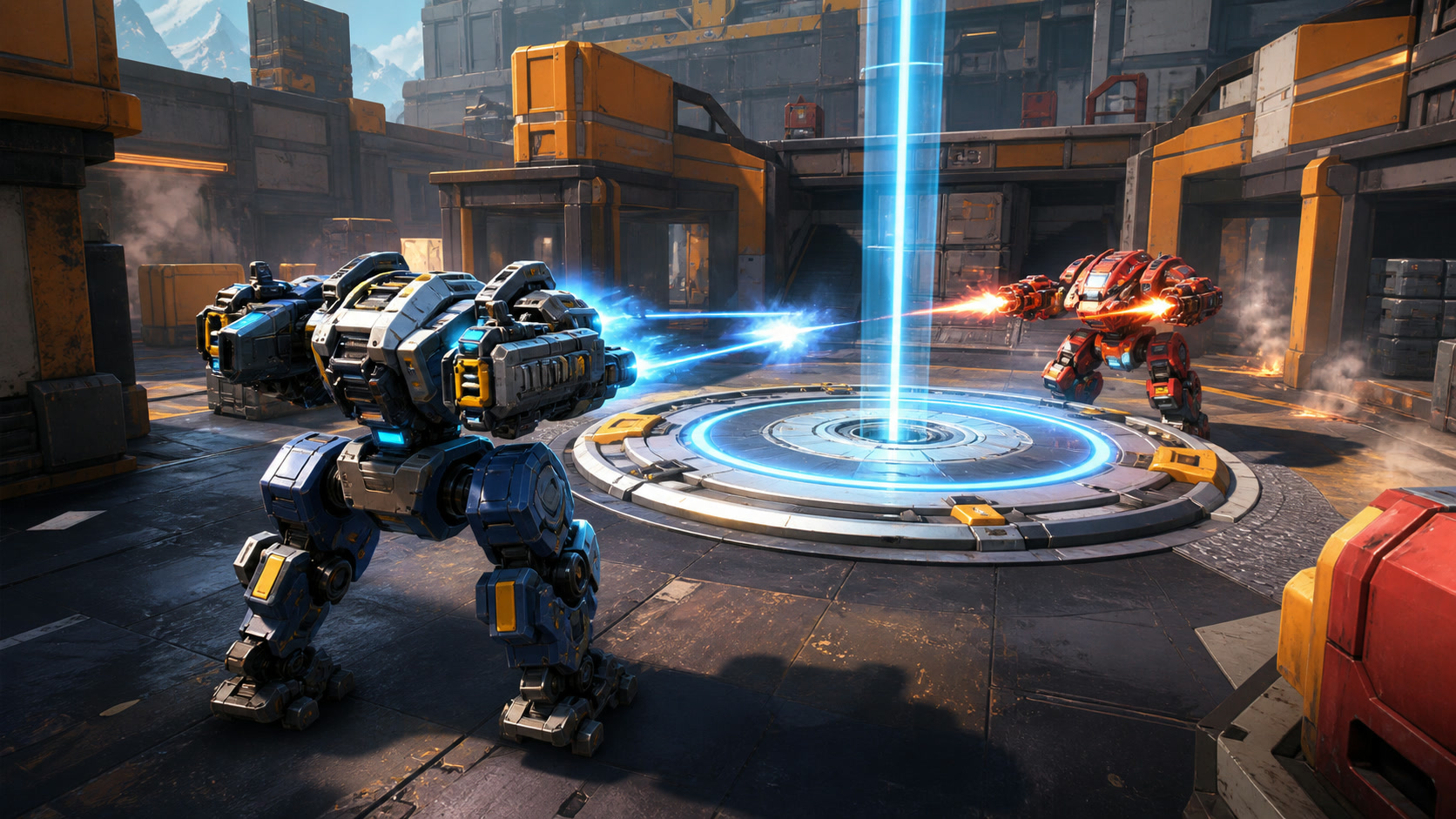
Editorial scene: two original combat mechs contesting a glowing control point inside a compact industrial arena
The Systems Around the Main Mechanic
Free-for-All, Control Point Clash, Deathmatch, custom matches, pilots, skins, weapons, and mech abilities create many combinations. Different ranges and movement profiles reward role clarity. Cross-platform play is convenient, but it also means control comfort, frame rate, and account progression affect the competitive experience.
Supporting systems are valuable only when they create a meaningful choice before the next round. New players should learn the central mechanic first, then add events, collections, or upgrades once their purpose is clear. This prevents a busy interface from being mistaken for strategic depth.
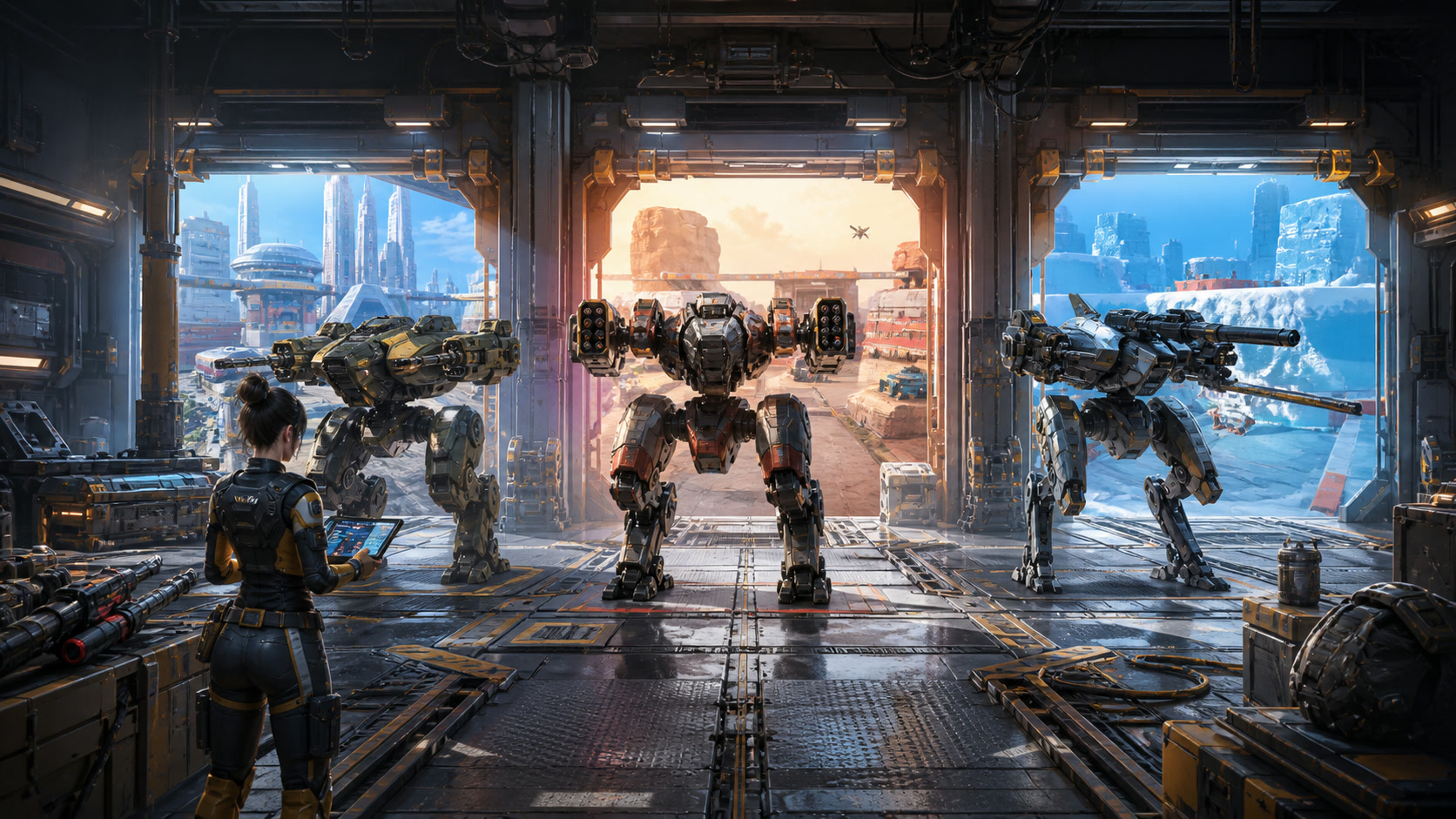
Editorial scene: a hangar where several original mechs carry distinct close, medium, and long-range weapon setups before different match portals
Progression: A Better Way to Improve
Develop two complementary builds rather than upgrading every new mech. One should hold or contest space; the other should answer a different range or map shape. Learn spawn routes and control points before buying power. A match replayed mentally often reveals a positioning mistake that a stronger weapon would not fix.
Choose one measurable session goal, stop when attention drops, and review one decision before starting again. Daily rewards and limited events may be convenient, but they should not determine whether play continues after it stops being enjoyable.
Ads, Purchases, and Random Rewards
Google Play discloses ads, in-app purchases, and random items. Because equipment affects combat, spending can feel closer to performance pressure than pure cosmetics. Check drop probabilities, upgrade currencies, event deadlines, and guaranteed paths. Never buy immediately after facing a visibly stronger opponent.
The current store page includes a random-item disclosure. Random rewards should receive a stricter budget than direct purchases because the desired result is not guaranteed. Check probabilities, guarantees, duplicate handling, event deadlines, and refund rules before using paid currency.
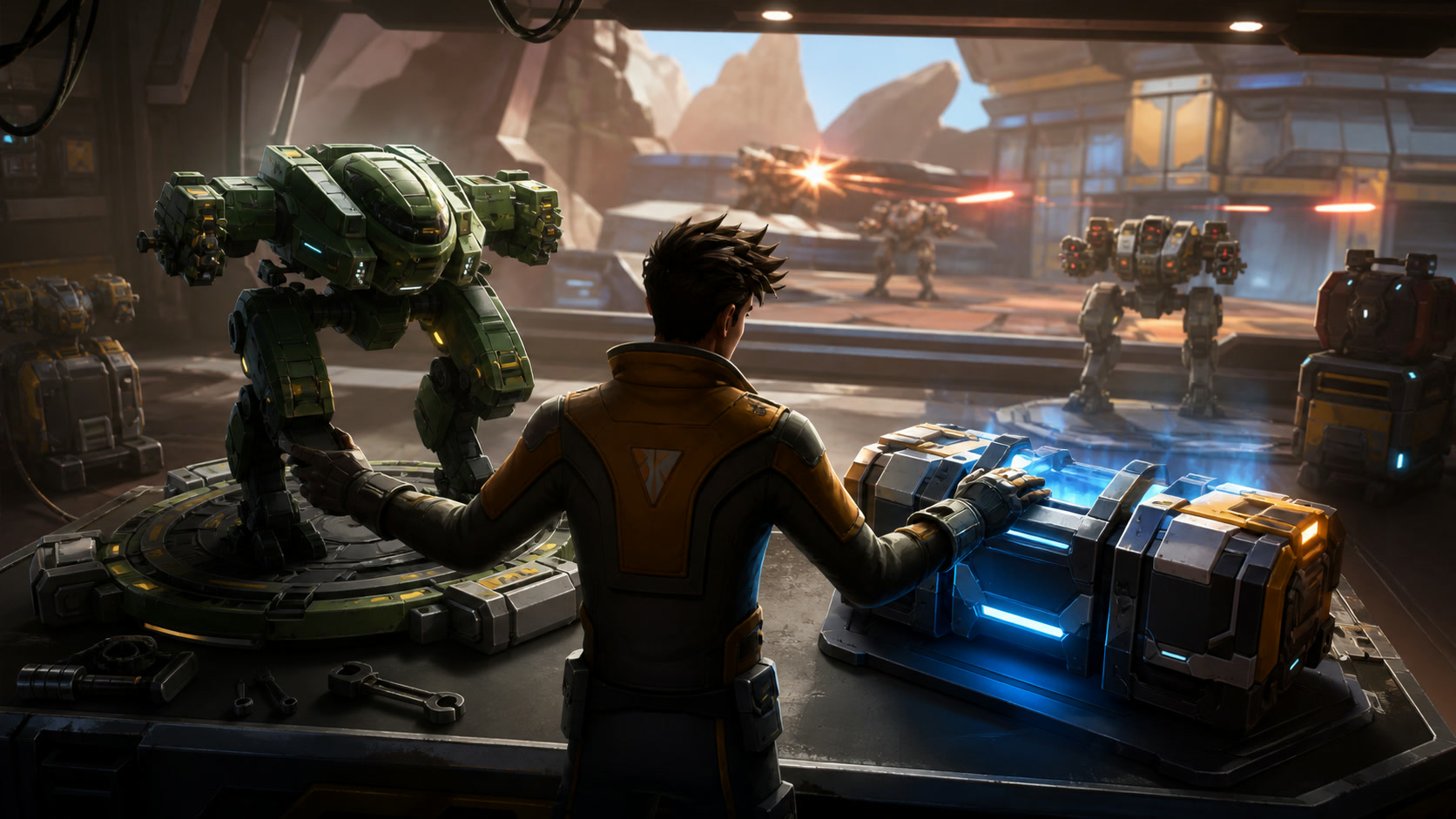
Editorial scene: a pilot selecting between upgrading a proven support mech and opening a randomized equipment crate
Device and Performance Expectations
Stable frame rate and touch response are competitive requirements. Lower effects before increasing aim sensitivity, use reliable Wi-Fi, and keep the phone cool during repeated matches. Cross-platform synchronization is valuable only when the account is securely linked and recovery information is protected.
Store compatibility allows installation; it does not guarantee identical frame rate, battery use, touch latency, controller support, or network stability on every model. Use official downloads, keep the operating system current, and avoid third-party performance tools that request excessive permissions.
Privacy, Younger Players, and Healthy Sessions
The Everyone 10+ rating covers robot combat, but online competition introduces public names, social contact, and possible harassment. Use a non-identifying player name, limit voice or text contact where possible, and teach younger players how to mute, block, and report. Purchases should remain adult-controlled.
Use a unique password when an account is required, protect recovery information, and enable platform purchase authentication. A content rating addresses themes such as violence or language; it does not fully judge advertising, chat, privacy, random rewards, or pressure to return.
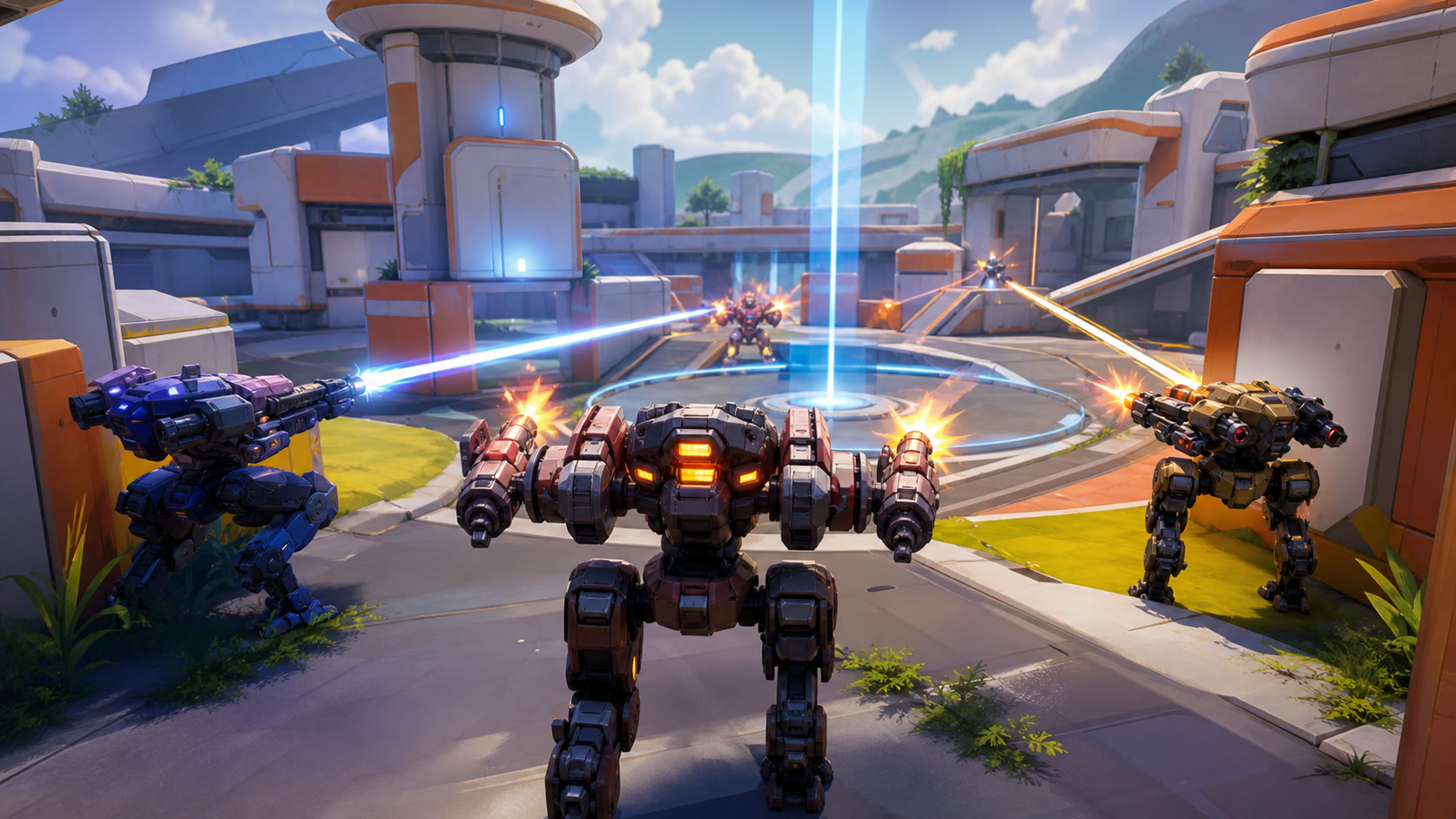
Editorial scene: a coordinated three-mech team holding lanes across a bright objective map
Who Is It For?
This is a strong fit for players who enjoy compact objective shooters, robot build experimentation, team roles, quick matchmaking, and long-term equipment progression. It is a weaker recommendation for players seeking offline play, equalized competitive loadouts, a solo story campaign, or progression without randomized and paid offers.
Strengths and Weaknesses
Strengths
- Short matches create immediate tactical feedback
- Mech and weapon combinations support distinct roles
- Multiple modes and maps prevent one fixed strategy
- Custom matches are useful for friends
Weaknesses
- Random items and upgrades create spending pressure
- Account power affects competitive expectations
- Online play depends on network quality
- A large economy can obscure the tactical core
Final Verdict
Mech Arena is most convincing when a coordinated team wins through map control and complementary builds. Its hangar depth can support that strategy, but it can also turn every loss into a shopping prompt. Build narrowly, review positioning first, and treat randomized progression as a budget risk.
The practical recommendation is to install from an official source, test the first session without spending, and decide in advance what would make the game worth keeping. A popular title earns attention; it still has to earn time, storage, money, and trust on the player’s own device.


.webp?x-oss-process=image/resize,w_80/format,webp)