
Papa Louie Pals Review: A Pocket Character and Story Studio

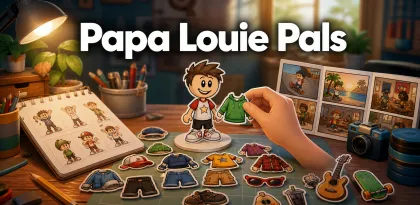

Papa Louie Pals is closer to a compact creativity tool than a conventional score-driven game. The official listing centers on designing original Pals, arranging scenes, adding props and speech bubbles, and saving the result as an image. Google Play currently shows 1M+ downloads and a Everyone content rating. The listing was updated on Jun 30, 2026, so features and offers should still be checked in the installed version.
Popularity is a useful discovery signal, not proof of quality. This review therefore focuses on the decisions the game repeatedly asks you to make, the systems that support or distract from those decisions, and the practical limits around money, privacy, age, and hardware.
The Core Loop
The main loop moves from character design to staging and revision. You shape a body, face, hairstyle, colors, and clothing; place the finished Pal in a background; adjust pose, scale, and expression; then add objects or dialogue before saving the scene. There is no timer forcing the process.
The first hour should be used to learn feedback rather than to maximize rewards. Notice what the game communicates clearly, what it hides behind menus, and which mistakes create knowledge for the next attempt. A healthy loop makes failure or delay informative; a weak loop merely asks for another tap, another ad, or another purchase.
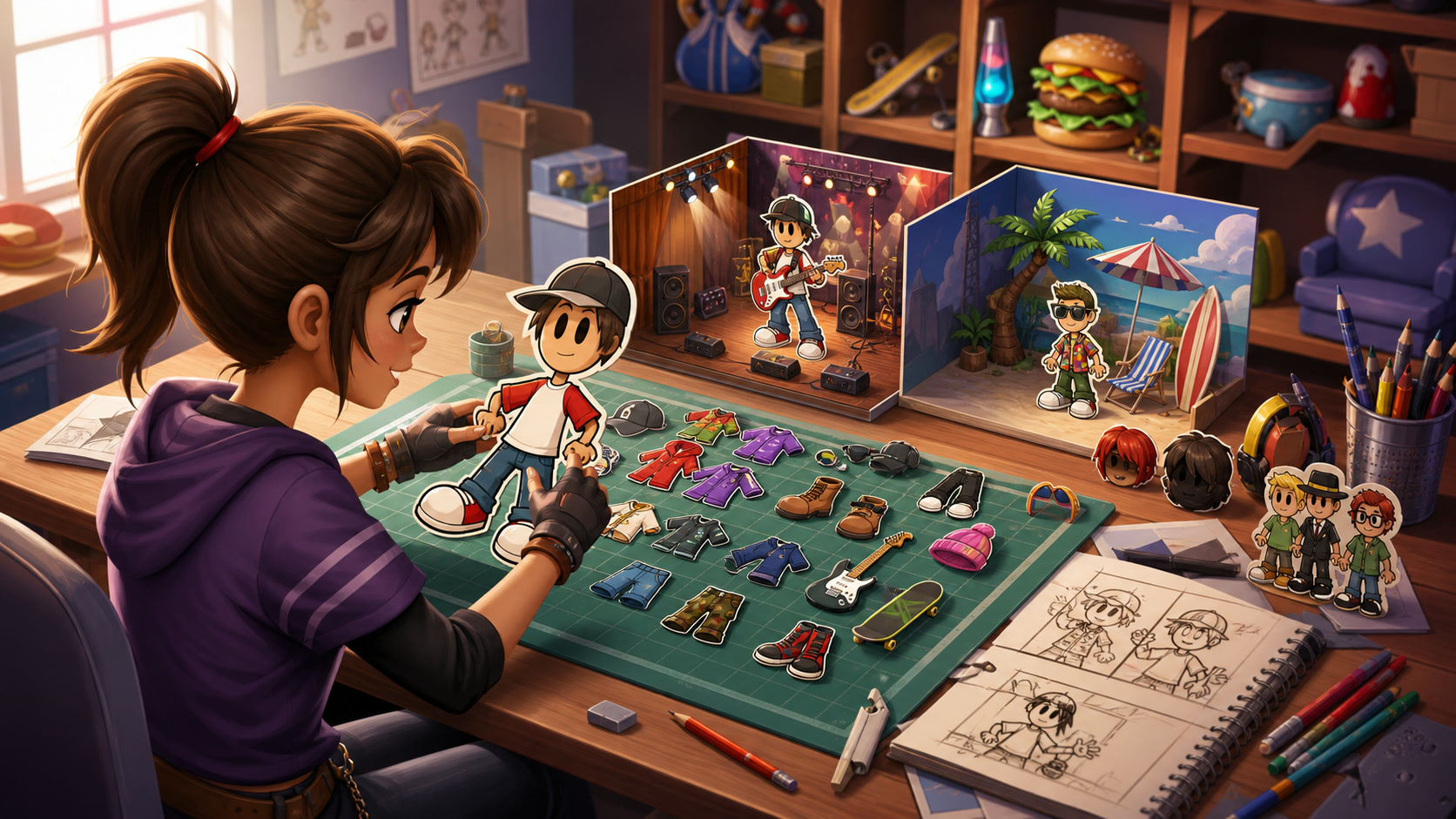
Editorial illustration: the loop is easiest to understand when every action has a visible consequence.
The Systems Around the Main Mechanic
Customization is unusually broad for a lightweight mobile creator. Hundreds of clothing pieces, hairstyles, colors, poses, backgrounds, handheld props, and caption tools support anything from a single reaction image to a multi-scene comic. Customer Packs add familiar Papa Louie customers plus themed scenery, props, and clothes.
These supporting systems matter because they shape the pace between active moments. The best ones create a meaningful decision before the next round. The weaker ones add collection, notifications, or currency without changing how the player thinks. New users should learn the central mechanic first and add optional systems only when their purpose is clear.
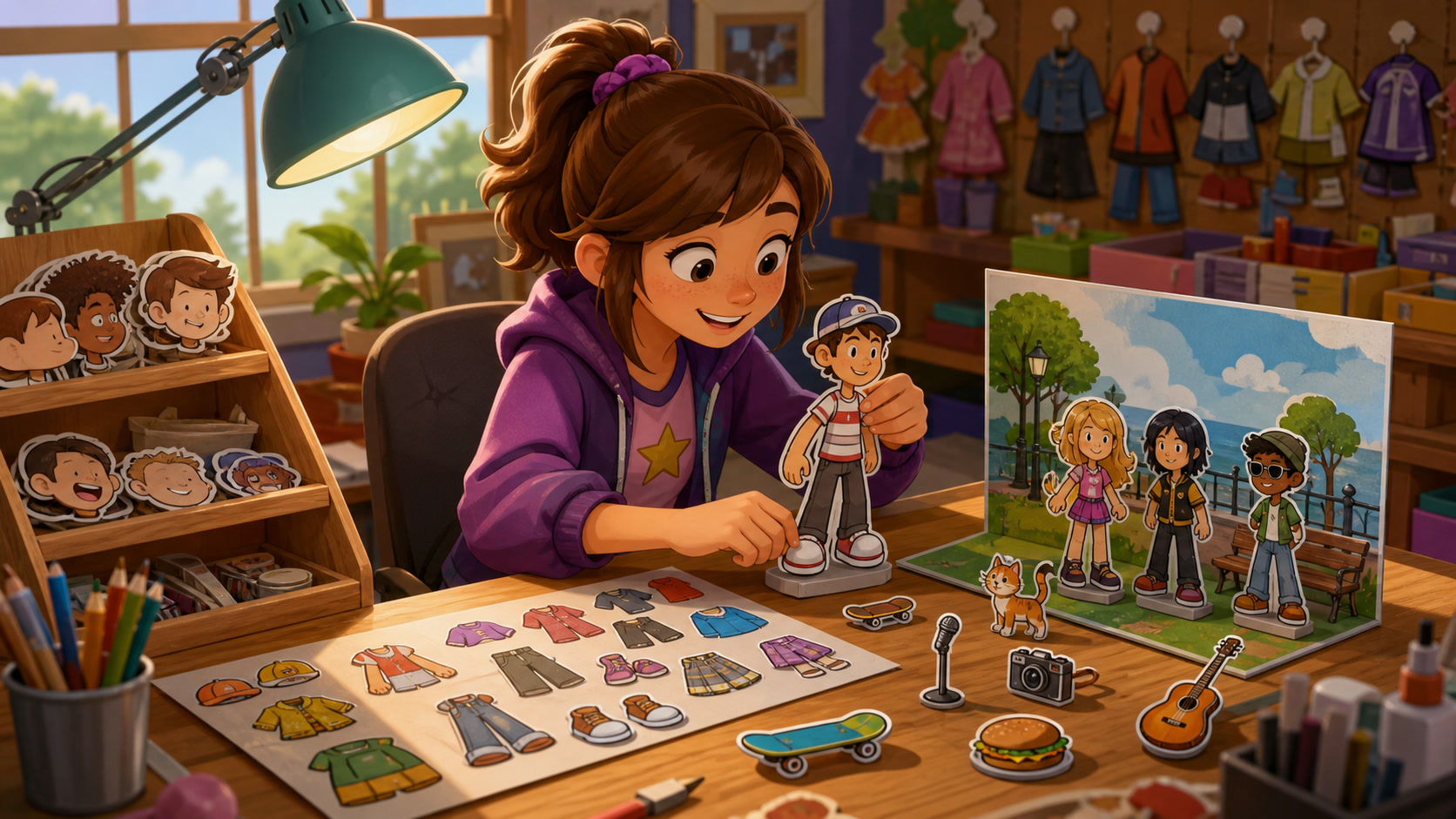
Editorial illustration: separate the central mechanic from the progression systems wrapped around it.
Progression: A Better Way to Improve
Progress is self-directed rather than numerical. A better goal is to build a reusable cast, establish a consistent color palette, and save alternate expressions before beginning a longer story. The value comes from iteration and reuse, not from unlocking stronger statistics.
A useful routine is to choose one measurable goal for a session, stop when attention falls, and review one mistake before starting again. This avoids confusing time spent with skill gained. Event calendars, streaks, or daily rewards may be convenient, but they should not decide whether a session continues after it stops being enjoyable.
Ads, Purchases, and Random Rewards
Google Play labels the app as containing ads and in-app purchases. The optional Customer Packs expand the creative library, but the base editor remains usable without buying every theme. Review a pack by the backgrounds and props you will actually use instead of treating the catalog as a collection checklist.
Store labels describe the current distribution page, not every screen a player may see after a future update. Before paying, confirm the exact item, currency, renewal rule, refund route, and whether the benefit survives account loss or a service shutdown. Randomized rewards deserve a lower budget than direct purchases because the desired result is not guaranteed.
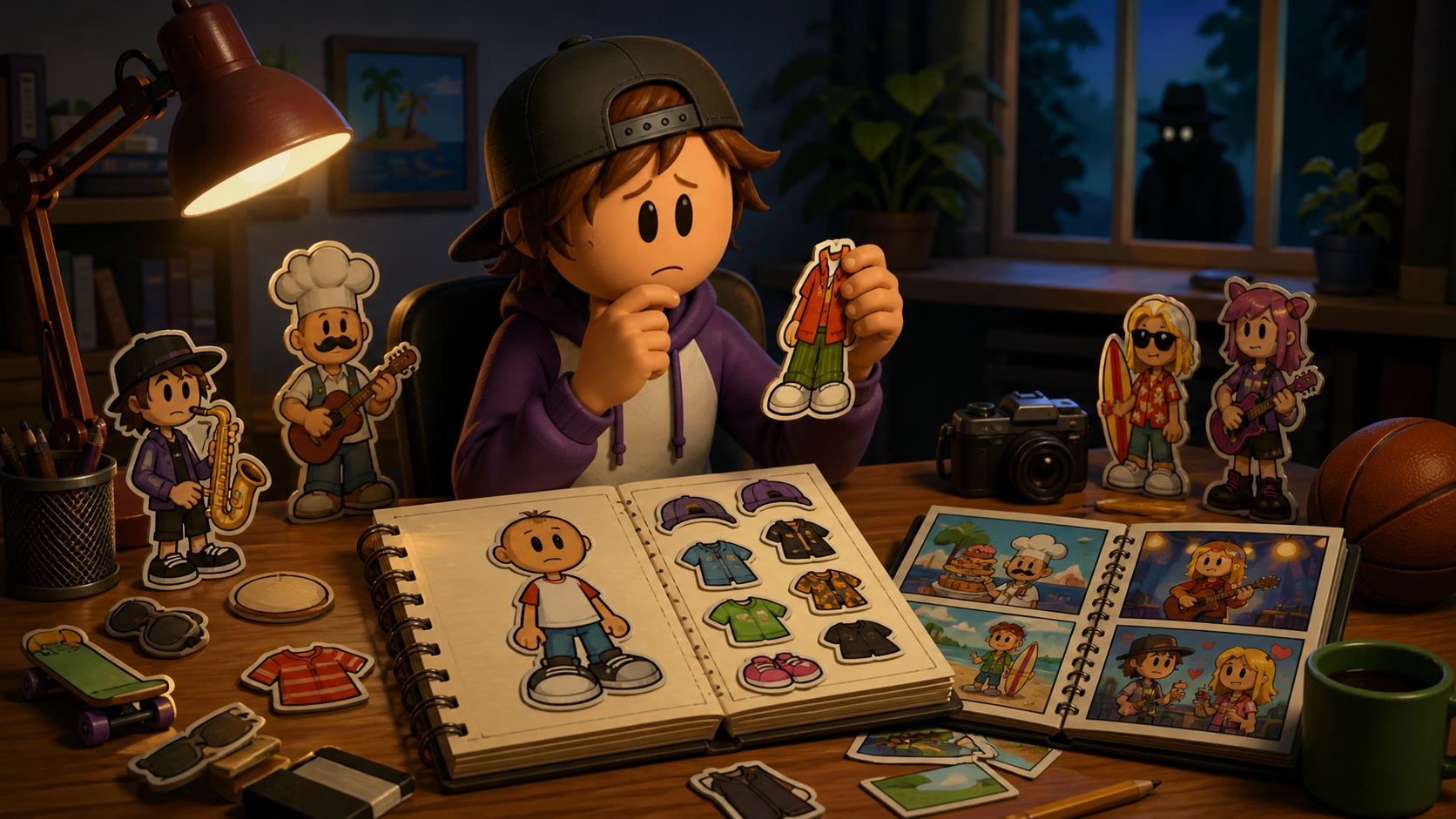
Editorial illustration: enjoyment improves when money, time, and device constraints are decided in advance.
Device and Performance Expectations
The editor is not presented as a high-end 3D game, but large scene libraries and repeated image exports still consume storage. Keep free space available, test the save function early, and confirm that exported images appear where expected before investing time in a long sequence.
Compatibility on Google Play means the store allows installation; it does not promise identical frame rate, battery use, controller support, or network quality on every model. Keep the operating system and app current, use official downloads, and avoid third-party “performance” tools that request excessive permissions.
Privacy, Younger Players, and Healthy Sessions
The app can create captions and export images, so the important boundary begins after the scene leaves the editor. Young creators should avoid putting names, school details, locations, or private jokes that identify another person into shareable images. The Everyone rating describes content, not privacy supervision.
Use a unique password when an account is required, enable platform purchase authentication, and do not share recovery codes. For a child’s device, review permissions and social features together with the child. A content rating addresses themes such as violence or language; it is not a complete judgment about spending design, chat, advertising, or privacy.
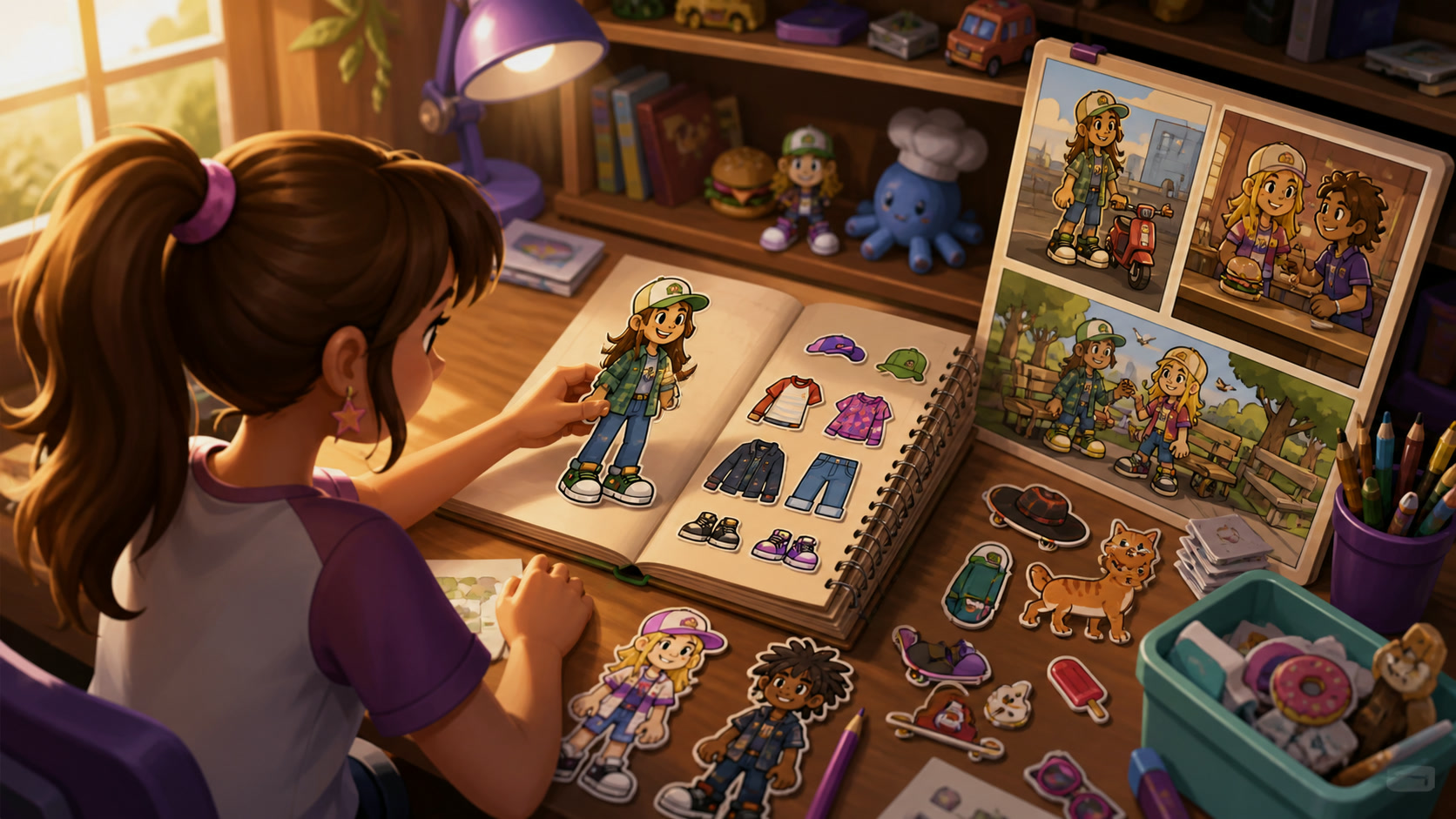
Editorial illustration: the best recommendation depends on fit, not popularity alone.
Who Is It For?
This is a strong fit for creative players who enjoy dress-up tools, comic panels, character design, fan-made scenes, and open-ended play without failure states. It is a weaker recommendation for players looking for combat, competitive progression, a guided campaign, or rewards that define what to do next.
Strengths and Weaknesses
Strengths
- Deep character and outfit customization
- Flexible scene, pose, prop, and dialogue tools
- Saved characters make multi-panel stories practical
- A calm format with no reflex requirement
Weaknesses
- Very little conventional game progression
- Optional packs fragment some themed content
- Exported scenes require careful privacy choices
- Complex scenes can become visually cluttered
Final Verdict
Papa Louie Pals succeeds when treated as a portable stage. It gives patient creators enough control to establish a cast and tell visual stories without learning illustration software. It is less convincing as a traditional game, but that is an honest trade: imagination supplies the objectives.
The practical recommendation is to install from an official source, test the first session without spending, and decide in advance what would make the game worth keeping. A popular title earns attention; it still has to earn time, storage, money, and trust on the player’s own device.


.webp?x-oss-process=image/resize,w_80/format,webp)