
PvZ 3 Review: A Retired Soft Launch and the Lane-Defense Ideas It Left Behind



PvZ 3 is an awkward name to research because EA has used it across several rounds of development. This article concerns the older Android package com.ea.gp.pvz3 recorded in APKHub. It does not describe a newly verified release, an active event schedule, or a playable current service.
EA's community team preserved the original soft-launch withdrawal announcement: that version would no longer be available after November 18, 2020. On October 23, 2026, the US Google Play URL for this exact package returned Not Found. EA also withdrew a later PvZ 3 soft launch in 2024 for further work. Those are separate announcements, and neither establishes the availability or features of a later game that shares the title.
The useful review here is a retrospective. The catalog describes a lane-defense game surrounded by plant progression and social systems. Its design questions remain interesting even though that description cannot serve as a current installation guide. All four images below are conceptual editorial illustrations, not screenshots or evidence of a running build.
Lane Defense Still Starts With Coverage
The basic appeal of Plants vs. Zombies is readable pressure. An enemy advances along a lane, a defender occupies a position, and the player decides where to commit the next resource. You can understand a failure without reading a damage spreadsheet: one row remained exposed, a blocker fell, or an attacker arrived too late.
For a retrospective, that clarity matters more than a list of currencies. A defense game earns another attempt when the player can explain what went wrong. If a loss only suggests that an account needs more upgrades, the next attempt teaches less about the board.
Separate those two kinds of failure when comparing versions of the series. Placement failure asks for a different arrangement. Progression failure asks for more account resources. A game can use both, but players need to know which one they are trying to solve before they spend time repeating a stage.
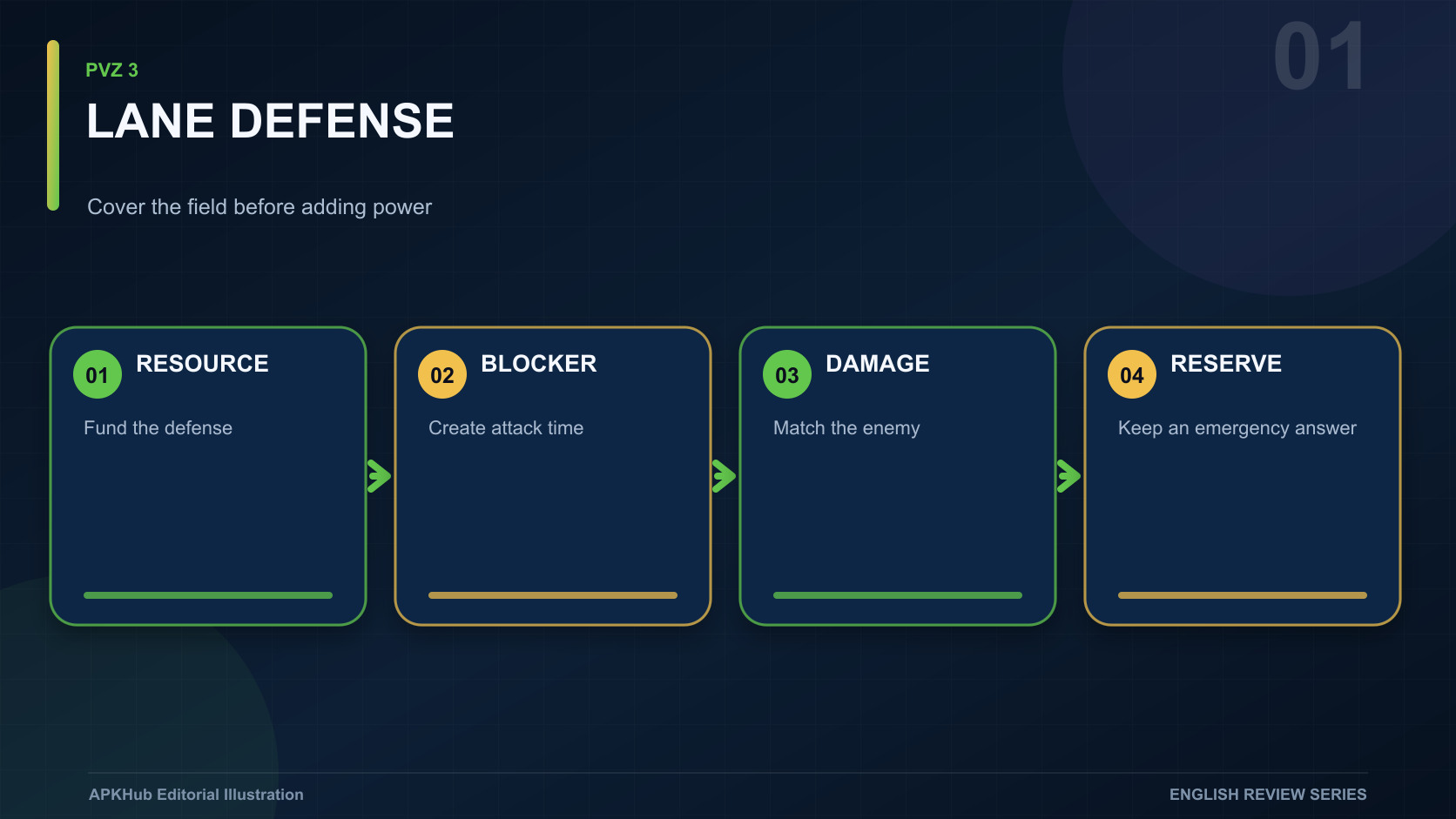
Retrospective editorial concept: lane coverage explains a defense problem; this is not a screenshot of the retired test.
A Plant Collection Needs Distinct Jobs
APKHub's archived description mentions familiar plant names, upgrades, and additional recruits. Treat those details as a record of the catalog entry, not a promise that the same roster remains available today.
The design question is whether a new plant changes a decision. A blocker can create time for an attacker. An area attack can answer a group. A control effect can delay an enemy that ordinary damage fails to stop. Different jobs make experimentation worthwhile; a larger collection alone does not.
Upgrade systems complicate that comparison. Two plants may appear to fill different roles when one has received much more investment. A useful evaluation asks whether the weaker option fails because of its job, placement, or level. That distinction helps explain why a short defense stage can feel either tactical or repetitive.
Arena and Clubs Belong to a Version Record
The old catalog text also names Arena and Clubs. This article does not claim that players can join those modes on the retired package. It makes no claim about current rankings, rewards, chat availability, or carryover into another release.
Those systems illustrate the broader trade-off around a lane-defense game. Competition gives repeat players a target after they understand the campaign. Group goals can give friends a reason to return. They also introduce deadlines and account obligations around what might otherwise be a self-contained puzzle.
A comparison between PvZ releases should therefore identify the exact build before comparing their routines. A guide for one test period may describe a menu that another build never contained. Shared characters and a shared logo do not make the instructions interchangeable.
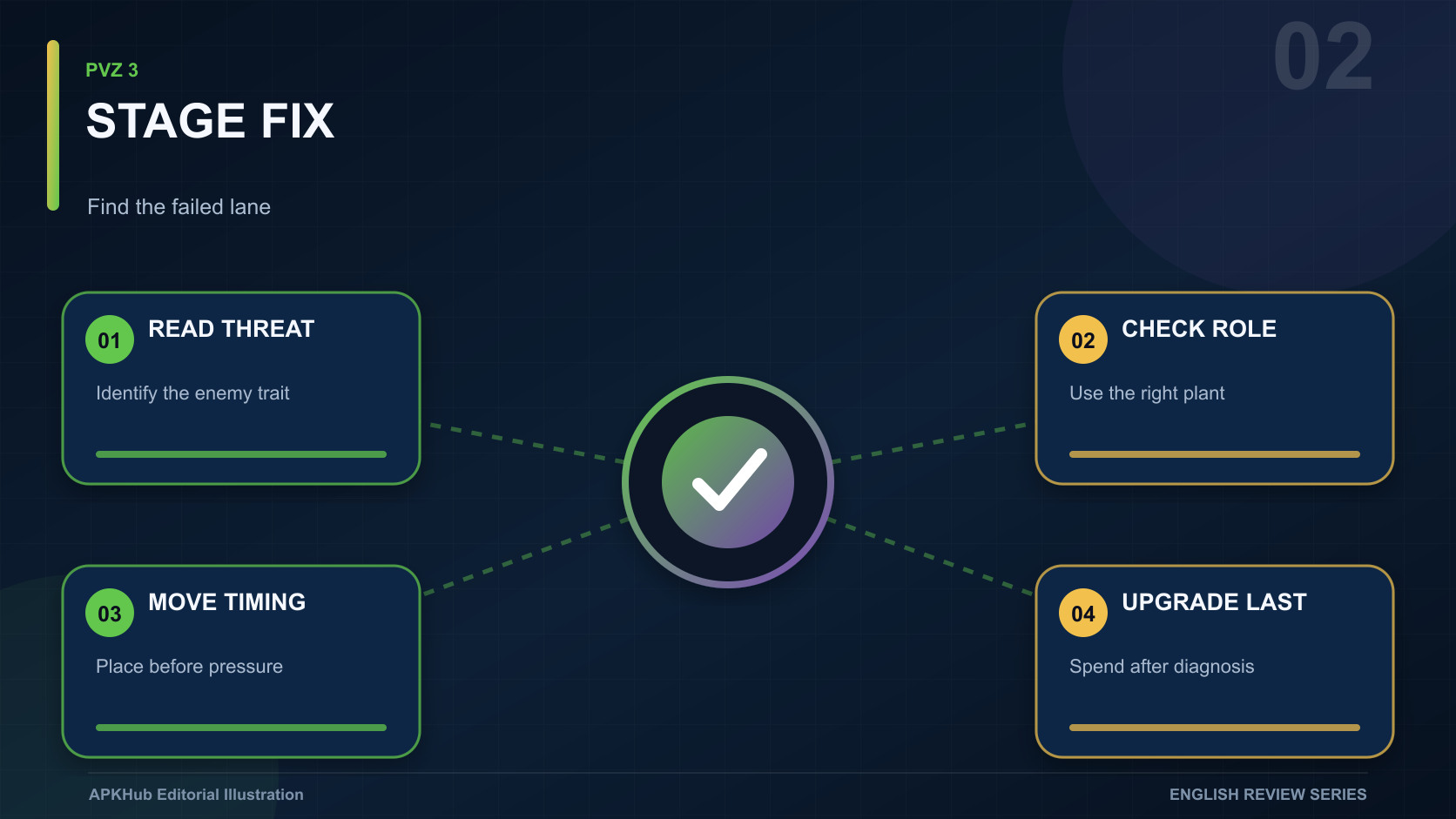
Retrospective editorial concept: separate placement choices from account upgrades when judging the old design.
Availability Comes Before Purchases
There is no verified current purchase offer for this exact package in this review. Do not use old screenshots to infer today's prices, event schedule, or the value of a saved balance. Follow an official announcement that identifies the relevant version before assuming an old account or purchase transfers.
APKHub's normal catalog status confirms that an entry exists on APKHub. It does not establish that EA still operates the original service or that Google Play offers the same package. These are different pieces of information.
For a newer PvZ announcement, check the publisher, package identifier, supported countries, and announcement date. A fan project, a test build, and an official commercial release can all circulate under similar names. Compare the actual product rather than the search-result title.
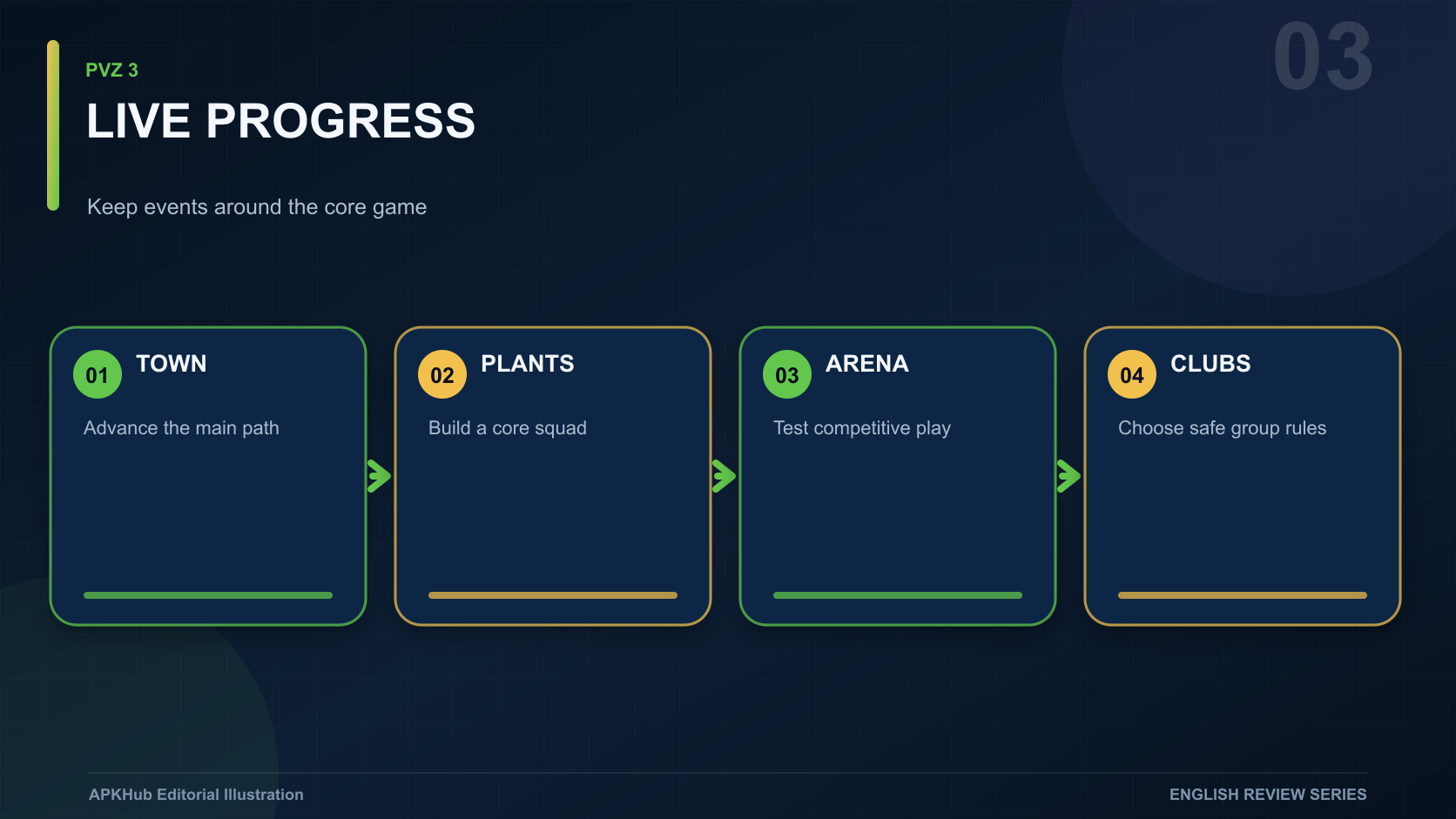
Historical systems illustration: these labels describe the archived concept, not an active service menu.
Who Will Find This Retrospective Useful
Long-time PvZ players can use the retired test as a comparison point for the series' changing design. The tension between clear board decisions and persistent account progression explains more than a blanket claim that a sequel was better or worse.
New players looking for something to install need a current official product page instead. This retired package is a poor starting point for planning a campaign, joining a club, or buying virtual currency. No personal gameplay test of a current build is claimed here.
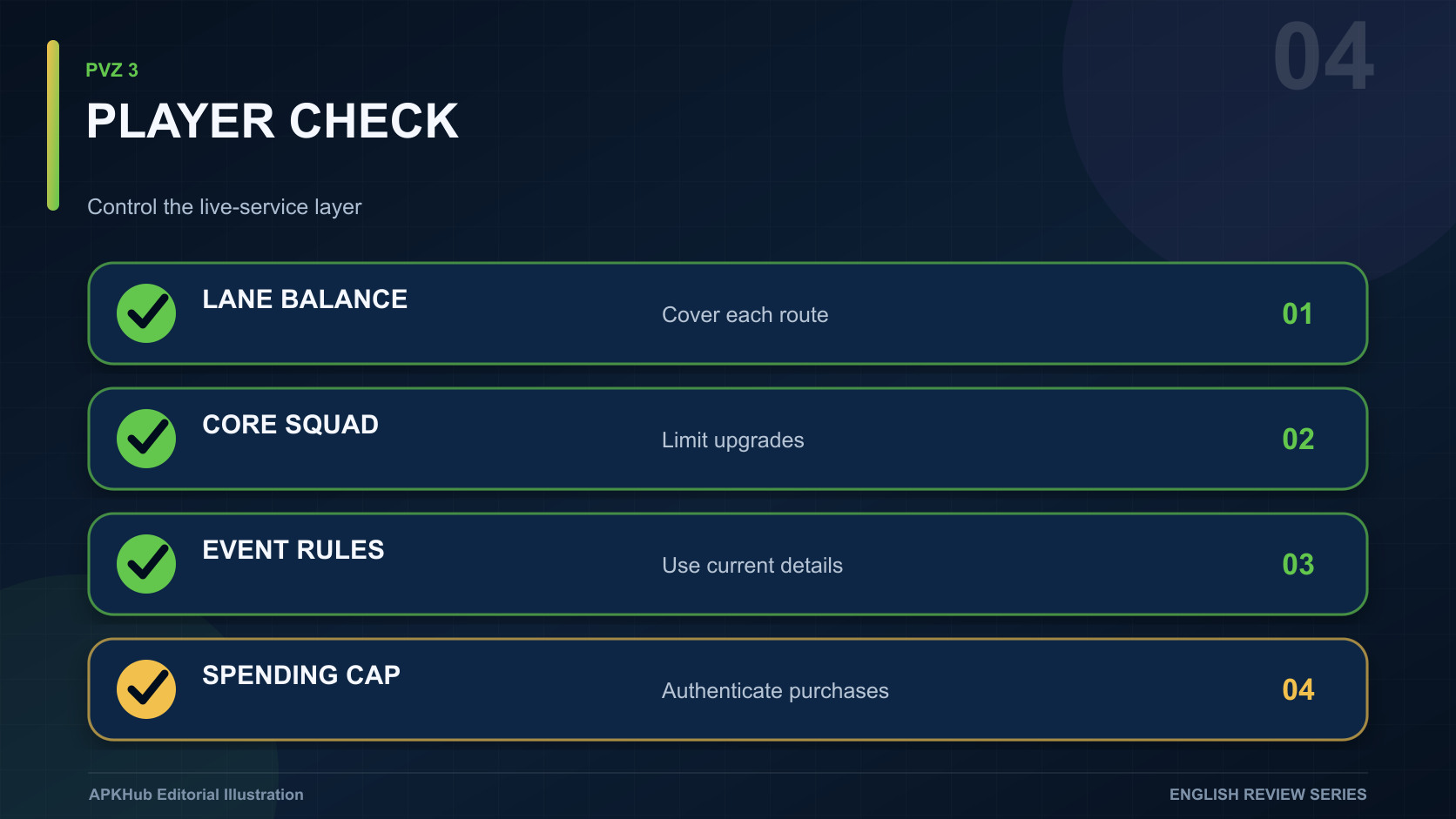
Editorial checklist: identify the version and its official status before following a guide.
Final Verdict
The older PvZ 3 entry preserves a recognizable design ambition: combine quick lane-defense decisions with a longer plant collection and repeat-play structure. Its retired status changes the recommendation. Read it as a chapter in the series' development, with tactical ideas to compare against other releases, rather than as a current live-service game to begin today.


