
RAID: Shadow Legends Review: Deep Turn-Based Teams Wrapped in a Shard Economy

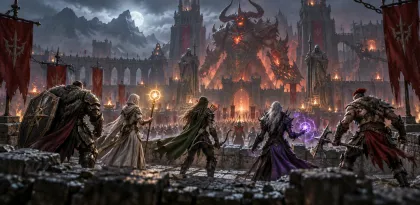

RAID: Shadow Legends is Plarium's free-to-play turn-based RPG set in Teleria. You summon Champions from sixteen factions, gear them with artifacts, and send a team of five into a campaign, a dungeon boss, a Clan boss, or the Arena. The Google Play listing used for this review is rated Teen for violence, mild blood, and suggestive themes. It flags in-app purchases that include random items and describes a roster of 800-plus Champions.
This RAID review separates the tactical game from the shard game. The first is a real RPG with affinities, turn meters, and boss patterns. The second is a random summon market that needs a written budget on day one.
The Core Loop: Build a Team, Beat a Node, Farm the Next Wall
A new account walks a voiced campaign across twelve locations. Early stages teach affinity—Magic, Spirit, Force, and Void—and why a "strong" Champion loses to the wrong color. You then farm those stages for experience, silver, and the first usable artifacts.
The loop:
- clear campaign until energy and gear become the limit
- farm a dungeon that drops the artifact set you actually need
- upgrade one team's books, masteries, and ascension
- try Clan Boss, Arena, or the next campaign difficulty
- spend shards only when a documented event improves the odds or a mercy counter is in play
Bosses named on the listing—Magma Dragon, Fire Knight, Ice Golem, Demon Lord—are weekly or daily skill checks. Fire Knight punishes teams that cannot land enough hits. Clan Boss rewards decrementing a bar over many turns. Arena is a speed-and-control puzzle against other players' defenses.
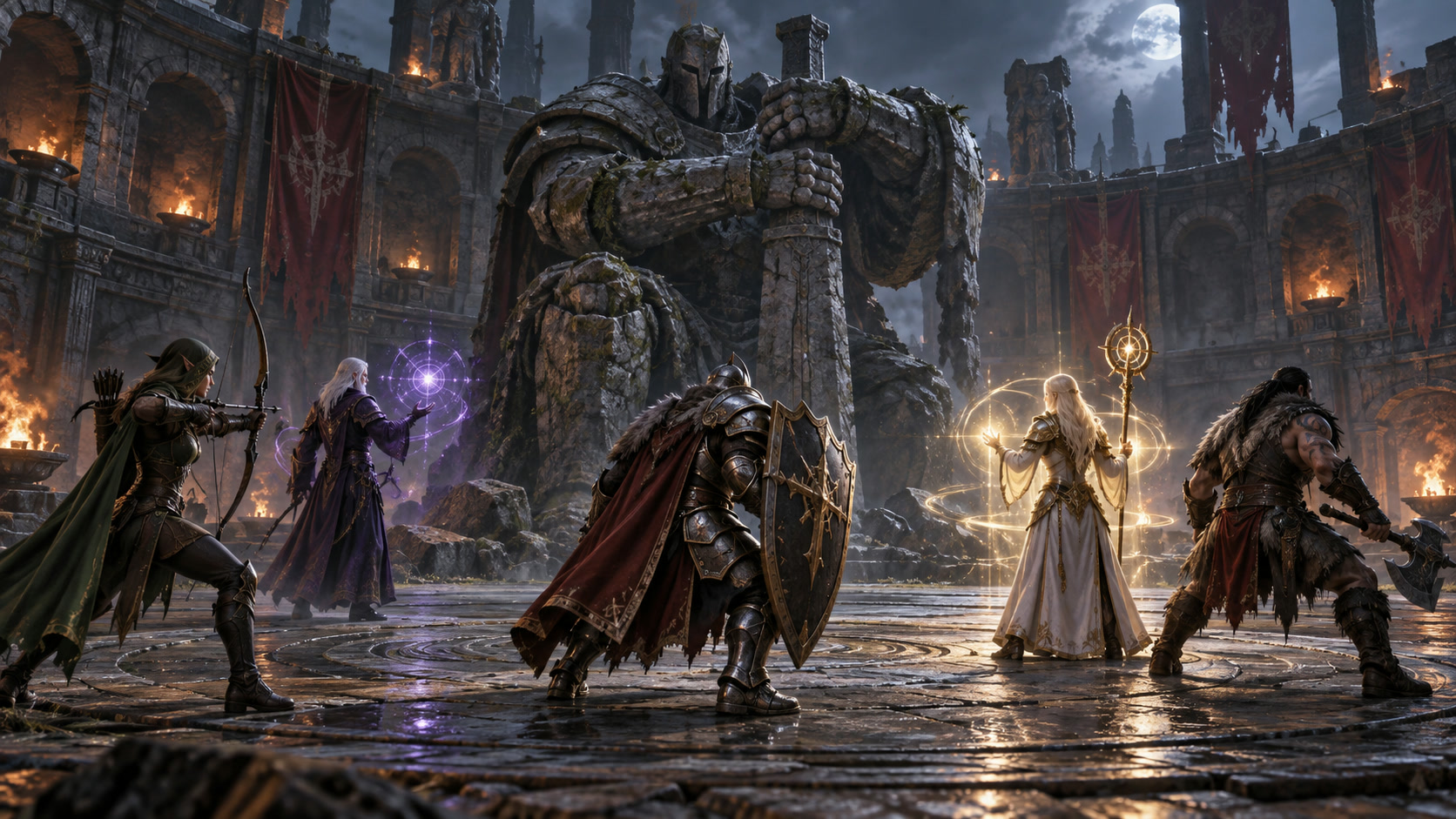
Editorial illustration: affinity, turn order, and a boss pattern beat a bench of unbuilt legendaries.
Systems That Actually Raise Damage
Artifacts and accessories do more work than rarity stars. A rare Champion with the right set, main stats, and masteries will carry content that a neglected legendary cannot. The listing's "1+ million possible Champion builds" is marketing language for that combinatorics. The practical version is: pick one farmer, one Clan Boss team, and one Arena core.
The Bastion is your hub for shards, upgrades, and preparation. Clans exist to share Clan Boss chests and tournaments. Faction Crypts and other late modes ask for Champions from specific factions, which is how the 800-plus roster becomes pressure instead of flavor.
Official support states that summon results are random under published rates, with mercy systems as the documented exception. Rates live in the Summoning Portal's information panel. Read that panel for the shard type you are about to open. Do not trust a memory of last year's percentages.
The What's New text on this scrape listed Anomalous Accessories, new Relics, larger storage, and Champion rebalance. That is the live-service pattern: more gear layers and more Champions. Each layer is optional until a mode requires it. Storage expansions matter because hoarding every relic is how the inventory becomes the game.
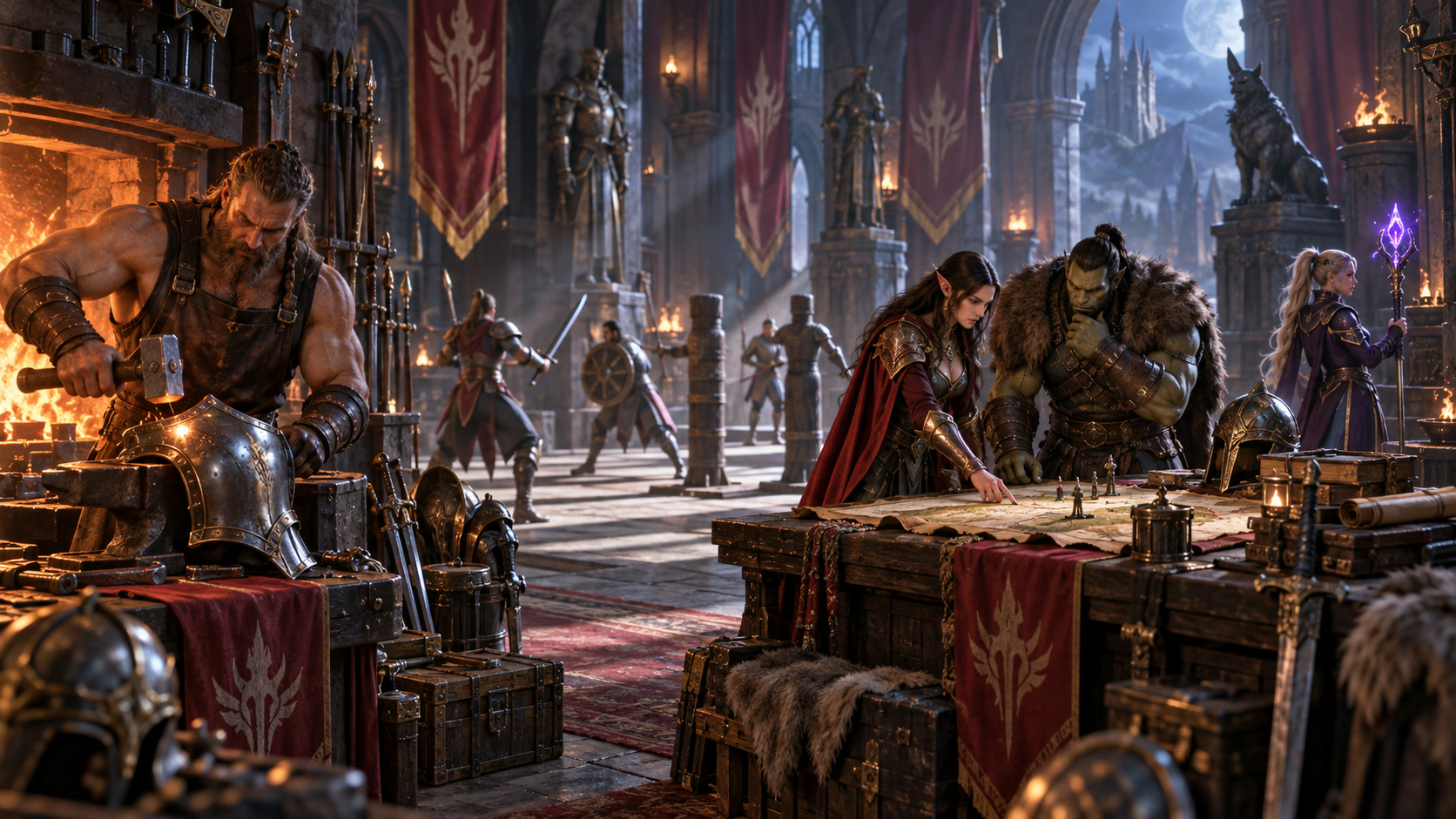
Editorial illustration: one finished team opens more doors than ten Champions sitting at level 40.
Spending Risk: Shards, Ancient Odds, and Random Items
The Play listing is unambiguous: in-game purchases include random items. Some paid items may not be refundable depending on type. Shards—Ancient, Void, Sacred, and other types in the live client—are the gacha key. Opening them summons a Champion at rates the portal publishes. Plarium's own support article says the probability of a better result stays the same across independent attempts except where a mercy counter applies.
Set rules before the tutorial hands you a shiny shard animation:
- decide a monthly cap, including zero
- never buy shards to "finish" a featured legendary
- save free shards for a 2x event or a guaranteed champion event if you choose to engage the summon layer
- treat new-player promo codes on the official site as time-limited bonuses, not as a reason to spend
- ignore unofficial gem or account sellers
Energy, gem packs, and battle-pass-style offers are easier to price because you can see the resource. Shard bundles are the high-risk product. A previous dry streak is not a coupon.
It is possible to play a large amount of campaign and dungeon content on free Champions. Clan Boss and high Arena are where missing legendaries and perfect speed gear become loud. Infer that gap honestly: the listing does not call the game pay-to-win, but random Champions plus competitive modes create a real power market.
Bind a Plarium account immediately. Listing reviews include lost-progress stories. Official support is the recovery path; a screenshot of a login screen is not.
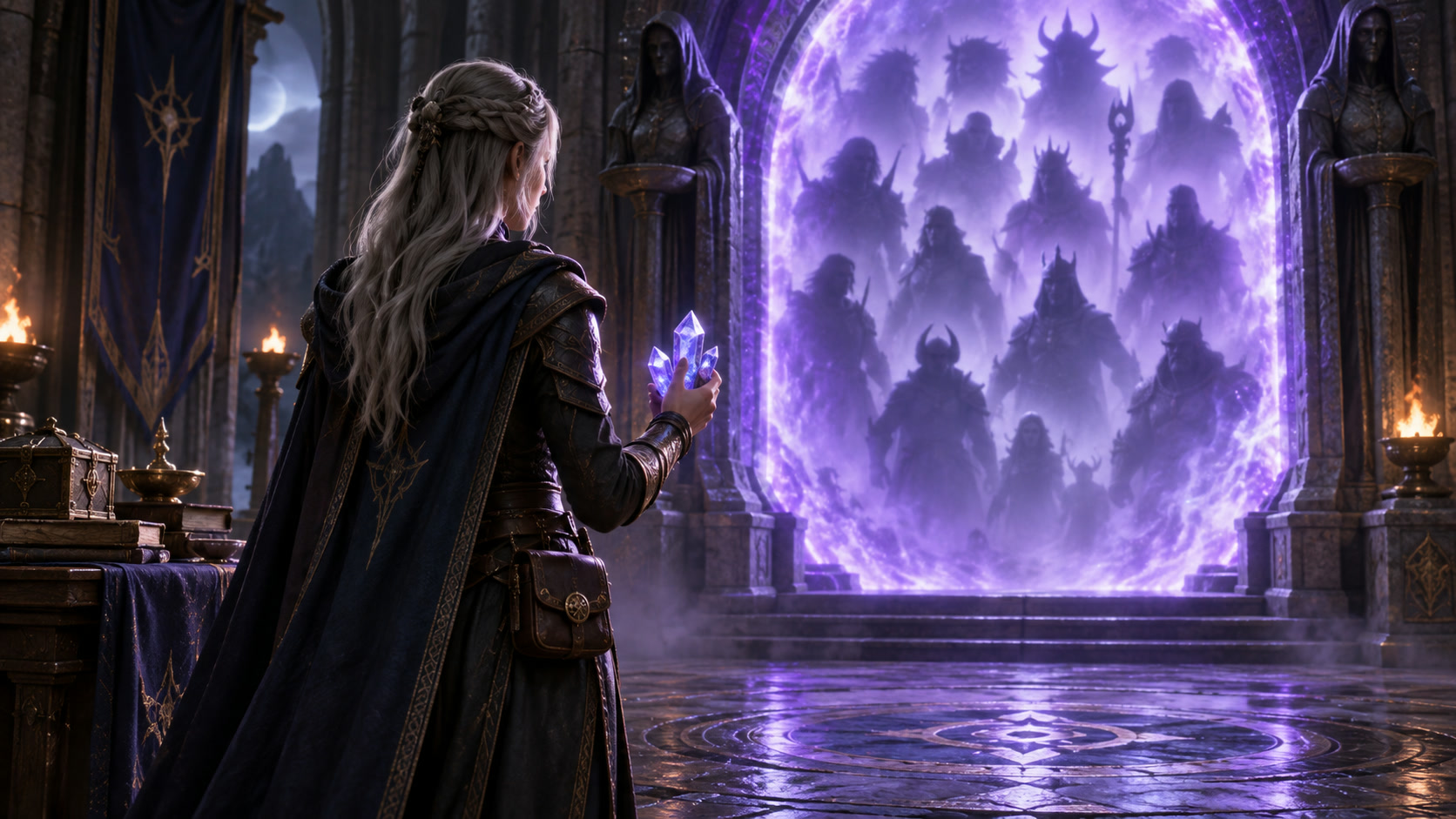
Editorial illustration: a shard is a ticket to a random Champion, even when the trailer shows a specific face.
A Smarter Early Account
Do not level every pull. Pick a campaign farmer who can clear 12-3 or the current equivalent efficiently. Put books into that Champion's damage skill. Farm one artifact set until the main stats are correct, then stop rolling trash substats for silver.
Join a Clan that matches your boss damage, not a Clan that demands daily donations you cannot meet. Read skill descriptions. A Champion who places decrease defense or increase attack often wins more content than a flashy nuker.
When a new collaboration Champion appears—Masters of the Universe is the pairing named on this scrape—treat it as a cosmetic event unless you already wanted that kit.
Who Should Play RAID: Shadow Legends?
RAID is best for players who like turn-based theorycrafting, boss pattern learning, and long gear projects. It fits people who can enjoy a rare team that they built.
It is a weak fit if random summons are a personal risk, if you want a premium campaign without energy, or if you expect every new Champion to be farmable on a schedule. The Teen rating's suggestive themes and combat presentation are part of the style, not an accident.
Strengths and Weaknesses
Strengths
- Real turn-based tactics under the marketing
- Dungeon bosses ask for different team jobs
- Free and rare Champions can carry a lot of PvE
- Clan Boss gives a shared weekly goal
- Rates and mercy are documented in-client
Weaknesses
- Random shards sit next to competitive modes
- Roster size creates "always missing someone" pressure
- Energy and silver sinks slow experimentation
- New layers of gear can reset a sense of completion
- Account recovery problems are costly because progress is long
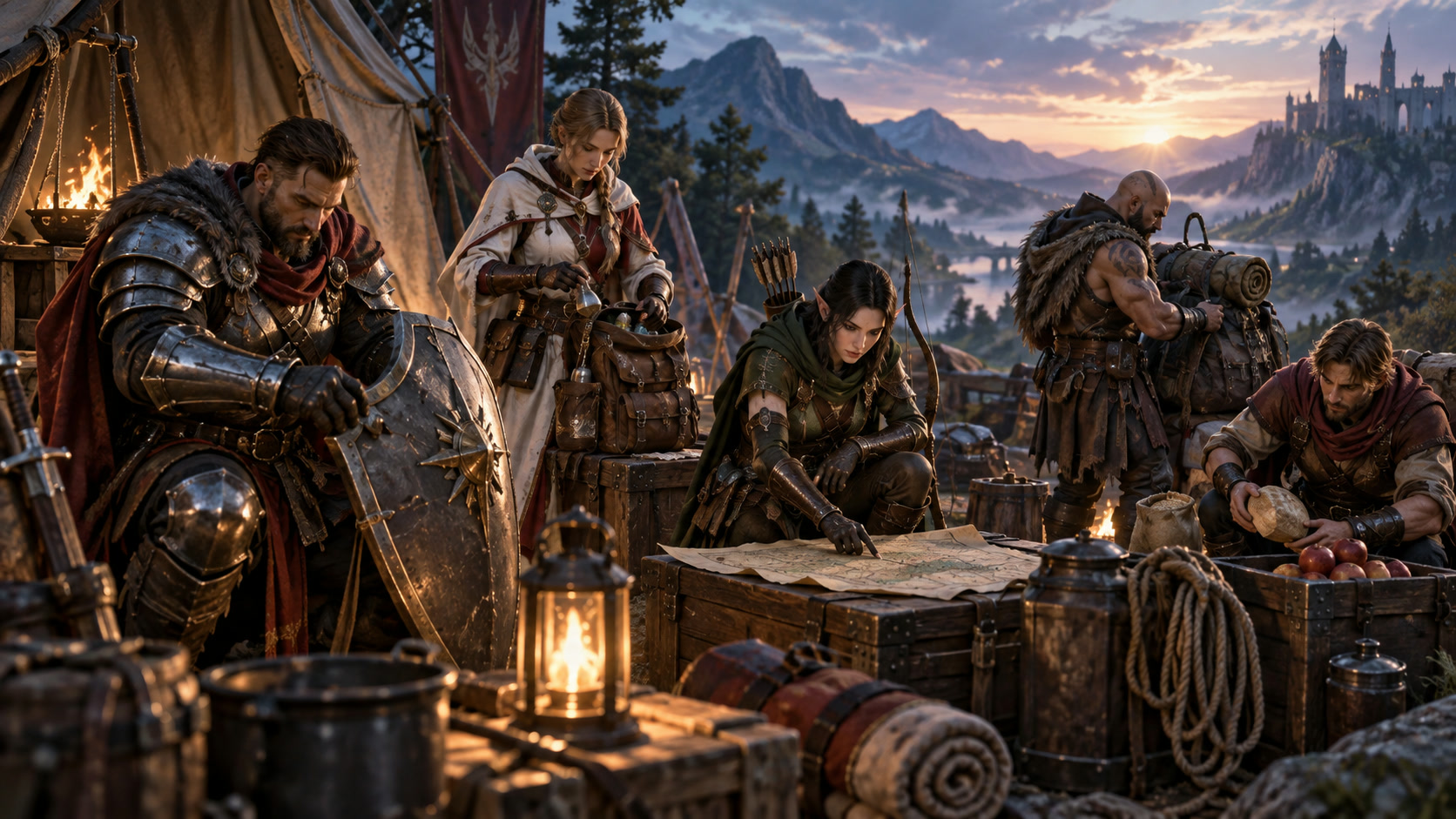
Editorial illustration: bind the account, finish one team, and open shards only on a rule you wrote before the animation.
Final Verdict
RAID: Shadow Legends is a genuine tactics RPG wearing a very loud summon circus. Affinity, turn meter, and boss mechanics are enough game for months.
Play the campaign and one boss until you understand why a team won. Keep shards inside a written rule, and treat featured legendaries as advertisements rather than assignments. If you can hold that line, Teleria has a long, sturdy mid-game. If you cannot, the portal will outlast your interest.


.webp?x-oss-process=image/resize,w_80/format,webp)