
SCHOOLBOY RUNAWAY - STEALTH Review: A House Full of Tells

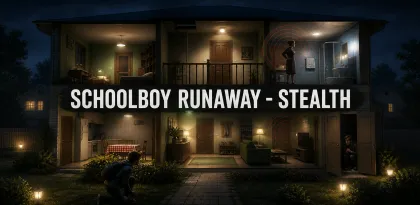

SCHOOLBOY RUNAWAY - STEALTH turns an ordinary home into a first-person stealth puzzle. The official premise is simple: a punished schoolchild tries to meet friends without being noticed, while parents respond to noise and environmental changes. The official Google Play page confirms the Android package, although the captured page does not expose every store metric. The listing was updated on May 29, 2026, so features and offers should still be checked in the installed version.
Popularity is a useful discovery signal, not proof of quality. This review therefore focuses on the decisions the game repeatedly asks you to make, the systems that support or distract from those decisions, and the practical limits around money, privacy, age, and hardware.
The Core Loop
A successful attempt is built from observation. You learn patrol routes, identify hiding places, search for useful objects, solve small puzzles, and move only when a safe window opens. Open doors and cabinets can become evidence, so the route is not just about reaching an exit; it is about leaving as few suspicious changes as possible.
The first hour should be used to learn feedback rather than to maximize rewards. Notice what the game communicates clearly, what it hides behind menus, and which mistakes create knowledge for the next attempt. A healthy loop makes failure or delay informative; a weak loop merely asks for another tap, another ad, or another purchase.
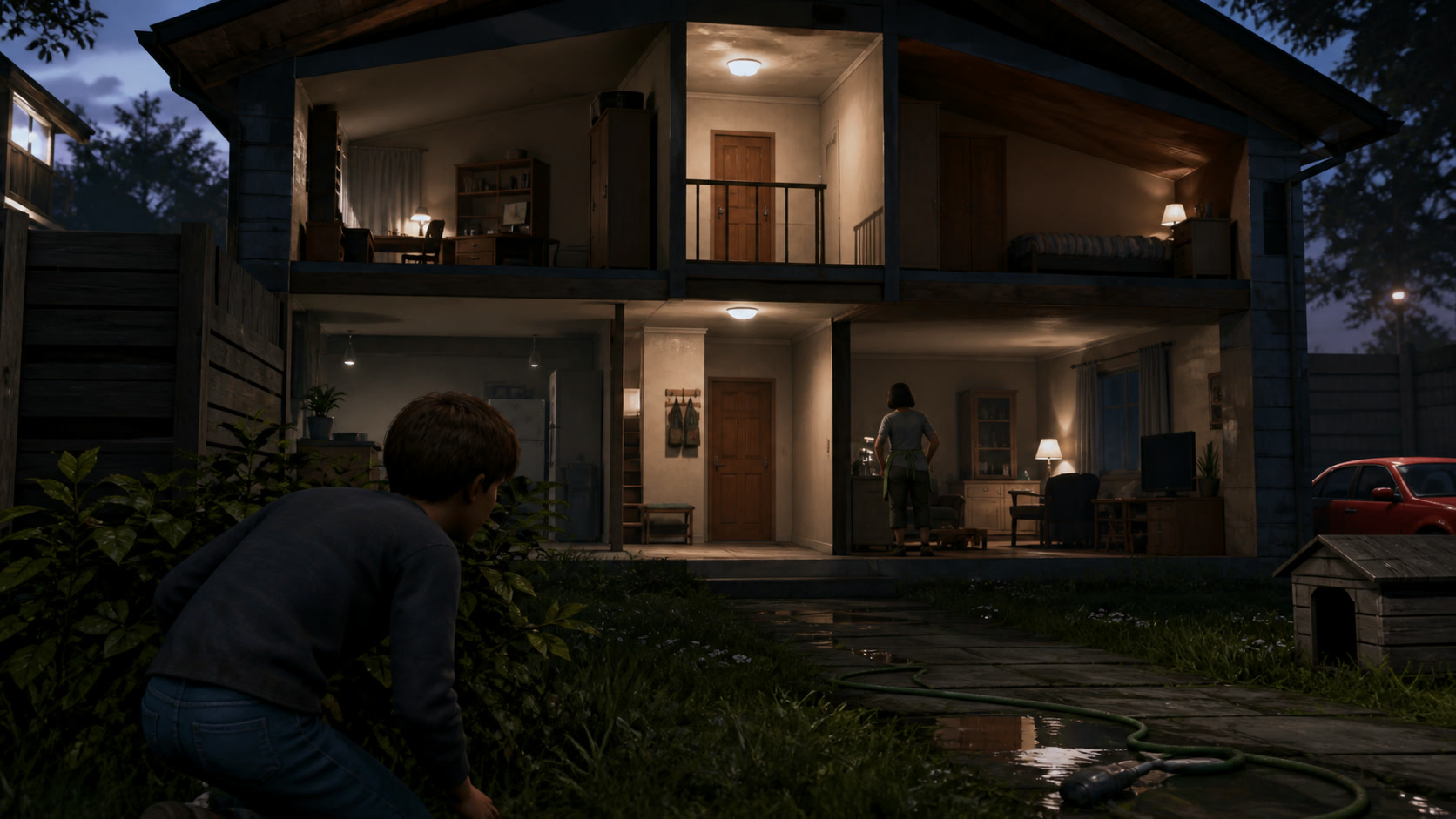
Editorial illustration: the loop is easiest to understand when every action has a visible consequence.
The Systems Around the Main Mechanic
The game combines spatial memory, item logic, sound awareness, and pursuit. A discovered object may unlock a later step, but carrying it without a plan can increase risk. Hiding works best as recovery, not as the entire strategy. The real skill is predicting how one action changes what the parents can notice next.
These supporting systems matter because they shape the pace between active moments. The best ones create a meaningful decision before the next round. The weaker ones add collection, notifications, or currency without changing how the player thinks. New users should learn the central mechanic first and add optional systems only when their purpose is clear.
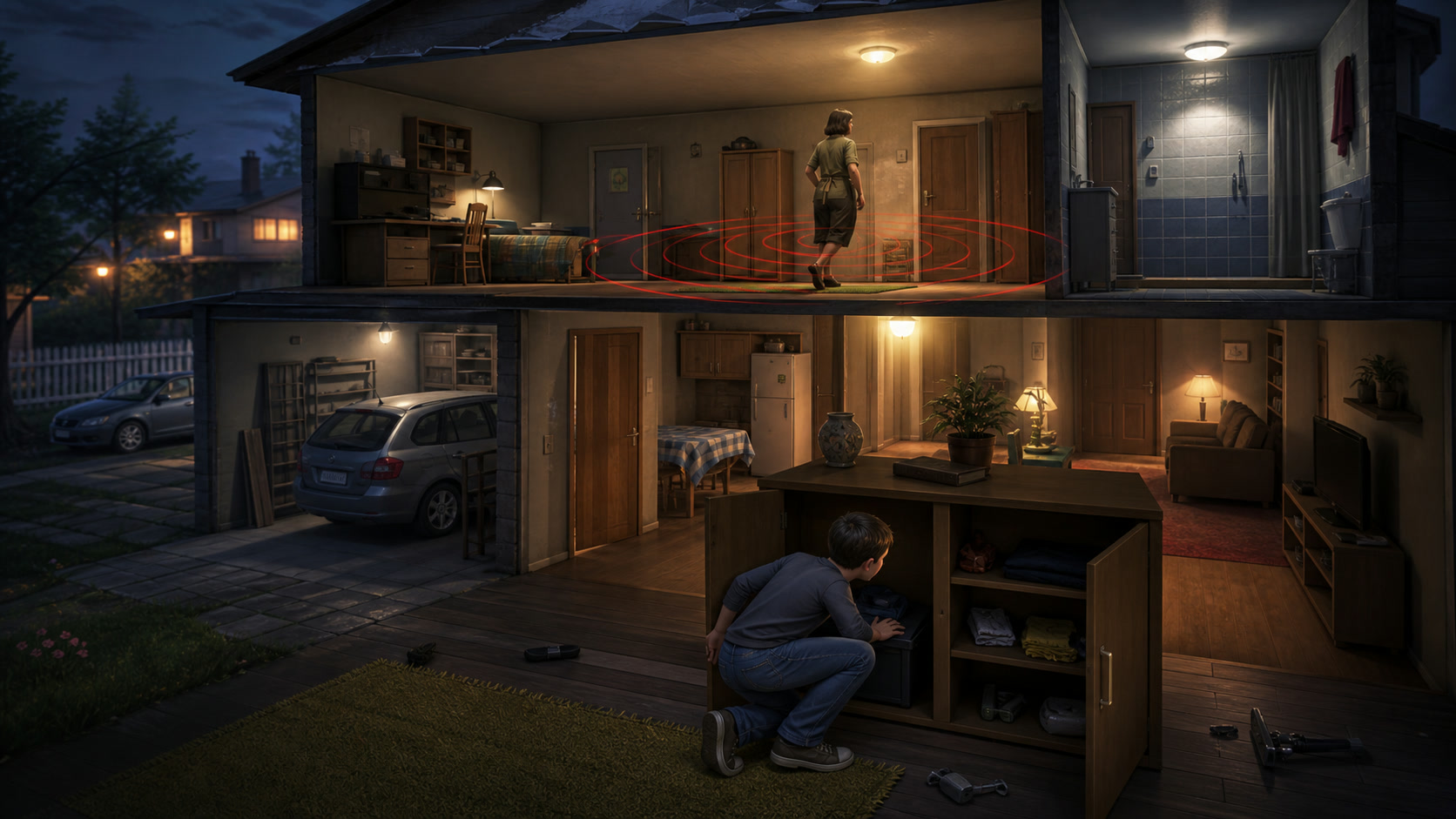
Editorial illustration: separate the central mechanic from the progression systems wrapped around it.
Progression: A Better Way to Improve
Progress comes from knowledge retained across failed runs. Map the house mentally, test one uncertain interaction at a time, and stop repeating the same escape line when it produces the same alarm. A disciplined player treats detection as information about sound, sight lines, or an altered object.
A useful routine is to choose one measurable goal for a session, stop when attention falls, and review one mistake before starting again. This avoids confusing time spent with skill gained. Event calendars, streaks, or daily rewards may be convenient, but they should not decide whether a session continues after it stops being enjoyable.
Ads, Purchases, and Random Rewards
The captured Google Play page for this package did not present a clear ads or in-app-purchase label. Do not convert that missing field into a guarantee. Confirm the current store listing and device purchase settings, especially because regional or later builds can expose different commercial options.
Store labels describe the current distribution page, not every screen a player may see after a future update. Before paying, confirm the exact item, currency, renewal rule, refund route, and whether the benefit survives account loss or a service shutdown. Randomized rewards deserve a lower budget than direct purchases because the desired result is not guaranteed.
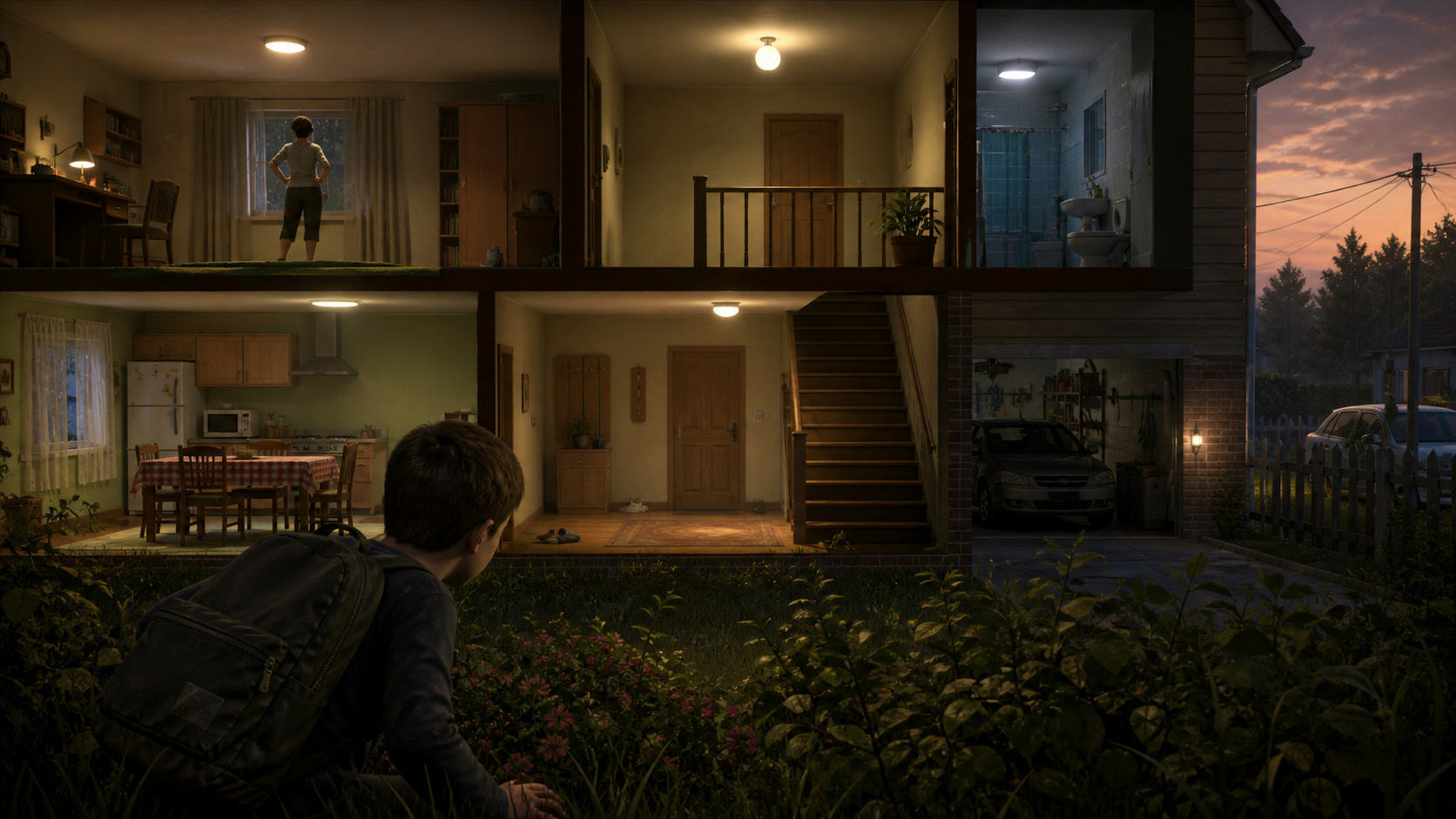
Editorial illustration: enjoyment improves when money, time, and device constraints are decided in advance.
Device and Performance Expectations
First-person movement and 3D interiors can be uncomfortable on a small screen or at an unstable frame rate. The official page does not specify a RAM requirement. Adjust sensitivity if available, play in a well-lit room, and stop if camera motion causes nausea or eye strain.
Compatibility on Google Play means the store allows installation; it does not promise identical frame rate, battery use, controller support, or network quality on every model. Keep the operating system and app current, use official downloads, and avoid third-party “performance” tools that request excessive permissions.
Privacy, Younger Players, and Healthy Sessions
The scenario is slapstick stealth fiction, not advice to evade caregivers or leave home secretly. That distinction matters for younger players. Parents can discuss the difference between solving a fictional detection system and handling real disagreements, curfews, grades, or household rules safely.
Use a unique password when an account is required, enable platform purchase authentication, and do not share recovery codes. For a child’s device, review permissions and social features together with the child. A content rating addresses themes such as violence or language; it is not a complete judgment about spending design, chat, advertising, or privacy.
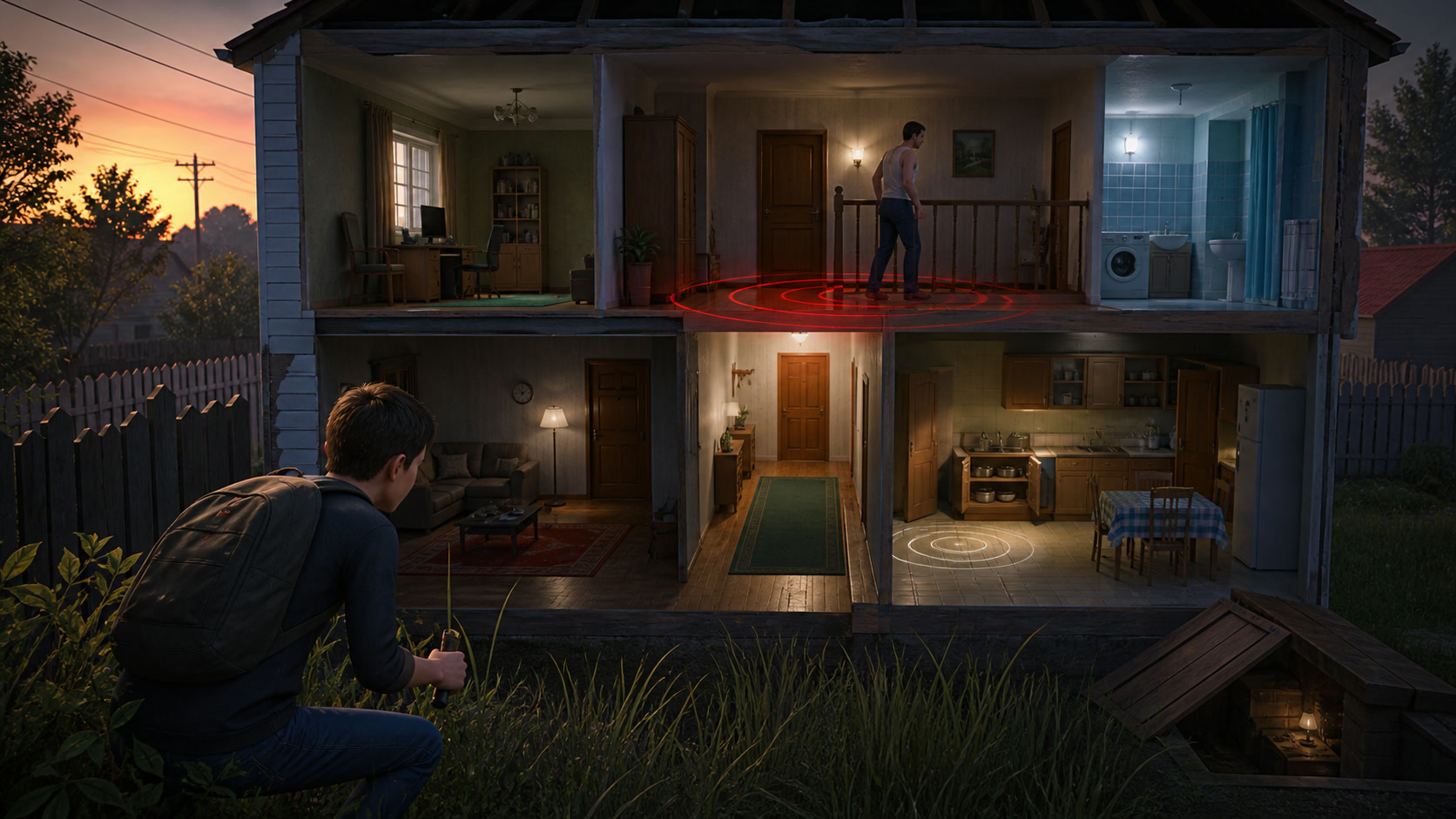
Editorial illustration: the best recommendation depends on fit, not popularity alone.
Who Is It For?
This is a strong fit for players who like compact horror-adjacent stealth, environmental puzzles, route learning, and tension created without complex combat. It is a weaker recommendation for players who dislike repeated detection, first-person camera motion, domestic conflict as comedy, or trial-and-error puzzle design.
Strengths and Weaknesses
Strengths
- A familiar home becomes a readable stealth map
- Noise and moved objects create useful consequences
- Failures teach routes and patrol behavior
- Puzzles give exploration a purpose
Weaknesses
- Trial and error can become repetitive
- The premise needs context for younger players
- First-person motion may be uncomfortable
- Official device and monetization details are limited
Final Verdict
SCHOOLBOY RUNAWAY works because small household details become tactical information. Its best moments arrive when a previously chaotic escape turns into a quiet sequence of deliberate actions. Enjoy it as a fictional stealth puzzle, keep the real-life premise in perspective, and expect learning through detection rather than a smooth first run.
The practical recommendation is to install from an official source, test the first session without spending, and decide in advance what would make the game worth keeping. A popular title earns attention; it still has to earn time, storage, money, and trust on the player’s own device.


.webp?x-oss-process=image/resize,w_80/format,webp)