
Solitaire: Classic Card Games Review: Familiar Klondike With Modern Extras

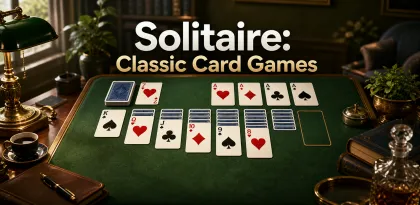

Solitaire: Classic Card Games presents Klondike, also known as Patience, with daily challenges, statistics, unlimited hints, draw-three play, left-handed controls, custom card faces and backgrounds, animation, and a Joker-style helper. The official description explicitly says it is not a social casino and involves no real money. Google Play currently shows 10M+ downloads and a Everyone content rating. The listing was updated on Aug 7, 2026, so features and offers should still be checked in the installed version.
Popularity is a useful discovery signal, not proof of quality. This review therefore focuses on the decisions the game repeatedly asks you to make, the systems that support or distract from those decisions, and the practical limits around money, privacy, age, and hardware.
The Core Loop
The goal is to move all 52 cards to four suit foundations from Ace through King. On the tableau, cards descend while alternating colors, and useful moves expose hidden cards. Each turn asks whether a move creates information, opens a column, or merely shifts the same problem elsewhere.
The first hour should be used to learn feedback rather than to maximize rewards. Notice what the game communicates clearly, what it hides behind menus, and which mistakes create knowledge for the next attempt. A healthy loop makes failure or delay informative; a weak loop merely asks for another tap, another ad, or another purchase.
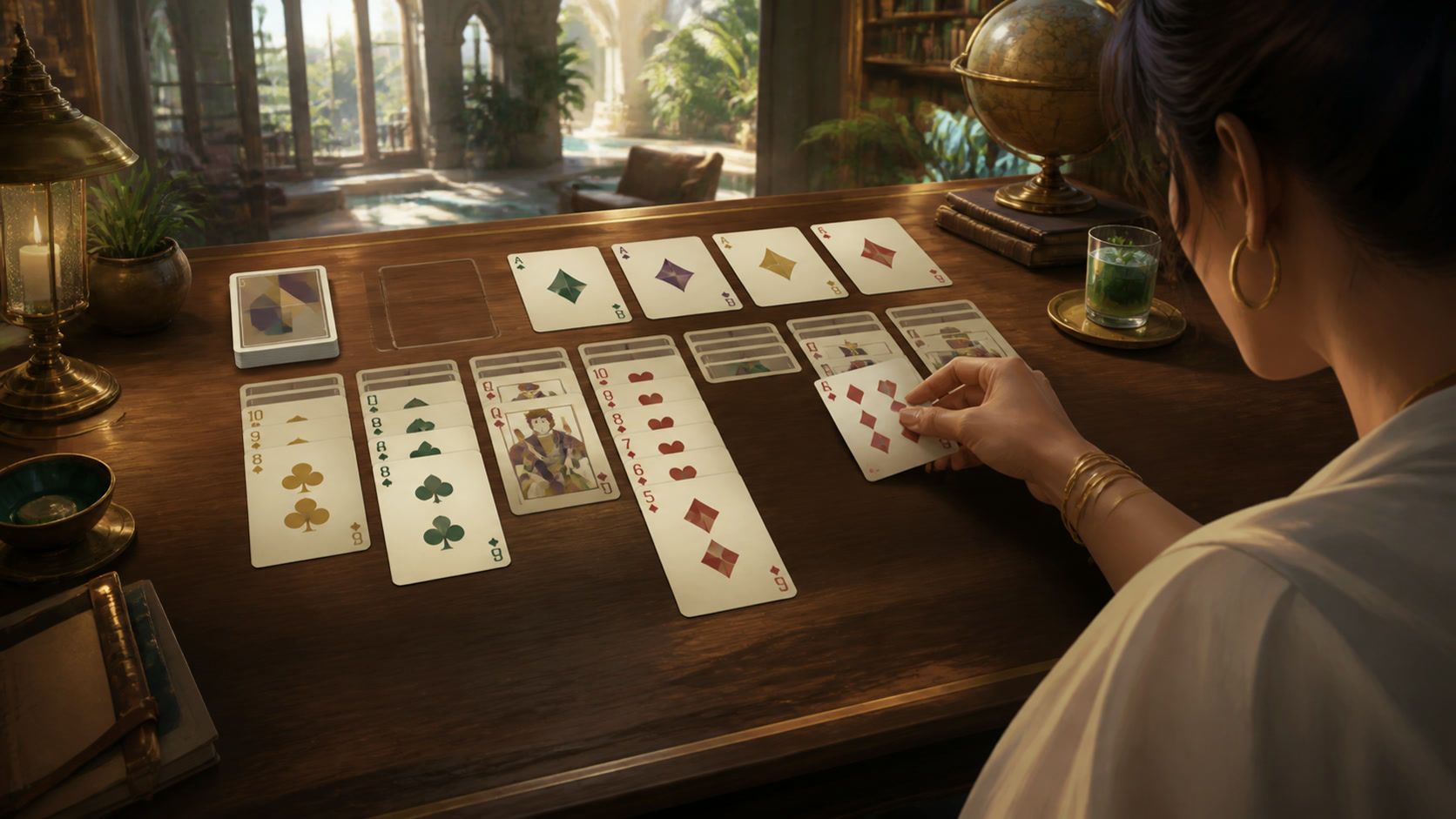
Editorial illustration: the loop is easiest to understand when every action has a visible consequence.
The Systems Around the Main Mechanic
Draw-three mode increases planning difficulty, statistics reveal long-term patterns, and daily challenges provide a fixed objective. Hints can unblock a position, while the Joker and other boosters make selected deals more forgiving. Visual customization changes comfort without changing the underlying logic.
These supporting systems matter because they shape the pace between active moments. The best ones create a meaningful decision before the next round. The weaker ones add collection, notifications, or currency without changing how the player thinks. New users should learn the central mechanic first and add optional systems only when their purpose is clear.
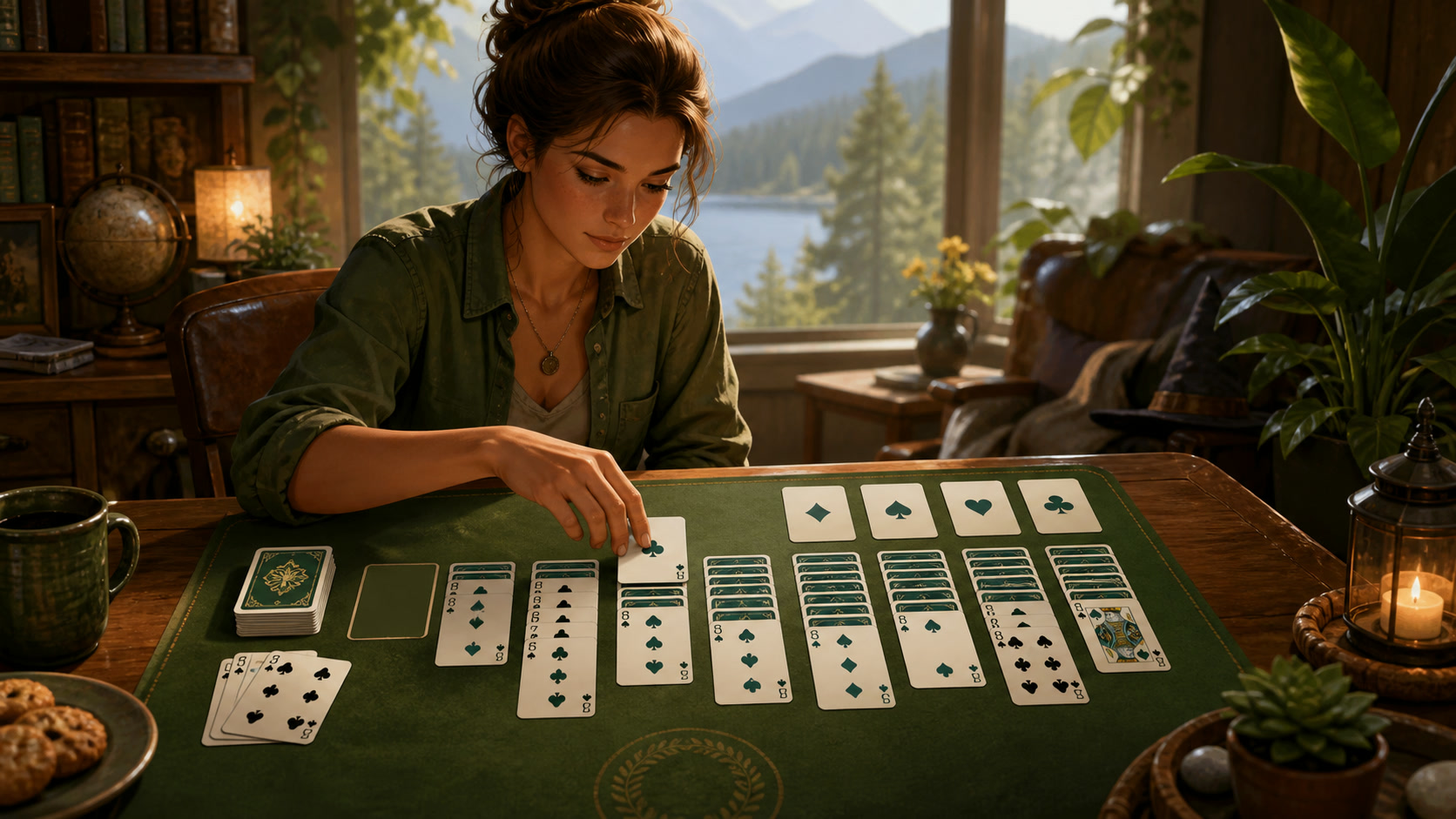
Editorial illustration: separate the central mechanic from the progression systems wrapped around it.
Progression: A Better Way to Improve
Prioritize revealing face-down cards, preserve empty columns for kings that improve access, and avoid sending a card to the foundation if the tableau still needs it. When a deal fails, distinguish an unlucky structure from an avoidable sequencing mistake before using a booster.
A useful routine is to choose one measurable goal for a session, stop when attention falls, and review one mistake before starting again. This avoids confusing time spent with skill gained. Event calendars, streaks, or daily rewards may be convenient, but they should not decide whether a session continues after it stops being enjoyable.
Ads, Purchases, and Random Rewards
Google Play labels the game as containing ads and in-app purchases. The official no-real-money statement is important: this is Klondike, not a cash-prize or wagering product. Even so, booster and ad-removal purchases should be evaluated calmly rather than at the moment a streak ends.
Store labels describe the current distribution page, not every screen a player may see after a future update. Before paying, confirm the exact item, currency, renewal rule, refund route, and whether the benefit survives account loss or a service shutdown. Randomized rewards deserve a lower budget than direct purchases because the desired result is not guaranteed.

Editorial illustration: enjoyment improves when money, time, and device constraints are decided in advance.
Device and Performance Expectations
The game suits one-handed and left-handed play, but card readability depends on screen size and chosen face design. Increase visual contrast if suits are hard to distinguish. Daily challenges or cloud-related features may need connectivity even when ordinary deals remain simple.
Compatibility on Google Play means the store allows installation; it does not promise identical frame rate, battery use, controller support, or network quality on every model. Keep the operating system and app current, use official downloads, and avoid third-party “performance” tools that request excessive permissions.
Privacy, Younger Players, and Healthy Sessions
The Everyone rating and solitary play limit social exposure. Ads, purchase prompts, and exaggerated claims about brain training still deserve perspective. Use the game for relaxation and pattern practice, not as a medical or cognitive assessment.
Use a unique password when an account is required, enable platform purchase authentication, and do not share recovery codes. For a child’s device, review permissions and social features together with the child. A content rating addresses themes such as violence or language; it is not a complete judgment about spending design, chat, advertising, or privacy.
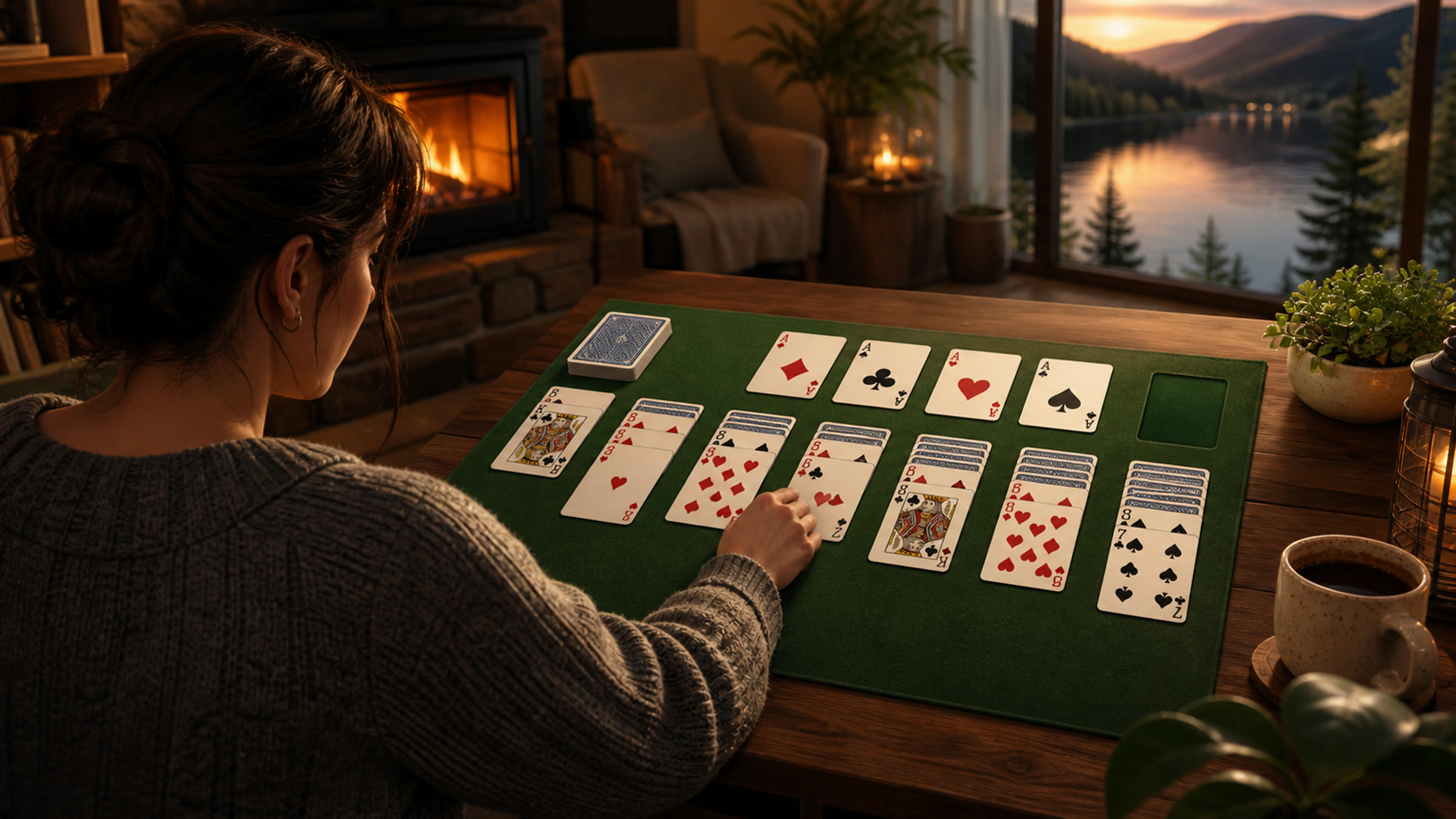
Editorial illustration: the best recommendation depends on fit, not popularity alone.
Who Is It For?
This is a strong fit for players who want familiar Klondike, short solo sessions, daily challenges, draw-three options, statistics, and visual customization. It is a weaker recommendation for players seeking competitive multiplayer, a completely pure rule set without boosters, or a one-time premium purchase with no ads.
Strengths and Weaknesses
Strengths
- Faithful Klondike foundation and tableau rules
- Draw-three and daily challenges add variety
- Hints and left-hand mode improve accessibility
- No real-money casino play according to the official description
Weaknesses
- Ads can disturb a relaxing session
- Boosters can replace careful learning
- Some deals may remain unsolvable
- Modern reward systems add unnecessary noise
Final Verdict
Solitaire: Classic Card Games is a practical Klondike companion with enough options to fit different hands, screens, and difficulty preferences. Its strongest moments remain the quiet ones: revealing a useful card and reorganizing the tableau. Keep boosters optional and the familiar design still earns its place.
The practical recommendation is to install from an official source, test the first session without spending, and decide in advance what would make the game worth keeping. A popular title earns attention; it still has to earn time, storage, money, and trust on the player’s own device.


.webp?x-oss-process=image/resize,w_80/format,webp)