
League of Legends: Wild Rift Review: 5v5 MOBA Combat Built for Touch Screens



League of Legends: Wild Rift is Riot Games' mobile 5v5 multiplayer online battle arena. You lock a champion, walk a three-lane map with jungle routes, take towers, contest Dragons and Baron, and try to destroy the enemy Nexus. The official site frames it as League of Legends rebuilt for phones: shorter matches, touch-first controls, and the same core idea that a good skill shot or a clean rotate can decide a game.
This review uses the current English title League of Legends: Wild Rift. The US Google Play listing for package com.riotgames.league.wildrift was live when this article was written. Availability still varies by country and store account, so confirm the listing in your region before you plan a download.
Wild Rift is free to play. Riot's store copy says there is no way to pay for power or playtime, and that every champion can be earned by playing. Google Play still labels the product with in-app purchases that include random items. Those two statements can both be true if paid products are cosmetic, loot-style, or convenience items rather than a direct combat-stat shop. Treat the live client and the current offer text as the source of truth.
The Core Loop: Lane, Jungle, Objective, Nexus
A match is a compressed MOBA. Two teams of five spawn at opposite bases. Minion waves march down lanes. Towers punish greedy dives. The jungle holds camps and river objectives. Your job is not only to win a 1v1. It is to convert farm, vision, and timing into structures.
The loop looks like this:
- pick a role and a champion that can do that job
- farm safely, trade when the wave favors you, and track missing enemies
- spend gold on items that answer the enemy composition
- rotate for Dragon, Baron, or a collapsing lane
- push through the inhibitor turrets and attack the Nexus rather than chasing isolated kills
Roles on the official listing include carry, support, jungler, and tank. In practice you also see mid-lane mages and baron-lane fighters. Each role has a different clock. A jungler is looking for the first camp clear and a gank window. A support is looking at ward lines and bot-lane trade patterns. A carry is trying to reach item spikes without dying for free.
Skill shots matter more than auto-attack spam. Many champions win by landing a hook, a root, a dash, or a well-timed ultimate. That is why Wild Rift can feel fair even when accounts have different cosmetic collections: the player who lands the skill usually creates the play.
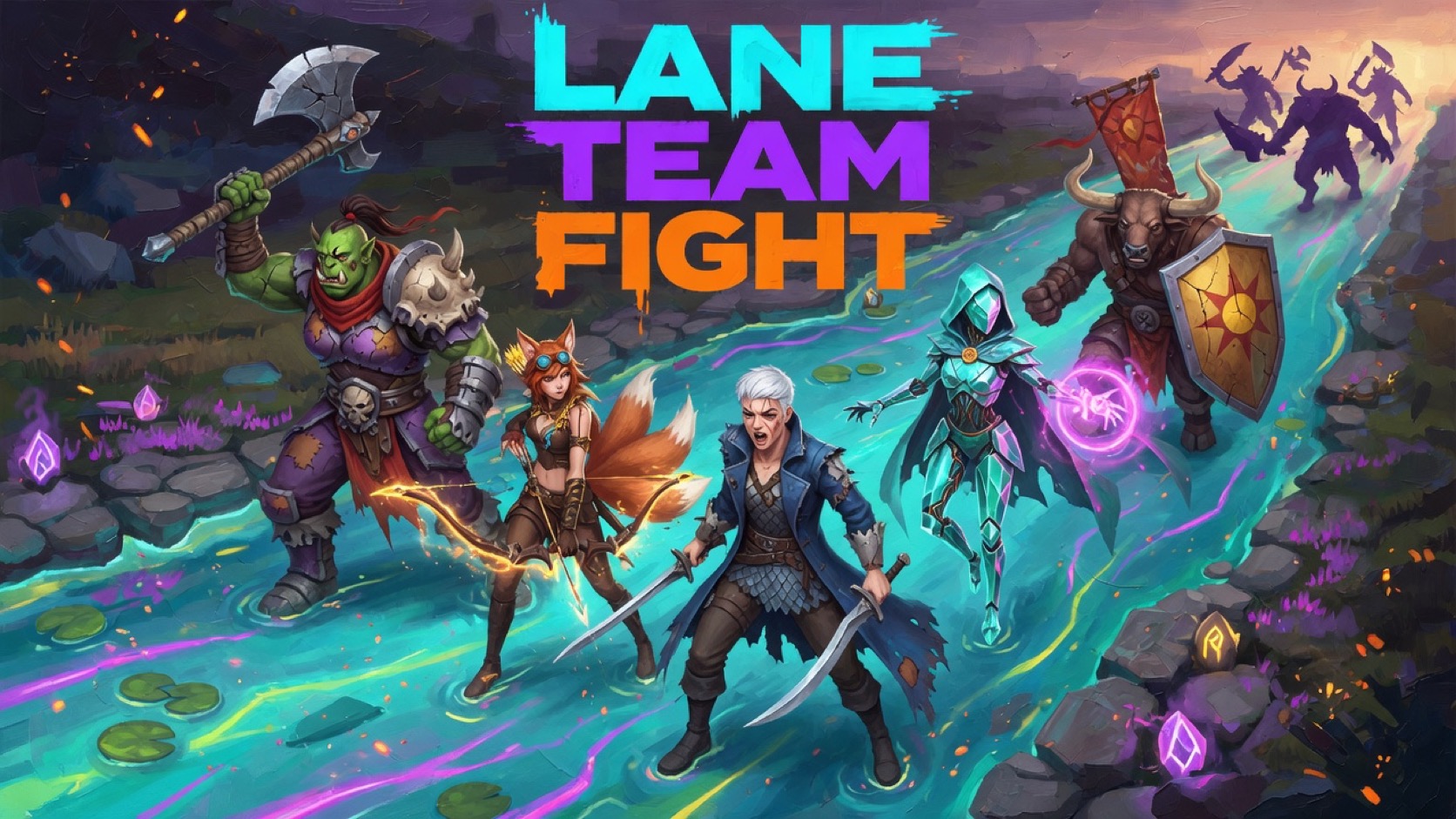
Editorial illustration: the fight is won by who arrives with cooldowns, not by who bought the flashiest skin.
Systems That Shape Every Queue
Wild Rift is not one playlist. The Play listing and official site describe unranked and ranked 5v5, party queues for duo, trio, or a full five, plus rotating modes. Modes, champion availability, items, and ranked rules can change between patches. Read the current patch notes on the official site rather than treating any one season as permanent.
Champion mastery is the long system. You can main one champion or keep a small role pool. A wide collection looks impressive and plays worse if you do not know wave states, recall timing, or when your ultimate is actually useful. Items and runes change how a champion answers a matchup. Active items, when present in the current patch, add another button you must not waste.
Social systems sit beside the match. Guilds, events, and cosmetic tracks give reasons to log in outside ranked. Chat and pings are part of the product. The Play listing rates the game Teen and flags that users interact. Mute and report tools are part of a serious first session, not an afterthought.
Hardware is a hidden system. A MOBA with skill shots needs a stable frame rate and a stable network. A pretty skin does not help if your ultimate animation stutters or your reconnect costs a tower. On a mid-range phone, prefer consistent performance over maximum effects during ranked.
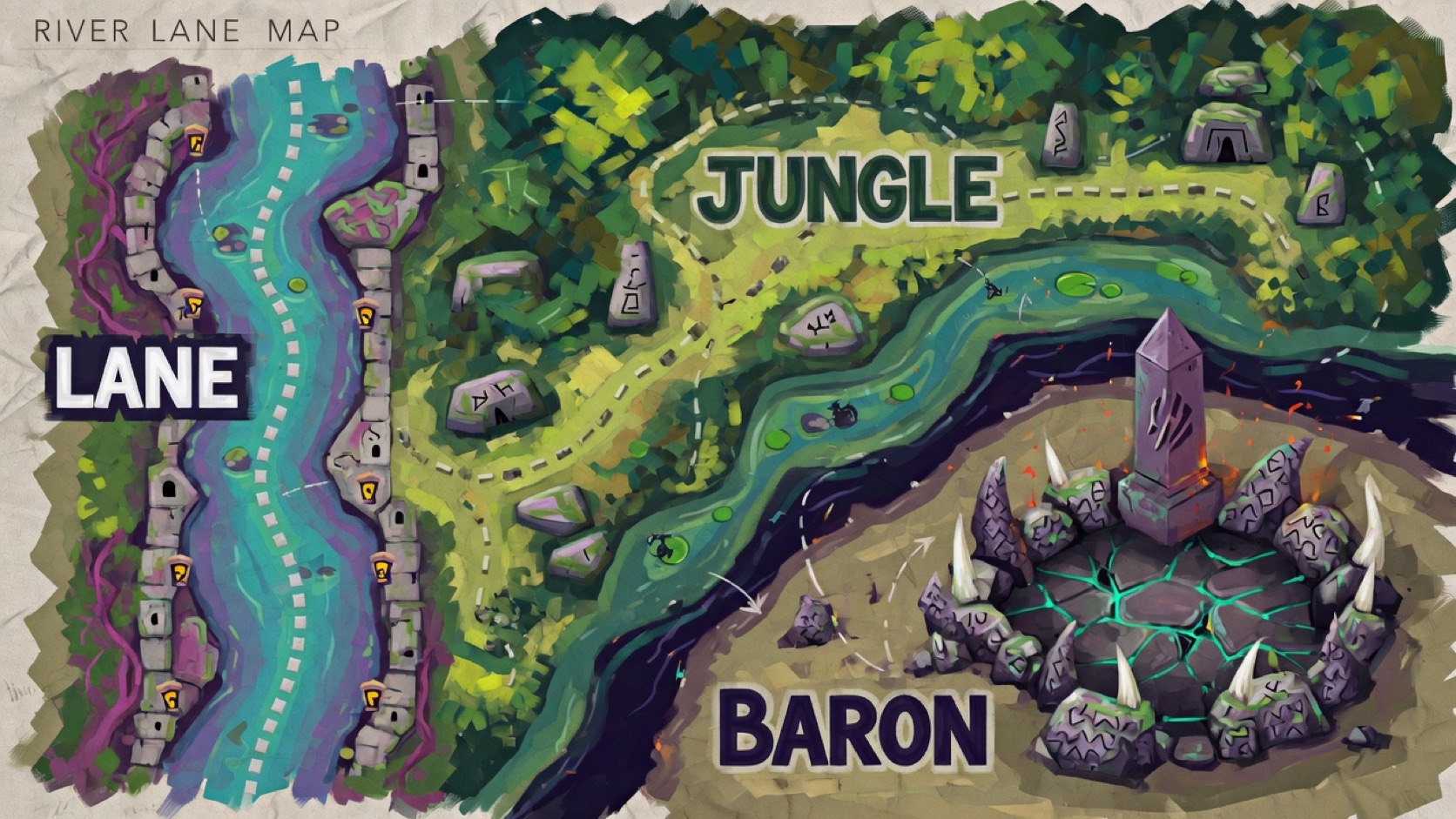
Editorial illustration: pick one role, one item plan, and a party size before you worry about the battle pass.
Spending Risk: Random Items Beside a Fair Combat Claim
Riot markets Wild Rift as free-to-play and "fair to play." The same listing that makes that claim also shows in-app purchases and the Google Play content-rating line "In-Game Purchases (Includes Random Items)." That label usually means some paid or currency-gated product can deliver a non-guaranteed result.
A careful spending rule set:
- read whether an offer is a fixed skin, a currency bundle, or a random drop
- do not treat a cosmetic chest as a way to climb ranked
- set a cash cap before opening the store
- enable purchase authentication on a shared device
- remember that Riot's "no pay for power" claim, if still present in your client, does not make random cosmetic purchases free of regret
This article will not invent chest odds, skin prices, or champion-shard formulas. Those numbers change by region and patch. If a purchase matters to you, screenshot the terms before you confirm.
Wild Rift also costs storage and bandwidth. Leave space for resource downloads, use Wi-Fi for the first install where possible, and finish downloading required assets before starting ranked.

Editorial illustration: random-item offers need a second read even when the combat shop is advertised as fair.
A Smart First Session
Do not start in ranked. Play a few unranked matches in one role. Learn last-hitting, when to back, and how far a tower will hit you. Practice one or two champions until you can use every ability without hunting the buttons.
A useful first-session checklist:
- pick a single role and stay there for the whole sitting
- mute all-chat if the noise is louder than the pings
- look at the minimap after every wave, not only after a death
- spend gold on the item that answers the enemy, not the item with the nicest icon
- stop after a set number of matches so one loss streak does not rewrite your habits
If you queue with friends, assign roles before champion select. Five players who all want to carry will lose to a coordinated four-person plan. A full premade five is the cleanest way to learn shot-calling; solo ranked is the fastest way to learn patience.
Who Should Play League of Legends: Wild Rift?
Wild Rift is best for players who want a real MOBA on a phone: lanes, jungle pathing, skill shots, and a ranked ladder. It fits groups that already speak in pings and can accept that one missed rotate is more expensive than a missed emote.
It is a weaker fit if you want offline play, a pause button, or a game that never asks you to talk to strangers. It is also a weaker fit if your device or network cannot hold a stable match. Regional store access is not guaranteed; if the listing is missing on your account, do not sideload unofficial packages to force it.
Strengths and Weaknesses
Strengths
- Genuine 5v5 MOBA structure with roles, objectives, and skill expression
- Official claim that champions can be earned by play and that combat power is not sold
- Party queues from duo through a full five
- Regular mode and champion updates on the live official site
Weaknesses
- Ranked chat and teammate quality can sour a good mechanical game
- Large installs and updates punish devices with little storage
- Play still flags random-item purchases, so cosmetics can become a spending trap
- Availability and feature set can differ by region
Editorial illustration: confirm the live listing, then lock a role and a stop time before the next queue.
Final Verdict
League of Legends: Wild Rift succeeds when you treat it as a skill game. The map is readable, the roles are distinct, and a well-landed ability still feels like the main product. Riot's public combat-economy claim is unusually strong for a mobile MOBA; the remaining risk sits in cosmetics, random-item offers, download size, and the social temperature of ranked.
Play unranked until your champion buttons are automatic. Queue with friends when you can. Recheck package com.riotgames.league.wildrift on Google Play in your country, because store access is not universal. Played with a role plan and a spending cap, Wild Rift remains one of the clearest ways to take League's 5v5 language onto Android.


