
Yu-Gi-Oh! Master Duel Review: Deep Deck Building, Serious Spending Risk



Yu-Gi-Oh! Master Duel is Konami’s competitive digital version of the trading card game. The official listing offers tutorials, a starter deck, Solo Mode stories, rotating events, worldwide duels, deck-list tools, and a card pool described as containing more than 10,000 unique cards. Google Play currently shows 10M+ downloads and a Teen content rating. The listing was updated on Jul 28, 2026, so features and offers should still be checked in the installed version.
Popularity is a useful discovery signal, not proof of quality. This review therefore focuses on the decisions the game repeatedly asks you to make, the systems that support or distract from those decisions, and the practical limits around money, privacy, age, and hardware.
The Core Loop
The real loop begins before a duel. You choose a strategy, build a legal deck, test opening hands and interactions, play against an opponent, then revise the list using what the match exposed. Winning matters, but the useful question after any duel is whether the deck executed its plan consistently.
The first hour should be used to learn feedback rather than to maximize rewards. Notice what the game communicates clearly, what it hides behind menus, and which mistakes create knowledge for the next attempt. A healthy loop makes failure or delay informative; a weak loop merely asks for another tap, another ad, or another purchase.
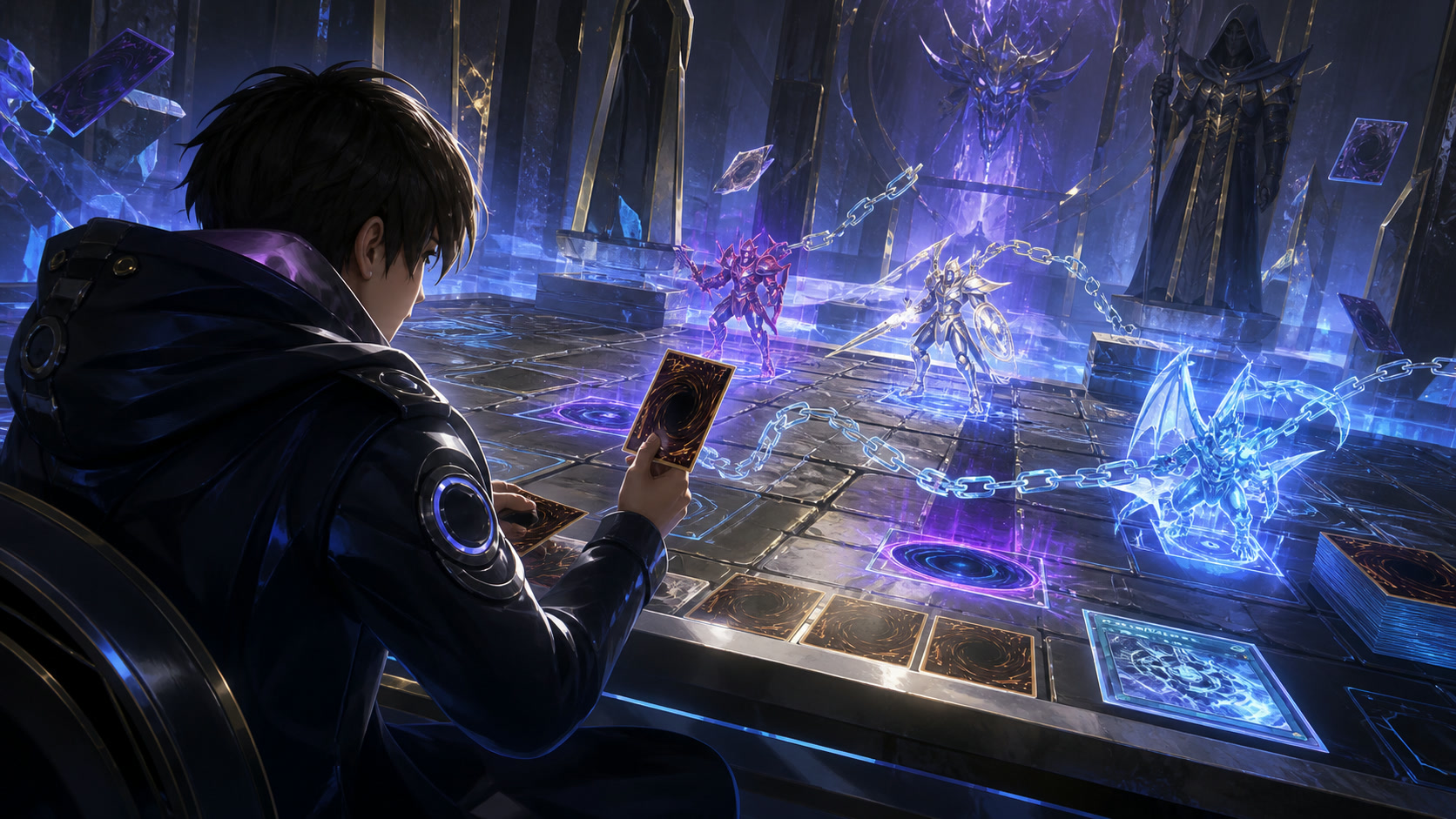
Editorial illustration: the loop is easiest to understand when every action has a visible consequence.
The Systems Around the Main Mechanic
Tutorials lower the initial barrier, Solo Mode teaches themed card stories and mechanics, and events apply alternative formats or special rules. The companion Neuron connection and worldwide deck lists support research. The complexity comes from timing windows, long card text, chain resolution, and a rapidly evolving competitive environment.
These supporting systems matter because they shape the pace between active moments. The best ones create a meaningful decision before the next round. The weaker ones add collection, notifications, or currency without changing how the player thinks. New users should learn the central mechanic first and add optional systems only when their purpose is clear.

Editorial illustration: separate the central mechanic from the progression systems wrapped around it.
Progression: A Better Way to Improve
New players should complete tutorials, keep the starter resources intact, and build one coherent deck before crafting side projects. Copying a tournament list without understanding its interactions creates expensive confusion. Learn the win condition, common opening line, recovery plan, and a few matchup responses before entering ranked play.
A useful routine is to choose one measurable goal for a session, stop when attention falls, and review one mistake before starting again. This avoids confusing time spent with skill gained. Event calendars, streaks, or daily rewards may be convenient, but they should not decide whether a session continues after it stops being enjoyable.
Ads, Purchases, and Random Rewards
Google Play explicitly discloses in-app purchases with random items, and Konami’s description says paid virtual currency can produce random in-game items. Treat packs as loot boxes. Check published odds and guarantees in the current client, budget in currency rather than pack count, and never chase one card after the budget is gone.
Store labels describe the current distribution page, not every screen a player may see after a future update. Before paying, confirm the exact item, currency, renewal rule, refund route, and whether the benefit survives account loss or a service shutdown. Randomized rewards deserve a lower budget than direct purchases because the desired result is not guaranteed.
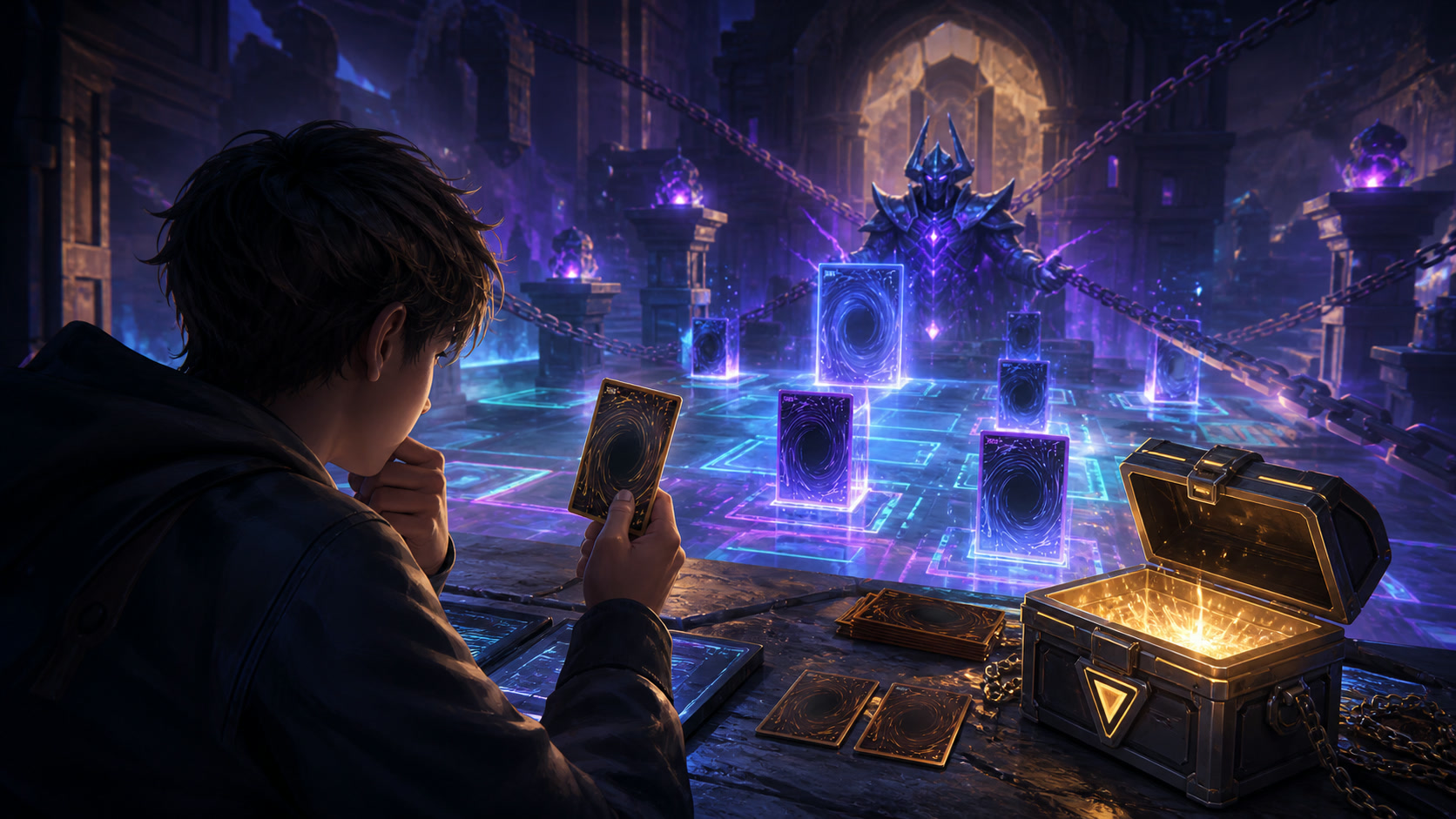
Editorial illustration: enjoyment improves when money, time, and device constraints are decided in advance.
Device and Performance Expectations
Konami lists Android 7.0 or later and a device with 4 GB of RAM, while warning that meeting those specifications does not guarantee perfect operation. Large updates, network stability, battery temperature, and other running apps can still affect play.
Compatibility on Google Play means the store allows installation; it does not promise identical frame rate, battery use, controller support, or network quality on every model. Keep the operating system and app current, use official downloads, and avoid third-party “performance” tools that request excessive permissions.
Privacy, Younger Players, and Healthy Sessions
The Teen rating includes fantasy violence and other content descriptors, while worldwide competition adds names and online interactions. Younger players need both chat/privacy rules and purchase controls. Account transfer and recovery details should be stored securely and never traded with another player.
Use a unique password when an account is required, enable platform purchase authentication, and do not share recovery codes. For a child’s device, review permissions and social features together with the child. A content rating addresses themes such as violence or language; it is not a complete judgment about spending design, chat, advertising, or privacy.

Editorial illustration: the best recommendation depends on fit, not popularity alone.
Who Is It For?
This is a strong fit for players who enjoy complex card interactions, deck construction, competitive study, solo lore, and repeated refinement after losses. It is a weaker recommendation for players who want short rules, guaranteed access to every card, offline-only play, or a low-maintenance collectible system.
Strengths and Weaknesses
Strengths
- Enormous strategic card pool
- Tutorial and Solo modes support learning
- Frequent formats reward deck knowledge
- Cross-platform competition offers a large field
Weaknesses
- Random packs create substantial spending risk
- Rules and card text can overwhelm beginners
- The metagame changes quickly
- A stable connection and capable device are important
Final Verdict
Master Duel is a serious card game, not a light card battler wearing a familiar license. Its depth is the attraction and the barrier. Build narrowly, learn deliberately, and treat every random pack as a financial decision. With those boundaries, the duel system can support years of study; without them, collection pressure can eclipse the game.
The practical recommendation is to install from an official source, test the first session without spending, and decide in advance what would make the game worth keeping. A popular title earns attention; it still has to earn time, storage, money, and trust on the player’s own device.


.webp?x-oss-process=image/resize,w_80/format,webp)